BUILDERS WHO THINK branding matters only when you're selling coffee, cars, and sneakers haven't been paying attention, says Mark Stevens, a White Plains, N.Y.–based marketing expert and author of Your Marketing Sucks. The added value of a builder's brand can be summed up in one instantly recognizable word: Trump.

“Until recently, builders had been brain-dead about branding,” says Stevens, who counts among his clients Hobbs Inc., a luxury builder in New Canaan, Conn., and Intrawest, a Vancouver, B.C.–based resort-property developer. “And then they woke up and said, ‘I hate Donald Trump, but damn, he puts his name on a building and adds an exponent to the price per square foot.' It's not Donald and his ego, but his ego-driven brand concept that drives his margins tremendously.”

Real estate branding guru Dave Miles of Denver-based Milesbrand begrudgingly says he has to agree. “[With Trump] you know what to expect,” he says. “Talk about a brand ... .”

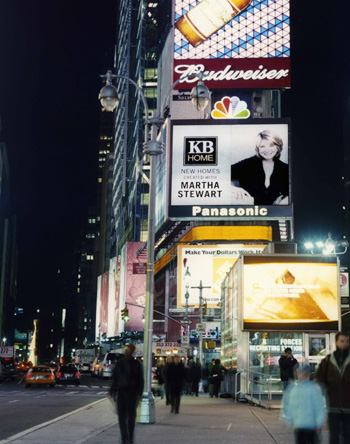
HIGH VISIBILITY: KB Home's partnership with Martha Stewart is designed to give KB access to  the mass market appeal of Stewart's design style and creativity. In return, it  gives Stewart the ultimate venue—the home—to showcase her work.

HIGH VISIBILITY: KB Home's partnership with Martha Stewart is designed to give KB access to the mass market appeal of Stewart's design style and creativity. In return, it gives Stewart the ultimate venue—the home—to showcase her work.

Now, builders have another powerhouse name to watch in the industry—Martha Stewart. In fall 2005, KB Home announced a long-term relationship with the goddess of gracious living. Her Halloween decorations festooned KB model homes nationwide last year, and a collection of New England–style house plans inspired by her own homes and her design sensibilities debuted in KB's Twin Lakes: Homes Created with Martha Stewart, in Cary, N.C., in October 2005.

At the debut of their community in Atlanta in July 2006, Stewart said her work with KB was a natural extension for her company.

“This is the ultimate way to showcase our talents,” she says.

IN THEE WE TRUST

Branding isn't just for the big guys. It's important for builders regardless of volume. A builder's brand is the crystallization of its identity, whether as a green builder, a “bigger house for less money” builder, a “stickler for details” builder who never cuts corners, or a builder who holds the customer's hand from beginning to end.

Ric Bonasera, general manager and partner at Frey and Son Homes, a custom home builder in Bonita Springs, Fla., says he knew the company's brand was secure the day he played golf with a client at a country club where Frey and Son had built several homes. As they walked the course, the client could pick out the Frey and Son houses from the back.

“He told me, ‘I can always tell which houses are yours because the backs are very distinctive,'” Bonasera says.

That's because Frey and Son is known for its attention to 360-degree architecture and its willingness to make extensive changes to its plans.


“We work from a portfolio of models, but we allow the homeowners to make whatever changes suit their needs,” Bonasera says. “Some of my competitors may move a bedroom door a few feet or move a toilet from one wall to another, but they don't modify to the extent we do. We don't have cut-off dates for changes. On one house recently, we were up and out of the ground and much of the exterior walls were up when the homeowner decided to add a 1,200-square-foot second story to the home. We're known for that.”

The commitment to creating an experience that matches the public's perception is the essence of branding, Miles says.

“Branding really comes down to the practice of building trust and fulfilling your promises,” Miles adds. And that has value, as many a builder has seen during negotiations with larger builders looking for an acquisition.

“There's a premium you get for brand equity in any kind of sale if it's positive, no doubt about it,” Miles continues. “If it isn't [positive], you have nothing other than the hard assets. [Brand is] what people would look to internally if [the company] is sold: Does the new buyer respect the brand or would they totally do it over?”

The process of building a brand helps a company focus on what it does best and connect with customers who value that focus, instead of trying to be everything to everyone and not satisfying anyone.

“It's pretty hard for a builder that does a whole bunch of things to be known for anything,” Miles notes.

Or, as Paul Parkin of SALT Branding in San Francisco puts it so aptly: “Only one person can be the cheapest. Everyone else needs branding.”

“What's interesting,” Parkin says, “is brands do help people make choices. You have a lot of choices—once you're at a price point, you have an emotional decision to make.”

SMALL STEPS FORWARD

The last time Pulte Homes studied consumer awareness of home builder brands (within the past five years), the results were disheartening at best. In the company's nationwide survey, 60 percent of respondents couldn't identify any home builder and 35 percent of new-home buyers couldn't remember who built their own house. By comparison, how many people can't identify what kind of car they drive and where they bought it?

The survey hasn't been repeated in recent years, says Keith Burke, Pulte's national director for marketing. Since then, Pulte has chosen instead to focus on surveying consumers in markets where they do business, both to gauge existing brand awareness and to encourage consumers to consider Pulte the next time they're buying a new house.

With the intense competition between national builders in many markets and the overall interest in the housing industry over the past few years, Burke theorizes that consumers today have a higher awareness of builder names.

Wendy Marlett, senior vice president of marketing at Los Angeles–based KB Home, says she believes that, in general, builders have made huge inroads in brand-building and overall marketing presentations.

“There's a real understanding that those things are a differentiator and [that] the better we can communicate to the public, the more we'll drive sales,” says Marlett. “I think the industry has gotten a lot more savvy.”

As well it must. Sphere Trending, a Waterford, Mich.–based trend monitoring firm, notes that branding continues to expand in nontraditional ways. Apple's iPod, for example, has gone past the point of being a brand to “encompassing an entire lifestyle, standing for customization and individualism,” according to a recent Sphere Trending newsletter.

“Purposeful branding” goes beyond price point or value to a deeper meaning. An example of such is Edun (“nude” spelled backwards), the apparel line by U2 front man Bono and his wife, Ali Hewson, which uses organic materials and helps promote fair-labor practices in South America and Africa. Fashionistas wearing the product can feel good, knowing that their high-priced, designer clothes weren't made by children working in sweatshops.

LATTE LESSONS

Nanette Overly, director of sales and marketing services for Dublin, Ohio–based builder/developer Epcon Communities, has had branding on the brain lately, as her company has been in the thick of it. With Epcon's home building division, the Epcon Group, building more than 3,000 homes in central Ohio and its 112 Epmark franchisees building under their own names in 26 states, the builder lacked a cohesive identity.

“It was making it hard for future homeowners to find us,” Overly says. “We were structuring an aggressive national accounts program for materials. We would try to say to manufacturers, ‘We've built 15,000 homes,' and they would say, ‘Under what name?' We entered the Builder 100 in 2004 at No. 46, but everyone said, ‘Who is Epmark Communities?'

“All those things came together to really kind of confirm what we were thinking [with branding]. It was like getting that big permission slip to say, ‘Go ahead, you're right on target.'”

Overly draws an apt comparison for builders to Starbucks, a place she says she finds herself “more often than I should be.” The price points of the products may be dramatically different, but the concept is infinitely applicable.

“When I'm in Starbucks, I have a very consistent, positive experience, regardless of what city I'm in,” Overly says. “It's critical that it's the same in home building, that our customers have a great experience. ... Your brand is everything they think of you. It's all the encounters they've had with you.

“In any industry, the focus so often is on the product instead of the consumer. The product is the means to get us to the consumer. If I'm focused on the consumer, I know I'm going to deliver a product that will satisfy the consumer.”

In March 2005, Epcon forged ahead, changing everything to “Epcon Communities,” therein dispensing with “Epcon Group” and the individual Epmark franchisee names and rolling out the company's new brand position, “Where Life Comes Together.”

Once the new position was established, Epcon began working on staff training “to really build what the customer experience should be and make sure it's consistent every place you go,” Overly says. “A brand is a very fragile thing. It's a living, breathing thing; it needs constant attention.”

LOOKING INWARD

Epcon isn't alone in giving constant attention to a new brand position. Beazer Homes USA began the process more than four years ago, conducting hundreds of interviews with people inside and outside the company to find out what people knew and thought about the firm. What the builder learned was that it basically did a good job, but there was inconsistency between regions. Retaining the local names of the builders Beazer acquired diluted the firm's name recognition, and overall, there wasn't much that made Beazer stand apart from other national builders.

In October 2003, the company unveiled a new logo and tagline, “Someday Starts Today,” to employees. More important, a process was started in order to train every employee as a “Beazer Ambassador.” The brand position would focus not on quality or value—two words so overused by builders that branding experts say they essentially mean nothing—but on the experience of buying, building, and owning a home. Every customer interaction was put under a microscope and examined through the filter of the brand.

The motivation was to improve the efficiency, profitability, and overall business of the company, says Beazer's CEO Ian McCarthy. More than two years into implementation, the company is starting to see the results it hoped for.

“The customer is such a focus now,” McCarthy says. “I feel much, much better about the experience. ... This is so important to us. It's the whole structure of our company. If we all know who we are, we can deliver a much more consistent, enjoyable product.”

An internal audit of your company's strengths—and weaknesses—is where a brand strategy has to start, says branding expert Miles. It helps builders quickly discover what employees think is important and how that compares with the company's business goals. For builders who can't seem to figure out what they want to be when they grow up, branding brings needed clarity.

“Entrepreneurs lack focus,” Miles says. “Branding becomes a governor. It's a discipline that all businesses need.”

That focus and discipline have already created efficiencies for Beazer, McCarthy says. For instance, by concentrating on one brand instead of trying to manage a dozen, the builder has been able to centralize many of the marketing functions at its Atlanta headquarters. The message may be modified slightly for each market, but it's produced by one creative team.

“We brought real resources into the company,” McCarthy says. “By pooling [them] here, we can increase the quality across the country.”

PARTNERING UP

Unquestionably, the biggest challenge builders face in establishing a recognizable brand is the buying cycle. It's a lot easier for Starbucks to connect with customers who make a daily purchase than for a builder who might work with a customer only once. That's all the more reason to make that one transaction count.

With such limited opportunities to make an impression on consumers when they're in the market for a home, it makes tremendous sense for builders to look for ways to partner with other well-known brands to increase their name recognition, says SALT Branding's Parkin.

While builders have a long history of effectively linking their brands with those of building products, such as windows, appliances, bath fixtures, and flooring, co-branding with well-known names in other industries is an emerging trend in housing, says Maxine Lauer, president of Sphere Trending. Recent examples include St. Lawrence Homes, which has partnered with tractor manufacturer John Deere to provide landscaping and lawn-care equipment for the John Deere Signature Community in the 62-lot Trenton neighborhood near Durham, N.C.

One of the most hotly pursued co-branding opportunities by builders in recent years has been with Extreme Makeover: Home Edition, the highly rated television show that features builders pushing themselves to the brink of exhaustion to build a dream house for a deserving family in less than a week.

McCarthy says Beazer Homes was willing to take a chance on Extreme Makeover to build a home for an Atlanta family because it was a perfect fit with its position statement, “Someday Starts Today,” and was a brand position centered on a memorable home building experience. Beyond that, he says the company isn't pursuing any other co-branding opportunities.

“We're very focused on our own message,” McCarthy says. “If ever you're going to do [co-branding], it has to be sustainable and deliver the right message. Does it reinforce your brand or distract from it? Just take Coca-Cola. I don't see them co-branding a lot.”

ON TV WITH KB: KB has taken full advantage of the power of co-branding, working with such  well-known shows as Live With Regis and Kelly and Extreme Makeover: Home Edition to reach millions of consumers.

ON TV WITH KB: KB has taken full advantage of the power of co-branding, working with such well-known shows as Live With Regis and Kelly and Extreme Makeover: Home Edition to reach millions of consumers.

GAINING LEVERAGE

Perhaps no national builder has pursued co-branding more extensively than KB Home, which, in addition to Martha Stewart, has partnered with such diverse and well-known television shows as The Simpsons, in a co-promotion with Pepsi and the Fox network to build and give away a replica of the cartoon characters' house (back in 1997 in Henderson, Nev.); with Live With Regis and Kelly, to give away a house built on the ABC network lot in New York; and with a segment of Extreme Makeover.

The impetus for co-branding is to reach out to consumers who may not be at the point of buying a home today, introduce them to your brand, and become the first name they think of when they are ready to buy, KB's Marlett says. While extremely different, all four of KB's co-branding initiatives reflect and reinforce the KB brand message of quality and choice.

“Exposure for exposure's sake is not as important as being able to tell the company's story and what's behind the brand,” Marlett says. “Something as goofy as Homer and Marge [Simpson] picking out an iridescent-orange kitchen in the KB Home design studio is a fun way to showcase the ‘choice' message.

LONG-TERM STRATEGY: Led by CEO Ian McCarthy (in the red jacket), Beazer Homes USA spent years studying  its customers and itself before it undertook a major branding effort  that focused on the home buying experience. Building a house on Extreme Makeover: Home Edition was a perfect fit with Beazer's new tagline, “Someday Starts Today.“

LONG-TERM STRATEGY: Led by CEO Ian McCarthy (in the red jacket), Beazer Homes USA spent years studying its customers and itself before it undertook a major branding effort that focused on the home buying experience. Building a house on Extreme Makeover: Home Edition was a perfect fit with Beazer's new tagline, “Someday Starts Today.“

“True branding is very consistent. I stick with that moniker of quality and choice, whether you're a first-time or luxury buyer. There may be nuances, but you have to be consistent.”

Parkin calls KB's partnership with Stewart a “great example of leveraging a person who has compelling brand ideas that would be very synonymous for homes. It's a perfect marriage of two brands that would make sense [together],” he says.

One of the reasons the KB–Stewart arrangement works, Miles notes, is that the two brands align well together, which is critical for a successful cooperative effort. If both brands have their own devoted fan base to bring to the table, all the better.

“It makes a lot of sense that KB would want to find someone who is a leader in teaching and educating people how to make a better home,” Miles says. “It makes the future of living in the house come alive.”