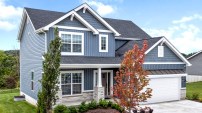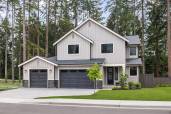
From introducing smaller homes and townhomes to expanding into new markets, Stylecraft Builders spent 2025 focused on creating attainable housing while positioning the company for future growth. Those efforts helped propel the College Station, Texas-based builder 15 spots higher on the 2026 Builder 100 list to No. 59.
Below, BUILDER caught up with CEO Doug French to learn how Stylecraft is navigating affordability challenges, balancing margins and volume, and identifying the next phase of growth for the family-owned company.
Stylecraft climbed 15 spots on the 2026 Builder 100 list. What were the key drivers behind that growth in 2025?
A number of factors contributed to our 15-spot climb on the 2026 Builder 100 list. One of the biggest was simply being willing to build more homes. Someone once told me, “If you want to sell 1,000 homes, you have to build 1,000 homes.” We felt more confident entering 2025 than we had the year before, so we were more aggressive with starts and put more product on the ground.
We also continued expanding our geographic footprint, which created additional opportunities and increased our overall volume.
Another important factor was becoming more disciplined about understanding which levers to pull in different communities. Some opportunities are more margin-driven, where we are comfortable with lower volume and stronger margins. Others are more volume-driven, where we may accept a slightly lower margin in exchange for greater velocity. As we have refined how we evaluate and manage those different scenarios, it has helped us increase volume in the right places and improve our overall business performance.
As a family-owned builder with deep roots in your local markets, how does that community focus shape your growth strategy and customer experience?
Large national public builders have gained significant market share over the years, and I have a great deal of respect for many of them. At the same time, I have come to appreciate the different perspective and business models that a family-owned, local, and regional builder can bring to the market.
To compete successfully, we have to understand what makes us different and be intentional about leveraging those strengths. We also study the national builders and learn from the tactics and efficiencies they use. The key is to know what to adopt without being pulled outside our comfort zone and into a game where they have a significant advantage.
Where we believe Stylecraft can continue to stand out through deep local market expertise, strong relationships, particularly with developers, and the ability to preserve a small-company culture and customer experience. At the same time, we have developed many of the systems, efficiencies, and scale of a larger builder.
That balance is what we are working to achieve: leveraging the strengths of a larger regional company while protecting the qualities that make us unique.
What operational or product shifts have you made to stay competitive on affordability while still maintaining quality?
The biggest shift we have made to improve affordability has been reducing square footage and designing more efficient floor plans. We have introduced smaller homes, including two-bedroom products, and in some cases eliminated garages or reduced covered areas that do not contribute to heated square footage. We have also paid close attention to expensive spaces such as kitchens and primary bathrooms, making sure they are functional and well-designed without being larger than necessary.
We have also simplified elements such as rooflines and developed specific price-point-driven products, including alley-loaded homes and townhomes. In one case, we were able to offer townhomes at $199,000, and the response from the community was very strong. It has allowed some buyers to purchase a home who may not otherwise have been able, or willing, to buy a traditional detached single-family home.
At the same time, we are not willing to remove features that we believe materially improve the quality and long-term value of the home. Over the past 15 years, improvements such as stronger energy standards, dimensional shingles, and other construction upgrades have made our homes better products. Our goal is not to cheapen the home. It is to remove unnecessary cost through smarter design while preserving the quality, durability, and value our buyers expect.
Looking ahead, what are your priorities for sustaining momentum and continuing to grow?
Our growth strategy is multidimensional. We still see meaningful opportunities within our existing geographic footprint, both by improving performance in our current communities and by expanding into adjacent communities where we already have market knowledge, relationships, and operational infrastructure.
We are also focused on growing our presence in East Texas. This is our first full year in that market, and we are not close to our full potential there yet.
Beyond that, we will continue evaluating new geographic markets. We are already conducting market studies and identifying areas where our business model, product, and culture may translate well.
The priority is to balance disciplined growth in the markets we already know with thoughtful expansion into new ones. Entering a new market is always challenging, but it is also energizing and creates new opportunities for the company.