FUNNY HOW SECOND-hand doesn't seem so bad when times get tight. With land prices in the stratosphere, consumer confidence waning, and mortgage interest rates creeping up, would-be home buyers who previously held fast to the “new or die” mantra may be tempted to give the resale market a second look in the year ahead. Many will simply assume that they can't afford to buy new.

Some indicators suggest that this shift is already in motion. While new-home sales are losing steam fast and inventories continue to pile up, sales of existing homes rebounded from a five-month slump in February, posting a 5.3 percent gain—the biggest increase in two years, according to the National Association of Realtors (NAR). At that time, the NAR estimated a 5.3 months' supply of existing homes on the market at the current sales pace, versus a slightly higher 6.3 months' backlog of new homes.

The irony, particularly for boutique builders who repeatedly pull permits in the same locales, is that resale competition isn't always in the form of antiquated housing stock. “The bulk of resales happen after three to seven years,” notes Al Trellis, president of Home Builders Network, a Maryland-based consultancy specializing in strategies for small builders. “When you're selling against houses that are two to four years old, you're often selling against your own stuff.”

Whether your main competition is that historic neighborhood just a few minutes from downtown or the master planned community you yourself built five years ago, there's one surefire way to get a leg up on yesterday's houses: Keep your sights set on the horizon line of tomorrow.

ROUND 1 Mix it up.

Even if your biggest competitor is the guy in the mirror, that's not license to hang back and relax, Trellis says. A builder with an inventory of, say, 20 plans should always be changing the menu. “There is a danger in holding on to the plans that sell the best, and that danger is holding on too long,” he warns. “No one wants to throw away a winner, but even a winner occasionally needs a new wardrobe and a week at the spa.”

The name of the game is to keep changing the look and feel of your product, Trellis says. “Introduce new elevations, retire certain floor plans, and rename some of your floor plans. If I sell the Breyerwood plan for $299,999 one year and then start selling it for $399,999 a year or two later, people will remember.”

Even with a great plan, rejuvenation doesn't hurt. “The world is full of suboptimizations,” he adds. “If you sell 25 a year, how do you know you can't sell 35 a year with some minor tweaks?”

The opportunities for improvement are often obvious, particularly when it comes to plans that have endured the gantlet of a phase one release. “Our revisions are usually driven by the fact that we learned something the first time around and we want to address it,” says Matthew Cody, president of Cachet Homes in Scottsdale, Ariz. Such was the case with a six-plex condo product the builder first introduced at McDowell Mountain Ranch, a desert community outside Scottsdale.

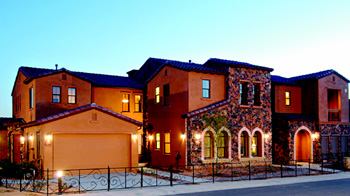
In the first iteration, a third of the homes had one-car garages, which didn't sell as quickly as those with two-car garages. “When we went to do the same product [in another community] we switched to all four-plexes with two-car garages, changed the garage orientation, and added some stone to the exteriors,” he says. “In this case, the floor plans didn't really change. It's the curb appeal we had to doctor up with how we handled the garages. We don't like to do the same product line, unedited, more than twice.”

ROUND 2 Divide and conquer.

When it comes to competing against older houses, tiny rooms and inadequate storage are easy to one-up. For decades, the standard new-construction response to these shortcomings was to super-size the offerings and dispense with just about any wall that wasn't structural. The newer thinking: Less is more if you reconfigure square footage with a purpose.

Dixon/Kirby & Co., a custom and infill builder in Cary, N.C., has won buyer loyalty not with overblown great rooms and showy foyers, but with special attention to what president Mark Kirby calls the service areas of the house—small, specific-use spaces such as mudrooms, message centers, bill-paying niches, and electronic recharging stations that occupy chunks smaller than 15 feet by 25 feet.

“When people look at resales, they can't find these kinds of spaces in old houses,” Kirby says. “It's not as much about rooms any more as it is about systems. Fifteen years ago, you walked right from the garage to the laundry room to the family room. There was no transitional space—what Carson Looney (a principal at Memphis, Tenn.–based architectural firm Looney Ricks Kiss) describes as the ‘liver.' In the same way the body needs a liver to filter out impurities, a house needs places where you can filter yourself when you enter.” Places such as key drops, bench alcoves, and cubbies where you can shed your coat and shoes, set down your briefcase or book bag, and stash the mail.

Another spot that Dixon/ Kirby has taken to the carving block is the vast bonus room over the garage. Once cavernous spaces, they are now smartly sectioned into playrooms with built-in kids' desks and adjoining hobby areas with durable worktables. Some have built-in wrapping stations with slots specifically designed to hold gift paper rolls and ribbon boxes. “When I walk a new house with a husband and wife, I'll see her mentally clicking through and recognizing these features as identifying a lifestyle need,” says Kirby, whose company builds 15 to 25 homes a year around Raleigh-Durham, N.C. “It's not a matter of adding more space; it's just reconfiguring these dumb, open spaces that are too big.”

LITTLE JEWELS: Homespun details such as decorative porch railings, exposed rafter tails, and variegated cladding can make a big statement in a small house, as evidenced by these gems, designed by Tringali Architects and built by Tennant Development in Bend, Ore.

Kirby says that most of his present-day clients crave a middle ground between the not-so-big-house and overblown mansions: “They'd rather have 5,000 square feet that is really well planned than 8,000 square feet where it's a matter of figuring out how much more furniture they have to buy so it doesn't feel empty.”

ROUND 3 Retool for tech.

Technology is, of course, another way to boost your mojo and leave the resale competition (including your own old stuff) in the dust. The key is to upgrade your floor plans to work with the home entertainment, security, and communication systems that live inside them. Otherwise, technophiles will view your home as just another retrofit—albeit a more expensive one with new drywall.

There's a thin line separating consumer literacy and technological obsolescence, and it's the builder's job to straddle the two. “We used to have the electronic closet, and people wanted a hardwired LAN in their house,” Kirby remarks. “Now the technology has moved past that. We still put in structured wiring, but we're also doing wireless.” Nomadic work habits are affecting floor plan design in a big way, he says.

For instance, large studies are being downsized as wireless extenders make it possible to work from any room in the home. “The computer being plugged into the wall is an old way of thinking,” Kirby says. “The new thinking is that you may only need a smaller recharging space for when the power runs out”—preferably one that can also accommodate cell phones, PDAs, MP3 players, and digital cameras.

Another tech toy driving spatial relationships inside the home: the flat-screen TV. “I love it because I don't have to build a cabinet around it,” says Kirby. “People come to me and say, ‘I need $10,000 for builtin cabinetry for my family room.' I say, ‘No, you don't.' The traditional family room—with a fireplace on the left and a TV cabinet on the right holding an old CRT [cathode ray tube] TV—is old school. Now you can buy the latest and greatest flat-screen LCD for less than it would cost you to buy a tube TV and build a cabinet around it. That's something I sell all the time against resale. It's liberating not to have an entire room designed around a tube TV.”

ROUND 4 Think elemental.

News alert: Old homes are not known for being particularly energy efficient, much less weatherproof. And with utility costs skyrocketing—by as much as 72 percent in some markets—and air-quality concerns increasingly on homeowners' radar, you can bet that they'll give a high-performance house a second look over a gas-guzzler with windows that leak.

Renaissance Homes, an up-scale production builder targeting move-up buyers in Lake Oswego, Ore., recently upgraded its own competitive strategy by adopting the Earth Advantage program, a local green building program with standards similar to those of the Leadership in Energy and Environmental Design (LEED). “A lot of the homes we built three or four years ago still have great, current floor plans and current amenities, so our biggest competition is [ourselves] on the resale market,” says president Randy Sebastian. “The way we've overcome that is we're now building homes to a higher standard than we were three years ago.”

This move has not only made Renaissance a standout in the marketplace, but it has profoundly reduced the company's number of callbacks. The kicker is a new and improved construction approach, using RainScreen technology, which acknowledges the builder's geographic position at the base of the Rain Belt, where the average annual rainfall is about 45 inches. Fiber-cement siding is placed on top of 1-inch-by-4-inch, pressure-treated vertical strips, creating an air space between the siding and the sheathing.

“This creates an airflow behind the siding, so there's no moisture build-up,” Sebastian explains. “Plus, our exteriors are flashed without caulking, so moisture doesn't get trapped. It's an approach that's now code in Vancouver, B.C., [Canada,] because of all the leaky condo lawsuits up there. It makes sense for our market. Since we started doing this three years ago, we have not had a single exterior window or door leak, whereas previously in this wet environment, two in 10 homes we built had some sort of leak in the warranty period.”

RainScreen costs about $12,000 more per house, but buyers are willing to pay for it, Sebastian says. “For us, it's a no-brainer because we don't have the liability we'd otherwise have without it.”

ROUND 5 Sweat the small stuff.

Leaving aside who or what the competition may be, good design sells. Never underestimate the difference that a small detail can make—whether it's an unusual front door, an arched header, or a knee wall with fine millwork to make one room extra special.

“If your budget is under $300,000, most builders will make you feel like you are lucky to be getting a house at all,” notes Dominick Tringali, an architect in Bloomfield Hills, Mich. “In a soft market, you want to make the everyday home buyer feel like they are a custom home buyer.” That includes first-timers, who now account for roughly two of every five home sales, according to the NAR.

Small, well-thought-out details can be a tipping point for shoppers who are on the fence about whether to buy new, Tringali states, and they don't have to cost a fortune. Plans that his firm has recently designed for Michigan builders such as Moceri Development, Ivanhoe Huntley Homes, Singh Development, and Cohen Associates have beat the competition with features such as 10-foot ceilings, niche storage spaces, display alcoves, and more natural light than the average resale home.

“The natural-light advantage is something that's easily achieved by taking your typical 6-foot windows and adding transoms to the tops of them, creating more wall space to elevations to make room for larger windows, or designing ceilings to add skylights,” explains Tringali. “These are all cost effective and make a big difference in the overall presentation” of a house.

ROUND 6 Think outside the box.

For all of their drawbacks, old houses have their indisputable advantages. And they are often found outside the actual house—namely, the curb appeal that comes with mature landscaping and an established streetscape.

“This has become more of an issue for us as we've started doing infill projects in dense locations,” says Kirby of Dixon/ Kirby. “People who move into old-growth neighborhoods have the benefit of 10 to 25 years' worth of tree growth. It doesn't require buyers to envision what the neighborhood will eventually look like. I've had great houses that just sat on the market because I didn't do a good job landscaping.”

This realization has prompted a shift in how total design and construction dollars are allocated on Dixon/Kirby's punch list. “Ten years ago, I was giving people the potential for great outdoor space; now I'm trying to build it and sell it, so that potential is already realized,” Kirby explains. That means greening out garden beds, courtyard spaces, and lawns as part of the overall package.

Curb appeal notwithstanding, an added benefit of this approach is that it has helped pre-empt the buyer disappointment that inevitably occurs when the $100,000 courtyards they envision (torn from the pages of shelter magazines) prove to be fiscally unfeasible.

“At least, building in infill areas, I'm helped by shrinking lot sizes,” says Kirby. “A budget of $30,000 on an acre is nominal for basic irrigation, plantings, and sod, but that amount will go a heck of a long way on a quarter-acre. People look at smaller lots and say, ‘Well, my yard is shrinking.' We point out that so is their yard maintenance.”

With smaller lots, demand for courtyards and similarly defined outdoor spaces is rising, he says. “I am building million-dollar homes on 5,000-square-foot lots, so I have to build great outdoor spaces to create bang for the buck. People will use outdoor space if it doesn't feel like second-class space. The responsibility today is not just building a house, it's building a site.”