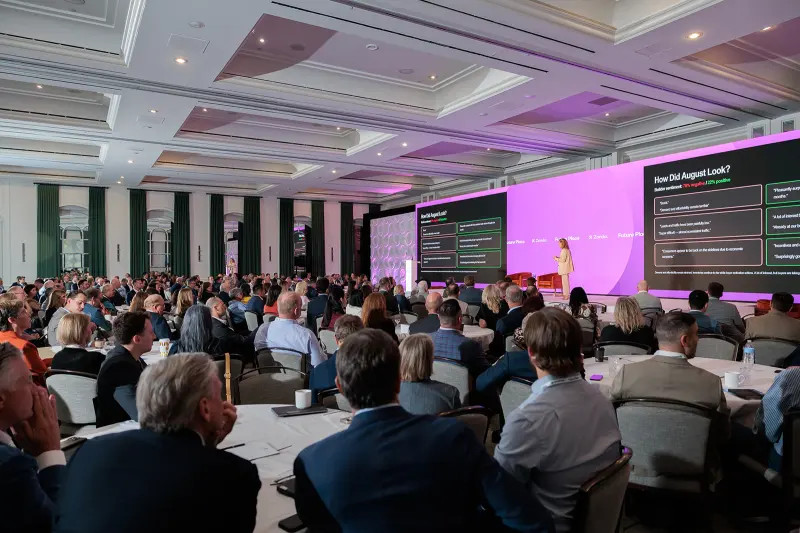
If day one of Future Place 2026 was about identity, culture, and placemaking, day two was about execution.
Across discussions on active-adult communities, culinary-centric developments, build-to-rent (BTR) neighborhoods, wellness-focused projects, and emerging master-planned communities, industry veterans repeatedly returned to the same question of “How do you create a place people want to be part of before the community is fully built?”
The answer, according to developers, planners, and operators throughout the day, is less about building bigger amenities and more about creating opportunities for connection. Through trails, farms, food programs, wellness initiatives, social events, town centers, and activation strategies, developers are investing in the “infrastructure of belonging.”
Belonging Has Become a Business Strategy
The strongest theme of the day was that builders and developers are no longer simply selling homes. They’re selling community. That message surfaced repeatedly across multiple sessions, regardless of product type or buyer demographic.
In a session on lifestyle advantages, Barron Collier Companies’ Cee Cee Marinelli said that community traditions and events play a key role in creating resident engagement. “We’re not just selling homes, we’re selling belonging,” Marinelli said.
Similarly, Nolen Communities’ Brian Grover, discussing Fox Point Farms, said developers today are “all just trying to bring people together.” The farm-centered community was designed around shared experiences, gathering spaces, and opportunities for connection. Amenities were completed before the project’s 15th home was delivered, helping establish a sense of life and activity from the outset.
The concept extended beyond programmed events. During a session on social infrastructure, speakers discussed how proximity, repetition, play, and shared experiences can foster stronger community bonds. Speakers agreed that communities succeed when they help people meet one another.
Trails May Be the New Clubhouse
While amenities dominated past conversations about community development, one feature surfaced repeatedly as a top priority: trails.
Multiple speakers identified trail systems as one of the most effective investments communities can make because they serve multiple purposes simultaneously. Trails improve wellness, support recreation, encourage interaction, and connect neighborhoods without requiring the high operating costs of large amenity buildings.
Alliance ASE USA’s Jake Carsten encouraged developers to plan trail systems before communities are platted, allowing designers to take advantage of natural topography and create diverse outdoor experiences. He noted that residents want opportunities to leave their front door and immediately access trails without getting into a car.
At Painted Tree in McKinney, Texas, Oxland Group’s Tom Woliver said trails became one of the project’s most universally appreciated features. “You can have the greatest idea, the greatest execution, but there is always a curveball,” he said. “Trails are fundamental.”
While amenity centers still matter, trail systems function as everyday infrastructure that serves residents across multiple generations and lifestyles.
Food Is Becoming a Powerful Placemaking Tool
Another emerging theme was the growing role of food in community development. Rather than treating restaurants, farms, and food-and-beverage offerings as supporting amenities, developers are using them as organizing principles for entire communities.
At Fox Point Farms, the working farm serves as the centerpiece of a 250-home development that includes events, live music, gathering spaces, and programming designed to reconnect residents with food production and community interaction. Grover said the goal is to create experiences rooted in something “more ancestral” while giving families alternatives to today’s screen-focused lifestyles.
Meanwhile, PROSPERA Real Estate Collective’s Ellen C. Buckley’s Ceres project is integrating edible landscapes, orchards, gardens, greenhouse facilities, food entrepreneurship, a chef incubator, and culinary education directly into the development plan. The project will preserve approximately 70% of its 94-acre site while incorporating food production throughout the community.
The food theme extended to BTR as well. “The number one amenity is food and beverage,” said Capstone Communities’ John Acken.
For developers, food represents more than a lifestyle perk. It serves as a catalyst for gathering, activity, repeat visitation, and community identity.
Wellness Has Expanded Beyond the Fitness Center
Wellness appeared in session after session, but speakers described a much broader definition than traditional fitness amenities. Today’s wellness communities incorporate walkability, trails, healthy food access, natural environments, air quality initiatives, aging-in-place design, wellness programming, and even circadian-rhythm lighting systems.
At Ceres, Buckley cited research showing buyers are willing to pay 10% to 25% more for wellness-oriented real estate and that edible landscapes can increase home values by 6% to 12%.
At luxury community projects discussed during the lifestyle panel, Bonfire Collective’s Jason Rickards pointed to wellness strateges include healthier building materials, air quality improvements, outdoor recreation, and activities designed to support long-term health.
The conversation reflected a growing industry belief that wellness should be integrated throughout the community rather than confined to a fitness room or clubhouse.
The 55-Plus Buyer Is Being Redefined
The active-adult market also emerged as a major area of evolution. Speakers agreed that today’s 55-plus consumer wants something very different from previous generations of active-adult buyers.
“It’s not about an age. It’s about an experience,” said Cammie Longnecker of Taylor Morrison’s Esplanade brand. “We don’t believe in retirement. We believe in reinventing.”
Panelists reported demand for larger homes, outdoor living areas, hospitality-style programming, flex spaces, and homes designed to accommodate entertaining for family and travel-oriented lifestyles. Golf, which is frequently declared obsolete by industry observers, remains a meaningful amenity for many buyers.
Helen Foster noted that Encore by David Weekley Homes represented 7% of the company’s total closings in 2025. Trilogy by Shea Homes’ Jeff McQueen highlighted a growing number of single female buyers entering the active-adult market, while several panelists emphasized that service and lifestyle programming are becoming just as important as the homes themselves.
The consensus was that the future active-adult buyer values flexibility, experiences, social engagement, and freedom rather than traditional notions of retirement.
Developers Are Becoming Experience Operators
Day two also revealed how dramatically the developer’s role is shifting. Today, developers are acting less like land companies and more like hospitality operators.
At Latitude Margaritaville, live music programming occurs five to seven days per week, supported by community-level social media engagement and activities designed to foster connection among residents. The community also shifted away from a single large clubhouse to specialized spaces intended to create a more diverse experience. Amenities were in place from day one.
Elsewhere, communities discussed food trucks, pop-up events, town-center activities, farms, concerts, wellness programming, and seasonal traditions as essential components of project success. The message was consistent: once a buyer purchases a home, the experience cannot stop.
Activity Drives Absorption
One of the top lessons of the day centered on activation. Developers stressed the importance of creating visible activity early in a project’s life cycle.
Forestar’s Andy Oxley said amenity investment in early phases remains a priority because buyers want evidence that the community is active and growing. Impactful entrance landscaping, gathering spaces, parks, and highly visible community features all contribute to buyer excitement.
“Everyone wants to see activity,” Oxley said. “Activity creates excitement.”
That idea surfaced many times across the conference. Whether through live music, events, trails, food venues, temporary activations, or early amenities, the most successful communities are finding ways to show prospective residents that the community already has energy and momentum.
As Homes By Towne’s John Woodman noted, “planning and early planning” are critical, and having key amenities operational on opening day can significantly drive absorption.
The Rise of Social Infrastructure
The biggest takeaway from the second day may be that developers view social infrastructure with the same importance once reserved for physical infrastructure. Trails, town centers, event programming, third places, semi-public porches, food-and-beverage venues, and wellness initiatives all share the common goal of creating opportunities for people to interact.
Future Place attendees spent relatively little time discussing traditional amenity installation and more on strategies for fostering connection, belonging, and activity.
As builders continue to navigate affordability challenges and evolving consumer demands, the communities gaining attention are not necessarily those with the biggest clubhouses or longest amenity lists. They are the ones that make it easier for residents to meet, participate, and feel connected from the day they arrive.
The next competitive advantage in community development may not be an amenity at all. It may be belonging and the story it tells well before ground breaks.