Home design has always evolved alongside the way people live. In 2026, this is showing up as a rise in popularity of snore rooms, which are typically smaller, soundproofed rooms enclosed within a primary bedroom.
“The classic setup is usually within the primary suite, with the main bedroom on one side of a larger en suite and a second, sometimes smaller bedroom on the other,” says Stephanie Ayres, senior vice president of product development for Zonda. “The snore room may be just large enough for a bed, with the bathroom in between acting as a sound buffer.”
Snore rooms are more common among luxury home buyers, as budgets and square footage can accommodate this specific design, but the concept is gaining traction across segments.
While the snore room itself isn’t a new idea, the floor plan feature aligns well with what matters to buyers today.
Rethinking Separate Sleep
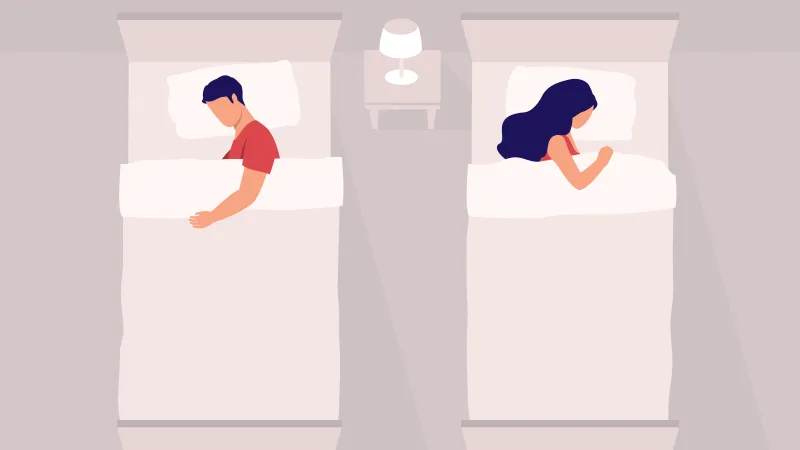
During an era when health and wellness drive home design trends, and when the public is obsessed with sleepmaxxing and seeking tools in pursuit of a good night’s sleep, more couples are choosing to sleep apart.
“Survey data from the American Academy of Sleep Medicine (AASM) shows that nearly one-third (31%) of U.S. adults have opted for what has been coined a ‘sleep divorce,’ or sleeping in another bed in the same bedroom or in another space in the home to accommodate a bed partner,” says Dr. Alexander Abreu, with the AASM.
“Factors driving this trend include snoring, obstructive sleep apnea, different work schedules, restless sleep, different temperature preferences, different mattress firmness preferences, different bedtime routines, and light sensitivity,” says Abreu.
But what’s changing isn’t just where couples sleep. It’s how they think about sleeping apart.
Attitudes toward sleep and relationships are shifting. For generations, sleeping separately has carried a stigma, often seen as a sign of relationship trouble. But as consumers become more educated around the relationship between health and wellness, including social wellness and relationships, and good-quality sleep, that stigma is dissolving.
Although culturally relevant today for its impact on home design, separate sleeping for the benefit of health and wellness is a theme that has re-occurred throughout history.
In the late 19th century, the bedroom became central to ideas about health and wellness, and separate sleeping arrangements were recommended. This didn’t necessarily mean separate rooms, but single beds that created physical separation between sleepers. Space itself was increasingly viewed as a tool for better health, alongside fresh air, ventilation, and larger bedrooms.
Twin beds eventually became fashionable throughout the early 20th century, before sleeping separately became more associated with relationship troubles closer to mid-century, a perception that has lasted until recently.
Today, separate sleep quarters are again being viewed through a wellness lens. And contrary to the name, a sleep divorce can actually strengthen relationships, according to Abreu.
“When individuals consistently obtain sufficient, high-quality sleep, they tend to demonstrate better emotional regulation, greater patience, more empathy toward their partner, better communication, and active listening.”
“Poor sleep is associated with increased irritability, anxiety, depression, and lower frustration tolerance.”
Sleep is ultimately an individual experience, but its impact on a relationship is shared. “Sleep disorders such as obstructive sleep apnea, insomnia, restless legs syndrome, and circadian rhythm disorders often affect both members of the couple, not only the person with the diagnosis,” explains Abreu.
That shared impact creates an opportunity to rethink bedroom design in new homes, and how the space itself can support better sleep.
Designing for Better Sleep
When choosing to sleep separately, one partner might be relegated to a couch or a guest room, which may not provide good sleep either. The beauty of a snore room is that it provides separation for sleep while keeping couples together in the primary suite.
“It’s the “separate but connected” design that makes these spaces so appealing,” says Ayres.
And that approach fits a much broader movement toward designing new homes around health and wellness.
“Newer homes help buyers achieve health goals through cleaner air and water [filtration] and enhanced lighting to support circadian rhythms and the body’s 24-hour clock. New homes often offer dedicated spaces for physical fitness as well, like home gyms, yoga corners, and spa-inspired bathrooms with steam showers,” says Ayres.
Snore rooms are a natural extension of that mindset, bringing wellness into the design of the primary suite itself.
Soundproofing is a key element of a snore room. Often, the en suite bathroom can serve as a sound buffer between the spaces.
If the snore room shares a wall with the primary space, make sure walls are well insulated to keep sound from carrying through. It’s worth upgrading the door to the snore room to a thicker model to dampen sound.
When styling a snore room, choose soft surfaces—carpet, wall treatments, and linens—all of which will help with acoustics.
Install independent lighting and temperature controls, so that each partner can tailor their sleep environment.
Consider circulation too, including whether either partner can access the bathroom or leave the suite without disturbing the other sleeper.
The other benefit of a snore room is purposeful flex space in a high-value location, which aligns with other homeowner priorities right now. Flex space is in demand, but its even better when the location can expand possible use. A snore room that’s not used for separate sleeping can easily become a nursery, meditation room, dressing room, or lounge.
Not all homes or floor plans will accommodate a snore room within the primary bedroom, but many floor plans now offer dual primary suites. Separate entrances mean each functions as its own private space, offering another level of separation for couples who prioritize independent sleep.
Homeowners now have tools to optimize sleep with their home design, but, “Ultimately, there is no one-size-fits-all approach. The healthiest sleeping arrangement is the one that enables both partners to obtain sufficient, high-quality sleep while preserving a strong emotional connection,” says Abreu.
This article was originally published on NewHomeSource.com.