
Who is shopping for new homes today? That’s becoming an increasingly important question as builders navigate a market shaped by elevated mortgage rates, affordability challenges, and shifting demographics. While young families remain a core customer base, NewHomeSource data suggests they’re no longer the main audience driving online shopping activity.
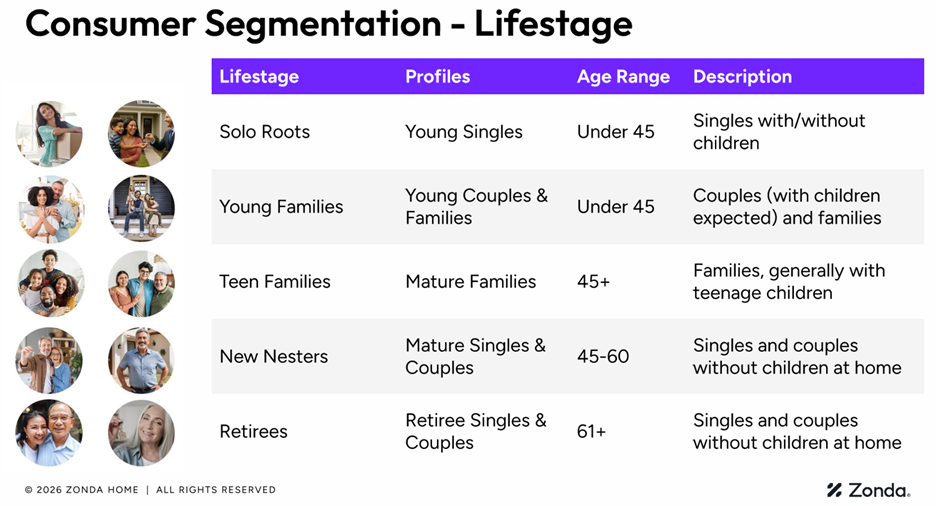
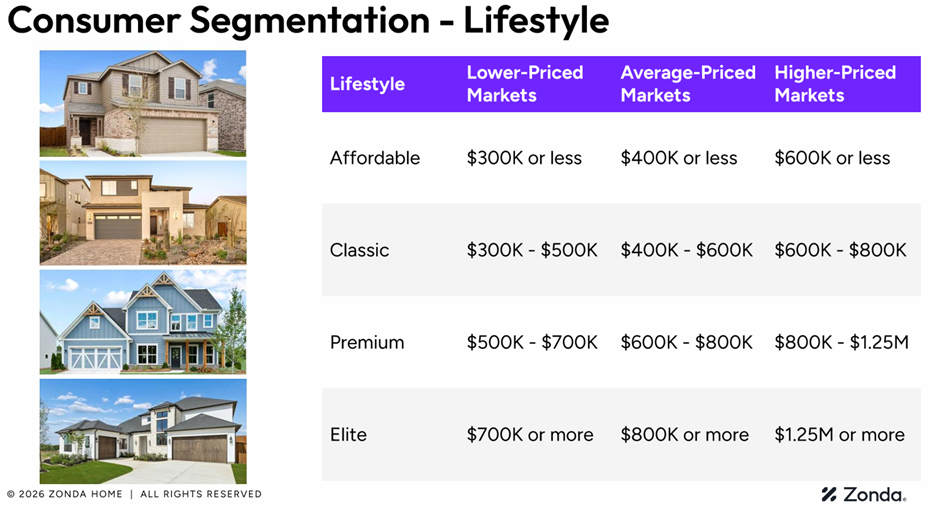
Zonda’s latest Homebuyer Outlook introduces a new consumer segmentation framework that combines lifestage and lifestyle preferences to better understand today’s shoppers. Combined, this model groups consumers into 20 segments based on age, household profile, and the price range of homes they’re viewing, providing builders with a more detailed picture of who is engaging with new home listings.
Retirees and Solo Shoppers Account for a Large Share of Activity
Across the top 50 housing markets during the second quarter of 2026, retirees generated 29% of all NewHomeSource shopping activity, while solo roots shoppers accounted for another 27%.
Looking at the more detailed segments, which include home price preferences, classic retirees represented the single largest shopper group at 11% of all activity, followed closely by classic solo roots at 10%. Affordable retirees and affordable solo roots also ranked among the most active segments.
Price, defined as lifestyle in the consumer segmentation model, remains one of the clearest themes across every life stage. Classic and affordable shoppers accounted for nearly 70% of all online activity during the quarter, underscoring the continued importance of attainable price points as economic uncertainty prevails and as interest rates remain elevated. Rather than concentrating only on entry-level buyers, affordability is influencing shopping behavior across a broad range of household types, from first-time buyers to retirees.
Shopper Mix Continues to Evolve
One of the more notable trends over the past year has been the changing composition of online shoppers. In September 2025, retirees represented roughly 24% of NewHomeSource shopping activity. By June 2026, that share had increased to 36%. During the same period, young families declined from 20% of activity to 9%.
Several factors likely contribute to that shift. Retirees often have accumulated home equity and greater financial flexibility, allowing them to remain active despite higher mortgage rates. Younger households, meanwhile, are generally more dependent on financing and have faced some of the greatest affordability challenges in today’s market.
While the traditional family buyer hasn’t disappeared, builders may benefit from recognizing that today’s online audience is becoming more diverse. As retirees, downsizers, move-down buyers, and single-person households represent a larger share of NewHomeSource activity, builders may want to consider whether their product offerings, marketing, and merchandising reflect that broader mix of consumers.
The insights in this article were taken from a more in-depth quarterly report published in Zonda’s Homebuyer Outlook.