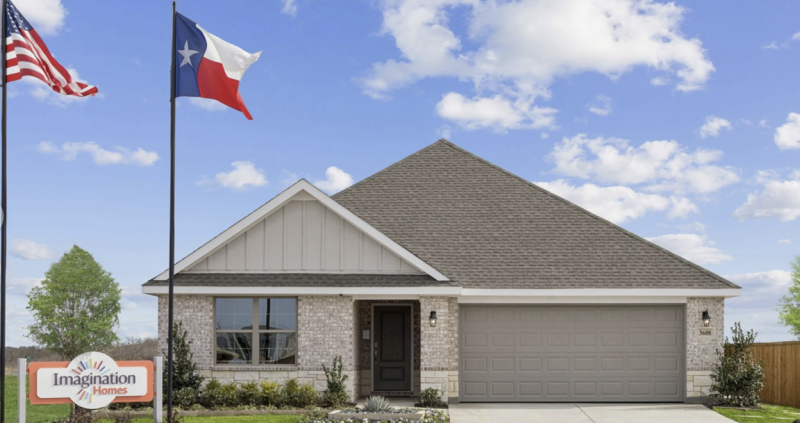
As affordability challenges continue to pressure housing demand, some builders are expanding into lower price points through dedicated attainable housing brands. While this approach is not new, today’s attainable lines are increasingly focused on delivering efficient footprints, streamlined selections, and value-oriented designs without sacrificing livability.
Launched in 2024 as a subsidiary of David Weekley Homes, Imagination Homes is a dedicated attainable-home brand designed to serve entry-level buyers seeking quality new homes at more accessible price points.
This analysis examines Imagination Homes’ footprint and early performance, followed by insights from an interview with Greg Grahmann, director of Imagination Homes, on designing for today’s attainable buyer.
Footprint and Market Positioning
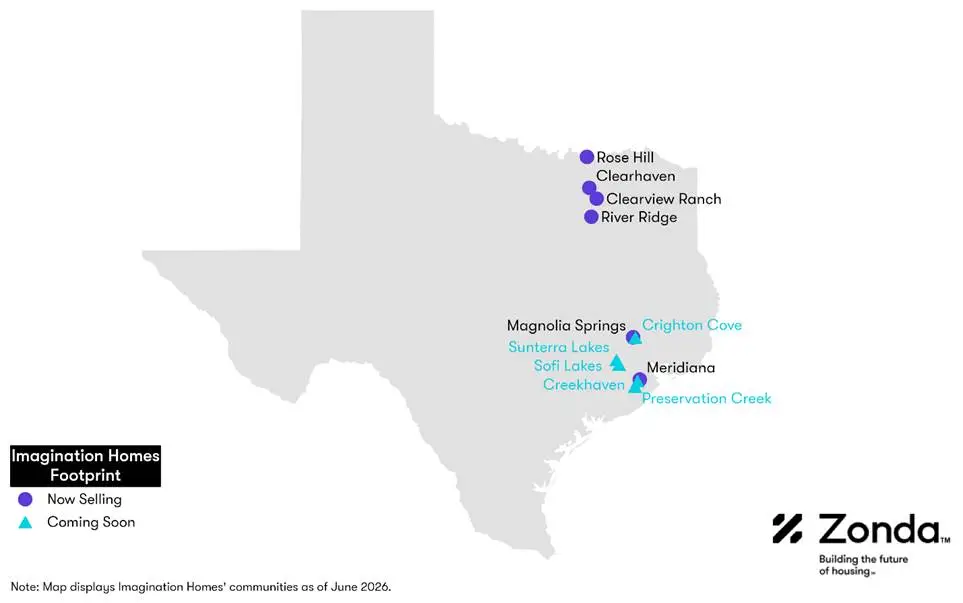
Imagination Homes is currently focused on the nation’s largest home building markets: Dallas, where it has four actively selling communities, and Houston, where it has two, with five additional communities coming soon. Central Texas is next on its expansion list, with an anticipated community opening in San Antonio later this year.
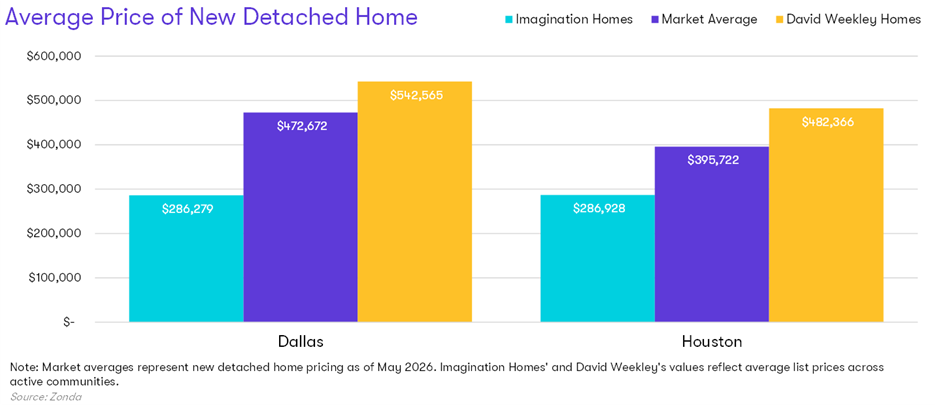
To better understand how these offerings compare within their respective markets, pricing provides context. As of May, David Weekley’s average price for a detached home in Houston was $482,336, compared with $395,722 for the metro and Imagination Homes’ list price of $286,928. In other words, Imagination Homes’ prices were 40.5% lower than David Weekley’s and 27.5% below the overall Houston market.
A similar trend appears in Dallas. As of May, David Weekley’s average new single-family homes in the Dallas metro area were priced at $542,565, compared with $472,672 for the market overall and $286,279 for Imagination Homes. That puts Imagination Homes’ pricing 47.2% below David Weekley and $186,393, or 39.4%, below the broader market.
Building an Attainable Housing Brand
Zonda Economics recently sat down with Grahmann to discuss the brand’s launch, what sets it apart, and what the team is learning from early performance.
Grahmann joined David Weekley Homes in 2013, and drawing on his extensive experience in the entry-level housing market from previous roles, was a natural choice to help lead the development of Imagination Homes and its approach to attainable new-home design.
What led to the launch of Imagination Homes?
At the end of 2023, David Weekley Homes was evaluating long-term growth opportunities and identified the entry-level market as a significant area to better serve. Across many of Weekley’s markets, roughly 42% of demand is in the sub-$400,000 price range, but at the time, Weekley only participated in about 8% to 9% of that segment.
Imagination Homes officially launched in early 2024 to better serve those buyers and make attainable homeownership more accessible in a significant portion of the market.
How do you approach home design differently for the attainable buyer?
Every decision starts with value. We focus on efficient floor plans, thoughtful use of space, and the features that matter to most buyers.
One thing we’ve learned along the way is that the customer base is broader than many people expect. We’re seeing interest from millennial families, empty nesters, and others looking to right-size without sacrificing quality. Our goal is to create homes that work for a variety of life stages while keeping homeownership within reach.
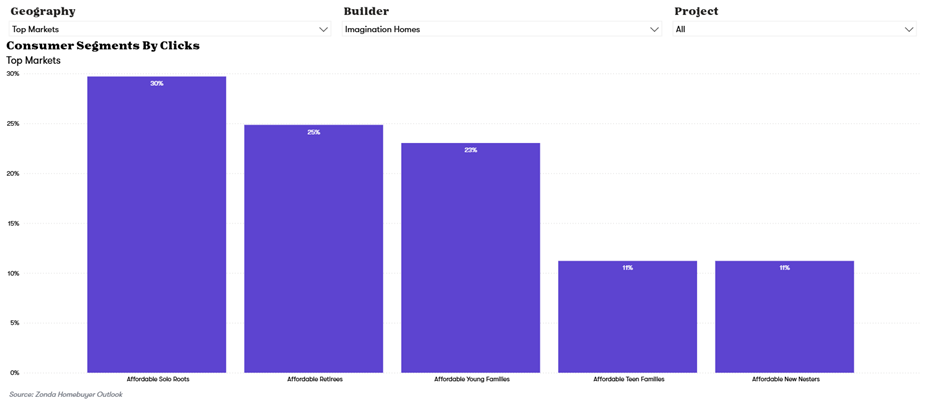
That broad appeal shows up in Zonda’s Homebuyer Outlook data. While “affordable solo roots” (single buyers under age 45) account for the largest share of interest in Imagination Homes communities at 30%, “affordable retirees” (buyers 61+) follow closely at 25%, reinforcing that attainable housing resonates across generations and household types.
Besides home design, what are some keys to keeping home prices down?
Well, for starters, being in Texas helps. But beyond that, there are three key factors. First, we are a 100% spec builder. By selling homes in the later stages of construction, we are able to plan more effectively, maintain tighter cost controls, and minimize customization. Second, we are highly focused on process. We are constantly asking ourselves how we can simplify workflows, eliminate inefficiencies, and operate more effectively. Third, we work closely with our trade partners to identify opportunities for improvement and find better ways to work together.
What have you learned from the brand’s early performance?
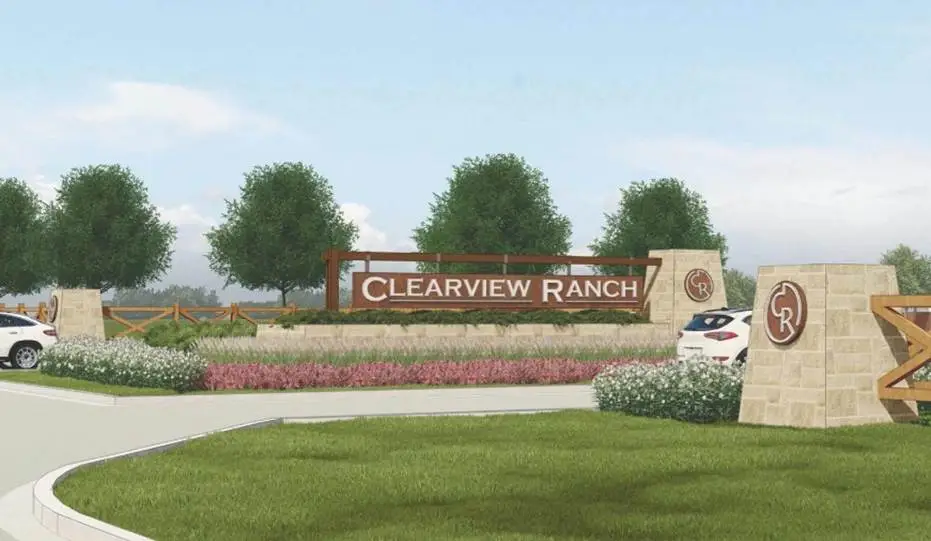
Buyers continue to respond when they see a home that fits both their needs and their budget. One of our early standout communities has been Clearview Ranch in Royse City.
The community has reinforced what we believed from the beginning: that there is significant demand for attainable housing when buyers can find the right combination of price, product, and location. What we’re seeing is that buyers aren’t simply looking for the lowest-priced home; they’re looking for value.
Many buyers are navigating the homebuying process for the first time. How does Imagination Homes support those customers?
Education is a big part of what we do because we want buyers to feel supported throughout the entire homebuying journey. It starts on our website, where blogs help introduce key concepts and prepare shoppers for the process. From there, we provide buyer guides in our sales offices, host mortgage workshops for prospective buyers, and look for every opportunity to make the experience feel less intimidating and more approachable.
Several of our sales consultants also have backgrounds in education, which is a real advantage. They bring patience, strong communication skills, and a natural ability to guide customers through each step of the process, whether answering financing questions, explaining the purchase timeline, or helping buyers navigate the path to closing day.