Longevity isn’t just about how long a home lasts. It’s about how well it lives over time. That lasting quality begins with design and extends to every finish of the home.
For Sekisui House U.S., meticulous attention to detail and self-governed high standards lead its ongoing vision to fuse Japanese and American home building technologies and practices into a new legacy.
In 2024, Japanese-based Sekisui House acquired M.D.C. Holdings for $4.9 billion. In early 2026, M.D.C. Holdings, officially rebranded to Sekisui House U.S. and Sekisui’s previously acquired brands Woodside Homes, Hubble Homes, Chesmar Homes, and Holt Homes were absorbed into one unified entity.
Ranking No. 8 on this year’s Builder 100 list, Sekisui U.S. ended 2025 with 11,712 closings and revenue of $6.44 billion and has been named BUILDER’s 2026 Builder of the Year.
The company’s home building subsidiaries, which operate under the name Richmond American Homes, stretch into Arizona, California, Colorado, Florida, Idaho, Maryland, Nevada, New Mexico, Oregon, Tennessee, Texas, Utah, Virginia, and Washington. The portfolio also includes Sekisui’s flagship brand SHAWOOD, known for its research-driven, precision-engineered homes.
“Sekisui House is embarking upon an incredible adventure to integrate the diverse companies that they have purchased,” says Tim Sullivan, Zonda chief advisory officer. “I think there is a massive opportunity for the new combined organization to present a combination of unique skills with the operational expertise of the Japanese model and the local expertise and connections from the home builders.”
Courtesy Sekisui House U.S.
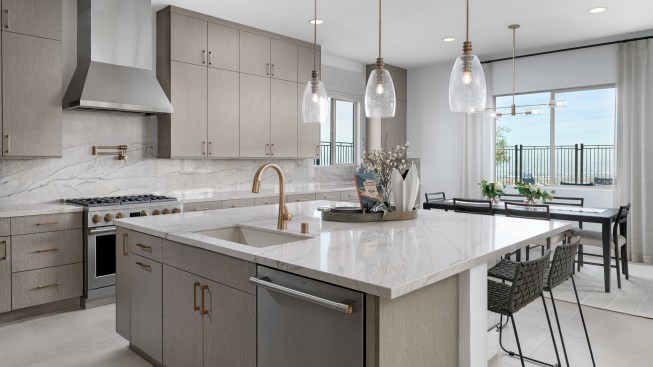
Richmond American Homes’ Sage II floor plan Primrose Park at Summerlin offers a gourmet kitchen with a center island, walk-in pantry, and adjacent dining area.
Man With a Mission
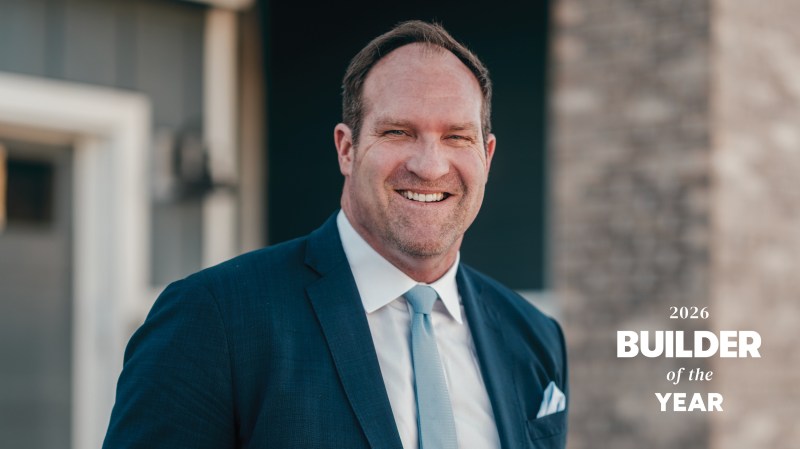
Leading the charge is David Viger, who joined M.D.C. in 2004 as a jobsite superintendent. Moving from the jobsite to the executive team, Viger served as division president, regional president, and chief operating officer before being appointed CEO in January 2025. His experience on the jobsite gave him deep appreciation for the work.
“The jobsite is the business. It’s easy to think the business happens in an office in Denver, but it doesn’t. Every decision I make goes back to that time. Not because of specific tasks, but because of empathy for the people who actually have to execute the work,” he says.
Viger believes the frontline team carries a tremendous amount of responsibility as they represent the company every day, while he helps drive the vision and strategy across the company.
“Sekisui House is very thoughtful and precise in how they approach growth. While the relationship is still relatively new, the long-term vision is clear. Everything we’re doing today supports the goal of building homes that feel safe, comfortable, and stress-free—places where people can truly breathe,” says Viger.
“That starts with what you don’t see: how the home is built, the discipline behind construction, and the self-governance standards adopted from Japan. The goal is to minimize warranty issues and long-term stress for homeowners. It’s both a short-term and long-term objective, and it’s something we live every day.”
The Elements for Success
As new standards evolve alongside home buyer’s needs, Viger says there is a large focus on lifestyle solutions, maximizing natural light, and having the ability to add or swap out elements that make a home truly livable for its respective buyers.
Viger explains, “We’re not just talking about do you want a bedroom or a study? We’re really talking about; do you need more storage? Are you a household that’s going to need a prep station near your kitchen? All these fundamental elements that you may see in a plan, but to be able to offer these things up separately and allow someone to choose from several plans in a community then pick that piece that’s going to fit what their needs are is a neat thing. It takes optionality to the next level.”
In addition to designing functional spaces into the home rather than requiring homeowners to retrofit later, Viger says what they’re using to build the house is just as important. The company is prioritizing durable materials that reduce future maintenance by leveraging Sekisui House’s extensive research and development facilities in Japan. Products are rigorously tested for weather and performance before being used.
That assurance of quality follows through to construction as well, Viger says. “Beyond standard inspections, we’ve implemented additional internal checks. These allow us to confidently assure homeowners that their home is built to a higher standard and designed to age well over time.”
All of these elements support a movement of buyers staying longer and older generations aging in place. “We often assume buyers will only stay in a home for five to seven years, but that’s not always true,” he says. “Many people find a home they don’t want to leave. We need to understand whether frequent moves happen because the home doesn’t age well with the buyer, or because the buyer genuinely wants change.
“If we can help people stay in their homes longer, that’s a win for both the homeowner and the builder.”
Courtesy Sekisui House U.S.
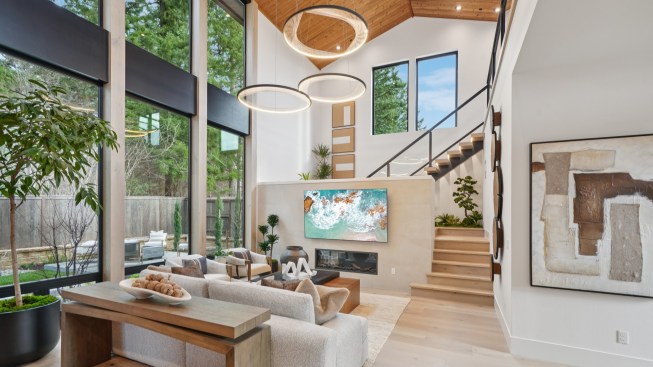
In Camas, Washington, SHAWOOD at The Glades offers a refined living experience that blends modern craftsmanship with Pacific Northwest serenity.
Lasting Design
While many details from SHAWOOD’S playbook are inspiring all of the Sekisui Houses U.S. brands, Viger says SHAWOOD will continue to be their top-tier offering in the states. The Japanese technology uses engineered post-and-beam construction with specialized metal joints and glulam components. Much of the structure is manufactured and inspected in controlled environments then shipped to the U.S. and assembled on-site.
“This system provides exceptional structural strength, which is important given Japan’s exposure to earthquakes and tsunamis, and allows for larger spans, open floor plans, and expansive glass walls. That technology is now influencing construction standards across all our brands,” Viger says.
With the fresh infusion of technology and experience, a new line of product is in the works for Sekisui House U.S., Viger says. The builder has already constructed prototypes and plans to launch its first neighborhood with the new product by the end of the year. Viger says it will target a different price range, while maintaining the same standards for construction quality, materials, and design.
But of course, taking Japan’s years of research and development then applying it locally has come with a lot of hard work and new ways of doing things. Thankfully, Viger knows how it feels to be boots on the ground.
“When we built our first prototypes, I thought the supers were going to be frustrated with me, and all the inspections, but they were so excited. When I walked through myself, it was the tightest, cleanest, most well-finished house I’ve ever walked at that stage. I said that it felt and looked so well-built thinking they’d say it took so much longer, but it didn’t. It took them a shorter amount of time, and the pride they had was evident.”
The prototype and impending neighborhood are just the start of Sekisui House U.S.’s future growth. And while Viger believes that efficiencies and processes can scale nationally, each market has unique needs whether its climate, material, or buyer preference. He says, “Home building is fundamentally a local business. That’s why listening to division leaders and respecting regional differences is critical.”
Those local folks, from the jobsite to the sales office, are the ones that Viger knows are keeping the lights on. He is excited for the new product, enhanced procedures, and what it can do for the company as a whole.
“It goes back to our people. This is our opportunity to give them something that makes the introduction and that relationship so much easier for our employees that are out there. They get to be prideful and open about the care of building a home,” Viger says. “When field teams are proud of what they’re building, it changes everything.”