ANY NUMBER OF CLICHÉD SUPERLATIVES COULD be used to describe the Washington development team of Jim Gibson and Sam Dunn: heroes, white knights, last-minute saviors, men among men. The terms would all be appropriate for a duo who recently wrapped up a whopper of a NIMBY saga.
Gibson is a Washington builder and Dunn a local architect/developer. Their involvement with the infill development of Rosedale, a six-acre property located in one of Washington's most prestigious neighborhoods, is nothing short of miraculous. What was once a story of a beloved park, some run-down dormitories, Washington's oldest home, and hundreds of very concerned neighbors is now a happy tale involving a three-acre land trust, six new houses—all with spectacular views of the Washington National Cathedral—and scores of contented neighbors. And keep in mind: These are the kind of neighbors who normally would make developers run for the hills.
“Just about everybody who lives near here is a lawyer,” says Gibson in a stage whisper as he stands in one of the new houses he built at Rosedale. “But we all went into this together. It was like going up in a plane with hand-packed parachutes that may or may not open.” In other words, a huge risk.
Add “leap of faith” to their list of heroic efforts.
NEIGHBORHOOD INVOLVEMENTRosedale's storied history goes way back. Its first structure, a stone cottage that would evolve into a clapboard farmhouse, dates to 1740 and is believed to be the oldest home in Washington. The property went through many hands until 1959, when the National Cathedral School (NCS) bought the grounds and built three dormitories there. It was during this time that neighbors began using the open space that surrounded the dorms as a park. When NCS stopped accepting boarding students, the school sold the property to Youth For Understanding (YFU), an international student-exchange program. Part of that deal was a covenant that required continued neighborhood access to the open space and, should YFU ever sell the property, gave the owners of some 18 neighboring properties a 90-day right of last refusal.
Fast-forward to 2003. YFU ran into money trouble and started talking about selling. Gibson and Dunn entered the picture and proposed buying the property for $12 million and putting up townhomes. More than 80 neighbors, who had organized themselves into a group called Friends of Rosedale, objected strongly to the Gibson/Dunn plan. The offer was rescinded.
In 2005, after YFU declared bankruptcy and was entertaining an offer of $12 million from an independent school, Gibson was called by Friends of Rosedale, which had been scrambling to match the school's offer. (Decrepit dormitories and the threat of townhomes were bad enough; the last thing these neighbors wanted was a 200-student school in their midst.) The group had raised $4.1 million to buy half of the site to keep in trust as a public park, but it was far short of the funds necessary to exceed the school's offer.
“The neighborhood group contacted us on the 63rd day and said, ‘We can't put this together. Can you help?' ” says Gibson. With just 27 days left, Gibson and Dunn swung into action. They were joined by Bob Holman, a Washington investor; Jonathan Abram, a lawyer (and neighbor) who would later buy the historic farmhouse; and Roger Pollack, another neighbor/lawyer who heads up the Rosedale Conservancy, a later iteration of the Friends of Rosedale. Eventually, seven neighbors and Dunn himself made commitments to buy lots on the land not occupied by the park.
A SPECIAL PLACE“There were literally hundreds of neighborhood meetings over the years,” says Abram. “Through that, Rosedale was transformed into an incredibly tight neighborhood, which was a great thing for Jim [Gibson]. He became part of a neighborhood effort to save an asset rather than what often happens with builders, which is an effort to stop the development of a neighborhood asset. Jim was great. He did what he said he was going to do.”
But there were still more hurdles, most notably the Historic Preservation Review Board, which had to accept the hastily crafted preservation and financing scheme, and an administrative law judge, who had to approve the proposed subdivision.
The subdivision eventually became what exists today: One renovated farmhouse, six new houses, and two lots that may or may not be built on in the future. The residential side of the site is on a slight ridge that runs along the street; behind those houses is another new house and the park. In the near distance, gracefully overlooking Rosedale, is the cathedral. All in all, it's one of the most glorious settings in Washington.
The design focus of the subdivision plan relied heavily on architecture that took its cues from the neighborhood. Cleveland Park, the area encompassing Rosedale, is where President Grover Cleveland built his summer residence in 1886. It's an eclectic mix of architectural styles—Victorian, Queen Anne, Craftsman, Shingle Style, and stuccos are all represented—and home to some of Washington's most powerful lawyers, journalists, and authors. Five of the new houses sit on a busy residential street, while the sixth new house and the renovated farmhouse occupy interior lots.
“We wanted to create a microcosm of Cleveland Park that allowed for both diversity and scale,” says Dale Overmyer, who served as the site architect for the project and designed the new home on the interior lot. “All the [project] architects tried to use elements that could be found in the immediate neighborhood.”
The 6,156-square-foot house designed by Washington architect Michael Marshall, for example, is a Renaissance Revival style that echoes many of the stucco homes in the neighborhood. Inside the three-bedroom, four-and-a-half-bath home are the kinds of touches that present challenges to a builder—intersecting-coin vaulted ceilings, extensive crown molding—but that are a requirement for the sophisticated homeowners who live here.
Tucked between the park and the homes that overlook the street is another jewel, the sixth, interior-lot house. An 8,947-square-foot, cottage-style shingled home with gambrel-shaped roofs, it fairly screams “summer compound.” Overmyer's design also has killer views of the cathedral, plus an expanse of lawn that extends from the house into the park, with only a few bushes separating the two parcels. The space feels like it's a million miles from urban life when, in fact, it's just four miles from the White House.
“Rosedale is very special,” says Dunn, who lives in a shingled house of his own design on the residential-street row. “Those who bought lots here really went into this on faith, because we didn't have a subdivision approved and we didn't have approval to tear down the dorms. Basically, we didn't have anything. But there was faith that it would be a really amazing place to live.
“In the end, everybody was happy. The neighborhood got to keep its three-acre park, the historic people got the offending dorms torn down, and the oldest house in Washington was preserved and restored.”
And six new houses went up in a neighborhood that rarely sees that kind of activity. For once, the developer and the builder got to play the role of good guys.
Kathleen Stanley is a freelance writer based in Washington.
Project: Rosedale, Washington; Site size: 3.1 acres (homes), 3.1 acres (park); Total units: 7 (6 new construction, 1 existing home); Price: home and lot prices withheld, $12.1 million for the land; Builder: Gibson Builders, Washington; Developers: Jim Gibson, Sam Dunn, and Bob Holman, Washington; Architects: Sam Dunn, Overmyer Architects, SMB Architects, Michael Marshall Architecture, and Richard Williams Architects, all in Washington; Site architect: Overmyer Architects; Civil engineer: CAS Engineering, Mount Airy, Md.
TO LEARN MORE ABOUT ROSEDALE AND THE COMPANIES MENTIONED IN THIS STORY, VISIT OUR WEB SITE AT WWW.BUILDERONLINE.COM, CLICK ON “THE MAGAZINE” TAB, AND THEN CLICK ON “BUILDER ARTICLE LINKS.”

BD060501254L1.jpgCLICK HERE FOR IMAGE GALLERY

FULL ACCESS: The architect wanted the house to have an open, “pavilion in the park” feel, so he punched up the elevation with windows (above). The pool necessitated a fence, but otherwise the site is open to the adjoining park.

A PLACE FOR EVERYTHING: The family's two sons share a large, spacious bedroom fitted with builtins along one wall (above). Cubby holes under the window seat help keep the boys organized.

HEART OF THE HOME: The house might have a nostalgic air about itself, but the kitchen (below) is what every modern family wants: wide open, functional, and great looking.

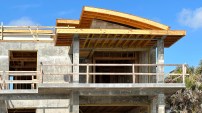
PROPER TOPPER: The rear elevation of one of the streetside houses demonstrates a self-imposed rule that all the architects for Rosedale followed: There would be no asphalt or fiberglass shingles used on the roofs.

JIGSAW PUZZLE: Clockwise from top left: Rosedale's site plan shows four new homes, a tennis court for residents, and an additional new home along Ordway Street. The long structure behind the tennis court is the renovated farmhouse; to the left of that (also behind the Ordway Street homes) is the new gambrel-roofed house. The extensive green area is the 3.1-acre park.

ECLECTIC OFFERING: Three of the five new streetside houses (above) show the variety of architectural styles used at Rosedale. The living room of one home, designed by SMB Architects, opens onto the dining room. The volume ceiling of another home, designed by Michael Marshall, is just one of a number of interesting ceiling treatments used throughout the house.