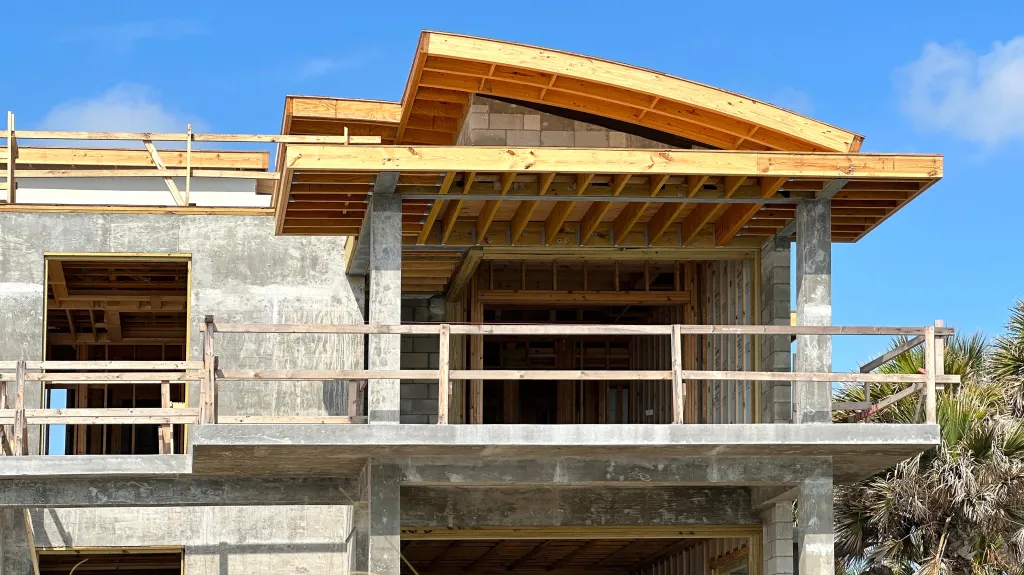
Hurricane season has kicked off once again. Although the 2026 season is predicted to be below-average, storms continue to intensify each year while outdated infrastructure and codes pose additional threats.
Developers and builders can learn from success stories, like Babcock Ranch and many Florida builders who have weathered the storms, as well as experts in resiliency and hazard mitigation experts like Don Neff, president of LJP Construction Services.
In the Q&A below, Neff shares actionable strategies for builders and developers in hurricane-prone areas to strengthen homes and communities as well as lessons learned and what’s next.
If a builder could implement only three changes tomorrow to improve hurricane resilience, what would you recommend?
Three risk management strategies builders can implement to improve hurricane resilience include 1) strengthening the continuous load path, 2) upgrading the building envelope, and 3) improving the roof system performance.
It is critical to ensure the foundation, walls, and roofing assembly are fully tied together using engineered connectors such as anchor bolts, hold-downs, clips, and hurricane straps. Many catastrophic failures begin when wind uplift breaks the connections between these structural elements. An intelligently designed load path dramatically improves a home’s ability to resist high winds and reduces the likelihood of progressive structural failure.
Impact rated windows and doors, reinforced garage doors, and a sealed roof deck are also necessary. In many hurricanes the initial failure occurs when wind-driven debris breaches an opening, allowing internal pressurization and water intrusion. Protecting the building envelope helps preserve the building’s structural integrity and significantly reduces interior damage.
Designing high wind-rated roofing assemblies with enhanced roof deck attachments, better edge detailing, and simplified roof geometry is also important. Small upgrades in closer fastening patterns, choice of underlayment, and roof geometry can yield major improvements in performance. Hip roofs perform better than gable roofs by reducing wind uplift forces.
What are the most critical design decisions early in the planning phase that determine a home’s ability to withstand hurricanes?
Designing structures to withstand the impact in hurricane zones is critical and starts at the beginning. Pre-construction planning is key. Elements to consider include:
- Site selection and elevations
- Soil conditions and foundation designs
- Structural engineering for a continuous load path
- Roofing connection systems
- Building envelopes and large opening protections
- Durable material selections
- HVAC and utility system design and placement
- Stormwater management and drainage systems
It is critical to understand flood risk, to study FEMA flood maps, storm surge zones, historical flooding data, and future climate risk projections in the site selection process. It is also important to understand local flood history and how storm water flows across and around the site. Building above base flood elevation requirements can reduce risks of flood impacts. Designing for positive drainage means lot grading needs to direct water away from the structures quickly and efficiently.
Design strategies may also include swales, retention systems, and drainage infrastructure to prevent ponding and water intrusion. Drainage planning needs to consider extreme rainfall events, not just average conditions. Wind exposure and topography also come into play. Open terrain, ridge lines, and coastal exposures can significantly increase wind pressures on structures. Soil stability, erosion risk and maintaining safe access during and after storms are also critical. The site selection process must consider the surrounding community and neighboring developments within the local watershed. It is also vital to plan for future conditions, not just current codes.
What lessons have emerged from post-storm rebuilds that are shaping today’s best practices?
Hindsight is always 2020. Lessons learned from Hurricanes Andrew, Katrina, Ian, and others have yielded great insights into architects and engineers’ plans and designs. Post-storm rebuilds have also yielded key lessons. The building envelope is a key element, and a continuous load path is critical. Water damage often exceeds wind damage. Roof failures are a major trigger for catastrophic loss. Codes dictate how structures are designed and built so they can survive in hazard zones, but inspections and enforcement are critical. Resilience requires system thinking. Power supplies and emergency back-up equipment must be protected. Material durability impacts recovery time. Community infrastructure influences building performance. And, owners value faster recovery, not just temporary survival.
How should builders approach site selection and lot grading in flood- or wind-prone areas?
Builders and developers play a leading role in shaping not just single homes, but the long-term resilience of entire communities. Hurricane resilience strategies impact infrastructure, site planning, drainage systems, and how neighborhoods function during and after a storm. The industry is recognizing that resilient communities recover faster, experience lower losses, and provide greater long-term value.
Planning for regional water management including integrated stormwater systems, bioswales, permeable surfaces, and preserved natural drainage corridors can significantly reduce flooding impacts. Coordinating with municipal drainage infrastructure to avoid overwhelming surrounding systems during extreme rainfall events is also essential. Street orientation, building spacing, elevation strategies, and open space planning can affect wind exposure, drainage performance, and emergency access.
Placement of electrical infrastructure, water systems, communications, lift stations, and backup power capabilities are also important. Elevating or hardening critical infrastructure can dramatically improve post- storm recovery. Designing redundancy into a community prevents a single point of failure from disabling an entire neighborhood.
Consistent construction specifications and standards also promote overall resilience and help safeguard communities. One weak structure can contribute to the wind born debris hazard and damage throughout a neighborhood. Educating homeowners and associations about maintenance and operational planning after construction is complete is another puzzle piece in creating resilient communities.
What are the biggest misconceptions builders still have about hurricane resilience?
One of the biggest challenges in designing and building for hurricane resilience is understanding that many failures are caused not by a single catastrophic error, but by a series of smaller misconceptions that compound during design and construction. Building codes set minimum standards. Building to code means the structure is fully hurricane proof. Not true. Building to code means just one step above breaking the law. Wind is the only major threat. Not true. Impact windows alone solve the problem. Not true. Roof coverings are the main roof concern. Not true. Older construction methods are good enough because they worked before. Not true. Flood zones define all flood risk. Not true. Construction quality is secondary to design. Not true. Resilience is too expensive. Not true. Ignorance is extremely expensive. Absolutely true.
How do you see hurricane-resilient construction evolving over the next five to 10 years?
Hurricane-resilient construction is likely to evolve rapidly as stronger storms, rising insurance costs, and changing building codes reshape the industry. The focus is moving beyond basic life safety toward long term durability, faster recovery, and whole-community resilience. New codes and construction practices will need to be implemented in the next round of new homes and buildings. Studies from agencies like FEMA have shown that the adoption of modern building codes averts over a billion dollars a year in structural damage in California and Florida alone. It makes sense for developers and builders to learn more about these updated building codes and construction products and principles.
More on resiliency and hurricane preparedness
-
BUILDER
8 Tips From Florida Home Builders’ Storm Playbook
5 MIN READ
-
BUILDER
5 Questions With Disaster Operations Director Jonathan Falk
5 MIN READ
-
Resilience
What Does ‘Disaster Resilience’ Really Mean?
6 MIN READ
-
BUILDER
Hunkering Down: 5 Tips for Hurricane Prep
4 MIN READ
-
Resilience
5 Fire‑Resilient Strategies Every Builder Needs
5 MIN READ
-
BUILDER
How Customized Building Codes Can Improve Climate Resiliency
8 MIN READ