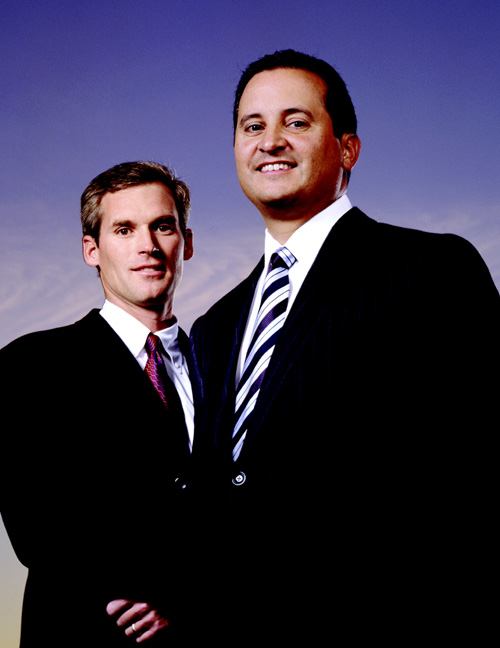
Shea Homes, Walnut, Calif.
5,878 Units
HOW DOES A COMPANY GO from helping to build the Hoover Dam and Golden Gate Bridge to constructing single-family homes in Denver, Los Angeles, and San Diego?
Employees of Shea Homes will tell you it’s by virtue of tradition. From its earliest days, J.F. Shea Co., Shea Homes’ parent company, has been focused on one thing, it says: “Do the right thing.”
“Without a doubt, that permeates our culture,” says Chetter Latcham, president of Shea Homes Colorado. “John Shea [the company’s founder] made sure that’s the way we build our homes.”
While doing the right thing has long been the undercurrent running through the company, the builder has given the ethos new life through a recent branding initiative, which employees say has better linked the seven home building divisions and facilitated new growth. Meanwhile, the company has maintained its attention to leadership principles and total quality management, enabling it to solidify its position as the nation’s largest privately owned home builder.
Started as a plumbing company in 1881, J.F. Shea Co. expanded its brand throughout the 20th century, widening its scope first to commercial construction, and 40 years ago, to home building. Today, Shea family members continue to work in the company’s ranks—Peter Shea Jr. is the COO—and employees believe the family’s ownership is a strong tool for selling homes. “We hear it from [the customers],” Latcham says. “They want to buy a house with a face and a name to attach to it.”
The home building operation started in Southern California but soon branched out to other divisions, including Washington state, Phoenix, and North Carolina. (In each division, the company offers a variety of products, most aimed at first- and second-time, move-up buyers, at an average price point of $390,000.)
With the addition of the new divisions, Shea grew rapidly, from $1.6 billion in revenues in 1999 to an estimated $2.8 billion in 2004. Entrepreneurship stimulated much of that growth, as divisions largely operated independently and were free to respond to their markets’ demands and opportunities.
But as the 1990s came to a close, top management began to notice inefficiencies. The lack of a clear brand confused customers, says Bill Pisetsky, vice president of sales and marketing for the company’s Southern California division, especially where sales areas overlap, such as in the company’s Southern California and San Diego divisions. “They’d go to the two divisions and get different images of the company,” he recalls.
Pisetsky and others advocated a company-wide branding initiative, which Shea rolled out in 2001. Through surveys of internal associates, Shea customers, and other new-home buyers, the company saw a common theme: People recognized Shea’s tradition of caring. From there, the builder developed a new motto, “Caring since 1881,” and made caring the central theme for dealing with customers and fellow employees.
Several years into the campaign, Piset-sky says it has provided a common ground for the company’s associates. Buddy Satter-field, president of the Arizona family division, agrees. “As we tackle issues,” he says, “we can fall back on that to drive us to do the right thing.”
Executives acknowledge that after divisions had operated independently for so many years, the company-wide branding initiative wasn’t without its challenges. Latcham touts the importance of uniformity in some areas, but he’s also pleased with the amount of continued freedom at the division level. “Where it matters, where we want to have creativity and the ability to respond to the local market, we still have that,” he says.
What’s more, developing similar marketing campaigns based on the brand has helped create business among divisions. The substantial runup in California home prices has driven some buyers to Phoenix—who already know about Shea. “We wouldn’t be as strong without the caring campaign,” Satterfield says.
Lining Up
The
success of the branding initiative spurred a larger campaign to
streamline operations. Last year, the company turned its focus to
processes that, with consistency across divisions, could become more
efficient. The company had outgrown the model where divisions operated
autonomously, says Bert Selva, the company’s president and CEO. “When
they’re all different, it impedes your ability to grow. By simplifying
our business, it’s enabled us to grow,” he explains.
The company assembled interdivisional teams across disciplines—one team each for sales and marketing, land acquisition, construction, and finance—to identify best practices and areas for improvement. “When you look at seven operating divisions, some do certain things better than others,” says Eric Snyder, vice president of sales and marketing for the company’s active adult division and leader of the sales and marketing team. “By collaborating, it will allow us to be more effective.” Snyder’s group already made one change consistent: Each division now motivates its sales staff with the same compensation structure.
The interdivisional teams also provide ready-made panels of company experts for employees in new divisions. “You have resources to rely on,” Snyder says. “You don’t have to reinvent the wheel.”
Birth And Adoption
Shea
has plenty of experience with new divisions, some of which have been
started or expanded through acquisition. The company’s purchase of
Southern California and Denver-based Mission Viejo Co., a developer of
master planned communities, catapulted its Colorado division’s growth.
When it bought Scottsdale, Ariz.–based UDC Homes in 1998, it gained
entry into the active adult market, now its fastest growing division.
(Shea now builds active adult communities in five of the company’s
divisions.)
Shea made UDC’s active adult developments its own with the help of substantial research efforts. It distributed 10,000 surveys with more than 200 questions to potential buyers to understand the market’s customers, their preferences, and their un-met needs.
When Shea started its research, most of the segment’s marketing targeted buyers in their mid-60s. The company leveraged its survey data to pursue a different segment of the market. “We wanted to bring in a hipper, younger, more affluent consumer niche,” Snyder says.
The company designed its “What I do” campaign to attract those buyers. The campaign emphasized the active lifestyles present in its Trilogy communities—not retirement—and appealed to potential buyers beyond traditional newspaper ads, through television and outdoor advertising. Mission accomplished: The average age of a Trilogy buyer has dropped six years, from 64 to 58.
Shea also has challenged active adult stereotypes through its actions. For the past two years, it has hosted the PGA Skins tournament at its Trilogy at LaQuinta community in Southern California. “When people think of active adult golf, they think flat,” Selva says. “They don’t think challenging, and they certainly don’t think PGA-level golf. This will increase brand awareness.”
Entering master planned communities sparked growth in the Colorado division, which quickly became a top-five builder in the market. Despite the recently soft Den-ver market, Shea has grown there each year since Selva started the division in 1996.
In some cases, land sales to public builders have buoyed that growth, while in others, the builder has succeeded by responding to market demands. Attached housing has become a larger component of its offerings—about 30 percent—driven by buyers’ needs for lower price points.
Though in 2005 permits are predicted to rise only slightly from 2004’s 16,000, Latcham believes an upturn in Denver is in sight. Consumer confidence is up, he says, and discretionary buyers—who have been scarce in the last few years—are returning to the market. And, he acknowledges, there is an expectation of success within Shea. “When you have a company that is 120 years old, you don’t want to let them down,” he says.
The company plans to add divisions in Sacramento, Calif., and Florida during 2005 and 2006, with an independent infill division likely further into the future. But Shea, comfortable outside Wall Street’s spotlight, won’t be fostering growth by joining the ranks of public builders. “There’s no interest in the company going public,” Selva says. “We love what we’re able to accomplish.”
Culture Club
While a commitment
to caring may further strengthen Shea’s reputation, attention to detail
and long-held management principles will help propel that future growth.
For more than a decade, the company has relied on leadership guru Stephen Covey’s 7 Habits of Highly Effective People book and workshops—which include such principles as “put first things first” and “begin with the end in mind”—as tools for making decisions and communicating among employees and trades. The methods mesh well with Shea’s approach, says Snyder. “Here it fits in,” he says. “Our organization and the 7 Habits are almost one and the same.”
The company’s leaders also manage through measurement. Satterfield turned to total quality management in 1992, when the Arizona division had grown rapidly. The division worked with consultants, read books, and attended seminars to learn the method—and it brought its trades along, side by side. “It doesn’t do us any good if we learn these things and keep them to ourselves,” Satterfield notes. “We want to work in cooperation [with the trades] to do it faster, better, and cheaper.”
Jim Younger, president of Younger Brothers Construction, has subcontracted with Shea Homes Arizona to frame its houses since the division started in 1991. He credits Shea with making him a better businessman.
“We have a language to communicate and operate at Shea unlike any other place I work,” says Younger, whose company spends about 35 percent of its time on Shea projects. The training he’s received through Shea, he says, has transformed his company, leading him to make decisions based on facts and measurements, rather than on gut feeling, as he had in the past.
Beyond internal improvements, Younger says Shea has facilitated dramatically better relationships among trades. “It’s different when you think of somebody as a friend,” Younger says. “You care more about what the work is like when you hand it off to the next guy.”
Those relationships spurred cooperation among the trades to revamp the building process. From the start of a house through the complete frame used to take more than 90 steps. Working together, the trades were able to cut the steps in half and substantially reduce cycle time. “We wouldn’t have been able to do that without the maturity the trades had experienced in working together with Shea for years,” Younger says.
Shea Homes
President and CEO: Bert Selva
Focus:
Builds first- and second-time, move-up homes in seven divisions across
the United States; average price point is about $390,000.
Employees: 1,400
Founded: 1964
Web site: www.sheahomes.com
Notable:
Parent company is J.F. Shea Co., started by John Shea in 1881; one of
the first builders to participate in “Extreme Makeover: Home Edition”
television show; partnered with Arizona Gov. Janet Napolitano to start
the Read to Your Child campaign.
Normalizing RelationsShea’s Southern California division has witnessed the market slowdown first hand—and welcomes it.
By now, the recent story of housing in Southern California has been well told: massive price escalation, hundreds-deep waiting lists, campouts for community openings.
But toward the end of this past summer, Shea Homes’ Southern California division—and its competitors—noticed considerable cooling. It seemed that potential buyers had finally hit their price ceilings, and they held off on new purchases until the extreme price acceleration slowed.
Shea’s executives insist the slowdown isn’t a bad thing. “This is a healthy thing that’s going on,” says Bill Pisetsky, the division’s vice president of sales and marketing. “It’s a return to normalcy.” Based on continued sales—in some communities, three or four a week rather than 20 a day—he reports that demand remains strong, and he noticed an uptick in consumer confidence by October 2004.
“Traffic numbers are down but not by a lot,” he says. “The customers are out there, they’re just waiting.” Pisetsky rejects the theory that the softening reflects a bursting bubble: The division anticipates between 4 percent and 6 percent appreciation this year. It’s a more normal—not a downward—trend, he says.
America’s Best JudgesThe 2005 America’s Best Builder entries were evaluated by a panel of builders, home building consultants, and past winners during the NAHB’s fall meeting in Columbus, Ohio. They included:
If you are interested in entering the America’s Best Builder competition, please e-mail Loretta Williams at [email protected] or call 202-736-3455. Entry forms generally are available in May. Winning builders must demonstrate excellence in finance and operations, marketing, construction, customer satisfaction, and community service.
Learn more about markets featured in this article: Denver, CO, Phoenix, AZ, Los Angeles, CA.