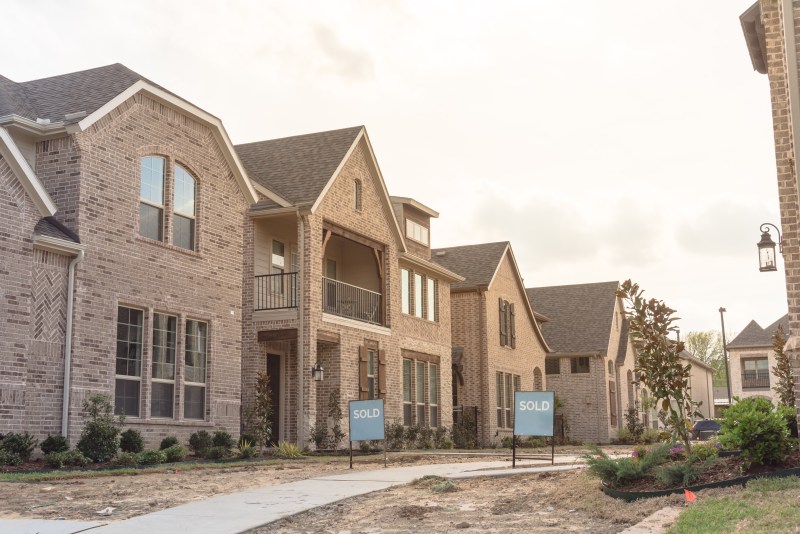
Affordability constraints and weaker consumer confidence remained headwinds for home builders during the first quarter of 2026. These macro headwinds were exacerbated by concerns related to inflation, interest rates, and energy prices in part due to the ripple effects of the Iran war.
Despite these headwinds, both new and persistent, public builders reported that demand is beginning to stabilize as orders, absorption, and cancellation trends generally moved in positive directions ahead of the spring selling season. A consistent theme across public earnings calls were strategic approaches that valued sales pace over price and aligning starts pace with current demand patterns.
The first quarter earnings period also suggested there is no single prevailing strategy for operating in the current challenging housing market. PulteGroup, Taylor Morrison, and KB Home highlighted a strategic shift to a higher mix of to-be-built homes, selling through spec inventory while increasing backlogs. Meritage Homes and LGI Homes, 100% spec builders, position their product to directly compete with the resale and rental markets, offering similar move-in timelines for prospective buyers.
What They’re Saying: On Demand, Strategy, and Outlook for 2026
“We reduced our unsold completed homes by 35% from a year ago, reflecting our focus on balancing sales pace, pricing, and incentives to drive incremental sales while maximizing returns. Our sales incentives increased during the second quarter, and we expect incentives to remain elevated for the rest of the year with a level dependent on demand, mortgage interest rates, and other market conditions.” — Paul Romanowski, president and CEO, D.R. Horton
“We use margin as a circuit breaker and we continue to refine and improve our asset-light, land light manufacturing platform. We have not pulled back and waited for the market to improve. We have maintained volume and focused on building improved business programs to bring cost down so that we can remain profitable and still provide needed housing supply… Even with the current market challenges, we are feeling optimistic about our position in strategic markets and the progress made in reshaping our business for current conditions.” — Stuart Miller, executive chairman and co-CEO, Lennar Corp.
“As pleased as I am with the growth in orders, I am even more encouraged with the fact that many of these homes are built-to-order homes. In the first quarter, built-to-order homes accounted for 43% of net new orders, up from 40% in Q1 of last year. We have outlined our plans to shift our business back toward our historic mix of 60% built-to-order and 40% spec. This quarter was just the first step in a process that will take several quarters to complete… I would highlight the progress we continue to make on lowering our spec inventory, particularly our finished inventory. The [lower] level of spec inventory allows us to effectively serve those home buyers needing quick move-in homes, while supporting our strategic shift back to selling more built-to-order homes.” — Ryan Marshall, president and CEO, PulteGroup
“We continue to lean into our strategy in this competitive market. Through our 60-day closing guarantee, move-in ready homes, and strong Realtor engagement, we offer certainty and consistency to our customers. Despite the current headwinds, we believe that long-term demand remains supported by favorable demographics and undersupply of affordable homes in the U.S. and when demand normalizes, our strategy and increased store count will provide a competitive advantage and allow us to increase market share.” — Phillippe Lord, executive vice president and CEO, Meritage Homes
“As we prioritize the balance between price and pace, we achieved our first quarter sales with a significant increase in the share of to-be-built orders to 38% from 28% in the fourth quarter. As a result, we began to rebuild our backlog, which increased 23% from year-end to 3,465 homes. This reacceleration in demand for to-be-built homes suggests that historic bio preferences are reemerging as excess spec inventory is cleared across the industry, and our new community openings support compelling value propositions for our shoppers to personalize their new home… We are further supporting this shift with mortgage incentive programs that provide confidence to our built-to-order customers and enhance their buying power, generally at less cost than incentives required for spec sales.” — Sheryl Palmer, chairman and CEO, Taylor Morrison
“We have returned to a mix of sales that are predominantly built-to-order, which we believe will enable us to achieve 70% built-to-order deliveries in the second half of this year. We have a renewed focus on this core strategy as a central component in strengthening our company going forward. With the lag between sale and delivery for built-to-order homes, we expect to continue growing our backlog. A larger backlog will provide many benefits, including greater predictability in our deliveries and higher gross margins than we achieved on inventory sales, typically in the range of 300 to 500 basis points.” — Jeffrey Mezger, executive chairman, KB Home
“Our strategy of balancing price and pace worked well in the first quarter. Our overall incentive remained flat compared to the fourth quarter at 8% of sales price. This is the third consecutive quarter that incentives remained flat on a percentage basis. We are benefiting from a healthy mix of built-to-order and spec homes in our inventory, balancing the higher margin in our built-to-order business with the lower margin but faster turns in our spec business. We are very comfortable with the level of specs in our inventory and their stage of construction. We increased our spec production in our first quarter in order to have the right amount available for delivery in the summer when many buyers are looking to move into their new homes ahead of the start of the school year.” — Douglas Yearley, chairman and CEO, Toll Brothers
“While demand at the start of the quarter was roughly in line with year ago levels, geopolitical issues and increased economic uncertainties, coupled with higher interest rates and gas prices, further eroded consumer sentiment, which weighed on our order activity most meaningfully in March, typically the highest sales month of the quarter… Based on our current owned and controlled lot count, we have the ability to grow deliveries by 10% or more annually once market conditions improve. So long as slower market conditions persist, we will continue to balance pace and price, control our cost and inventory levels, and return capital to our shareholders.” — Dale Francescon, executive chairman, Century Communities
“Clearly during the quarter, new home demand and home building conditions continued to be challenged and impacted by affordability, consumer confidence, the conflict in the Middle East, and general uncertainty and volatility in the broader economy. In managing all of this, mortgage rate buydowns continue to be an important part of our sales strategy. We continue to successfully balance margins and sales pace at the community level and offer mortgage interest rate buydowns on both spec sales and to-be-built sales as a leading incentive to promote our sales activity.” — Robert Schottenstein, CEO and president, M/I Homes
“While closings and profitability were impacted in the short term, our strong sales performance reflects continued demand for our product and the effectiveness of our approach in maintaining absorption in a competitive environment. As we have consistently stated, our focus remains on managing the business with discipline while positioning for long-term growth.” — Patrick Zalupski, CEO, Dream Finders Homes
“Our current approach emphasizes maintaining steady sales and clearing older lower-margin lots and older quick move-ins. Looking ahead, as we open new communities where these incentive costs are already factored in during land acquisition, we anticipate strong gross margins provided the market doesn’t require further increases in incentives. But based on our recent sales, we don’t anticipate that to happen.” — Ara Hovnanian, chairman, president, and CEO, Hovnanian Enterprises
“LGI Homes’ 100% spec, entry-level focused business model centered on providing an affordable alternative to renting is purpose-built for this backdrop. Underpinning that model is a strong, low-cost land pipeline which is nearly 100% on balance sheet, providing investors full transparency into our capital structure, driving margin durability by capturing the developer’s economic value, and minimizing reliance on external partners whose priorities may not align with the long-term value creation we are focused on.” Eric Lipar, chairman and CEO, LGI Homes
“Higher mortgage rates and surging energy costs are readily evident to potential home buyers and both undoubtedly contributed to the recent drop in consumer sentiment. While these challenges may prove temporary, they have left us more cautious and reduced the likelihood of achieving sufficient pace and margin expansion to support full-year EBITDA growth… In this environment, we could probably achieve a higher sales pace by increasing spec starts and offering more incentives. We think that would do little more than spike revenue for a few quarters and burn through our valuable option position.” — Allan Merrill, chairman and CEO, Beazer Homes
“We achieved our results against the backdrop of ongoing and persistent affordability challenges faced by many consumers in the housing market, as well as increasing uncertainty and volatility for consumers caused by domestic and global events and trends ranging from increasing gas prices to job concerns in this new AI era… We believe the foundation to our industry-leading gross margin starts with our commitment to owning and developing land. One of the primary differentiators from many of our peers is that we do not engage in off-balance sheet, high interest cost land banking arrangements that can distort a builder’s economic leverage and risk.” — Jim Brickman, CEO, Green Brick Partners
“Financing incentives continue to be a key selling tool as buyers remain motivated to own a home, provided they can secure a monthly mortgage payment that fits their budget. We are encouraged by the price elasticity we experienced during the quarter as incremental adjustments in pricing led to an uptick in demand. We view this as an indicator that underlying demand remains intact across our markets despite broader macroeconomic uncertainty. From an operational standpoint, we remain focused on a pace of price philosophy, which means maintaining a consistent cadence of starts, driving efficient inventory turns, and driving toward a more pre-sale oriented backlog.” — Greg Bennett, vice chairman and CEO, Smith Douglas Homes