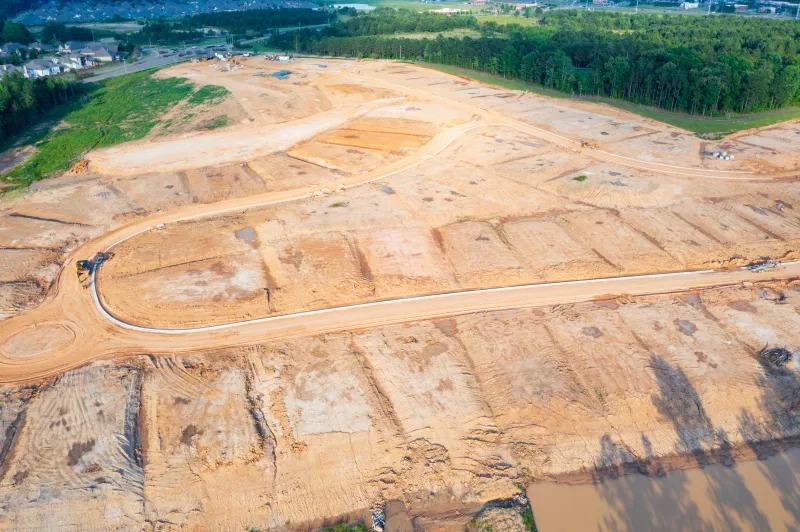
Lot supply loosened for the eighth consecutive period in the second quarter. As a result, the lot market is now ‘appropriately supplied’ for the first since 2016.
“The shift reflects both improving lot availability and moderation in housing starts as builders respond to a softer demand environment,” says Ali Wolf, chief economist for Zonda and NewHomeSource. “While the national market has returned to balance, conditions still vary significantly from one market to another.”
Zonda’s New Home Lot Supply Index (LSI), a metric based on the number of single-family vacant developed lots and the rate at which those lots are absorbed via housing starts, increased by 24.6% on a year-over-year basis to a reading of 85.2 in the second quarter. On a quarter-over-quarter basis, national supply increased by 0.7% from the first quarter.
At quarter’s end, the LSI was sitting on the boundary between “slightly undersupplied” and “appropriately supplied.” Depending on the cadence of housing starts in the third quarter, the index could return to undersupplied territory.
On a metro level, lot supply ranged from three markets categorized as “significantly oversupplied” to 13 markets categorized as “significantly undersupplied.” Boise, New York, and Minneapolis were the only markets where supply conditions tightened on a year-over-year basis.
Denver, Austin, and Atlanta were the top three markets for loosest lot supply in the second quarter and “significantly oversupplied.” San Francisco joined Dallas in the “slightly oversupplied” category while nine other markets ended the quarter “appropriately supplied.”
San Diego, Baltimore, and Devner saw land supply loosen the most on a year-over-year basis while Boise’s lot supply tightened the most compared to the same time last year. Miami and San Diego remain the tightest lot markets in the country.
Zonda also records future lots through the stages of development ranging from raw land through streets in, the last stage before a lot becomes a vacant developed lot. The final stages of development are classified as total upcoming lots, which indicates delivery over the next 12 to 18 months.
Total upcoming lots in the second quarter declined by 4.5% on a year-over-year basis. These type of lots are down 13.6% from the 2022 peak but were up 21.4% compared to the same quarter in 2019. The largest share of total upcoming lots, approximately 372,000, were in the excavation stage in the second quarter. These lots have an expected delivery between the first and second quarter of 2027.
“Builders continue to strike a careful balance between preparing for future demand and avoiding excess supply,” Wolf said. “Upcoming lot activity declined in the second quarter as developers remained disciplined about bringing new lots through the pipeline. While activity slowed, the development pipeline remained active, highlighting a mindset of cautious optimism.”