
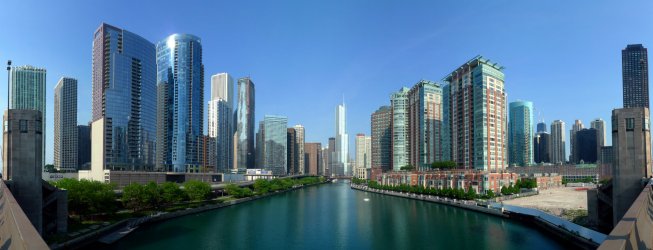
21: Chicago-Naperville-Elgin, Illinois-Indiana-Wisconsin
Total new-home closings: 4,980
Population: 9,554,598
The good: Increases in starts and closings in the first quarter show a strong start to 2015.
The bad: Builders report slowdowns in buyer activity, as entry-level buyers remain out of the new-home market.
The bottom line: Even with slowdowns reported and first-time buyers out of the picture, a metro area with nearly 10 million in population is going to present builders with big opportunities.
Just as the Chicago area showed signs of leveling out in fall 2014, the Windy City blew in a 15.9% year-over-year increase in new units started in the 12-month period ending the first quarter of 2015, when the annual rate of closings also rose year over year by 6.7%. But Metrostudy reports that boots on the ground give a different perspective, relaying slowdowns in buyer activity and suggesting the possibility of a dip in sales ahead. Decreases among foreclosure related activities aren’t likely to help, as resale properties have picked up the leftovers, leaving share among new-home sales flat at 3%. New-home prices also have leveled out year over year from January 2013 to January 2014, but still miss this market’s biggest potential: its first-time buyers. Any builder who finds their way into that market will strike gold.
See complete Chicago market data >
22: Philadelphia-Camden-Wilmington, Pennsylvania-New Jersey-Delaware-Maryland
Total new-home closings: 4,913
Population: 6,051,170
The good: With the bulk of new-home sales funneling into the newest subdivisions, this market proves it’s willing to buy when presented with the right options in the right areas.
The bad: The overall number of subdivisions, as well as starts and closings, are down in the first part of 2015.
The bottom line: With unemployment below the national average as of March 2015 and activity happening in new subdivisions, chances are the year will come on strong by the end.
With a housing market that remains in a lull amid numerous positive economic indicators and the greatest success among new-home sales arriving with the latest subdivisions, this area proves it’s looking for something new. And with the first quarter of 2015 posting 501 active subdivisions—80 fewer than the previous quarter—those new options may not be on the immediate horizon. Starts in the first quarter of 2015 were down by 15.8% from the previous quarter, falling 21.7% year over year. Meanwhile, closings posted a 33% quarter-to-quarter drop, equating to a 21.6% decrease year over year. Ultimately, the area manages to hold steady, but it has yet to take off. Pending additional new developments, its best days may lie ahead.
See complete Philadelphia market data >
23: Indianapolis-Carmel-Anderson, Indiana
Total new-home closings: 4,207
Population: 1,971,274
The good: Hendricks and Marion counties, where activity increased in the first part of 2015.
The bad: A relatively flat market that’s overshadowed by stagnant job growth.
The bottom line: Even with the market relatively flat in early 2015 and receding in the usual hot spot (Hendricks County), a market this large is going to produce plenty of opportunity, especially when builders focus on areas with increased activity.
Year-to-date permit numbers were up 4% year over year in March 2015 and unemployment remained low at around 5.5%, but that’s about as exciting as the news got for the new-home market in early 2015 around Indianapolis. With below-average job growth casting a slight shadow on 2015’s peak season and annual starts over the 12-month period ending the first quarter of 2015 showing a 0.6% year-over-year decrease, Metrostudy forecasts call for a leveling among closings. And with the number of finished and vacant homes decreasing in the first quarter of 2015, builders show they’re thinking in the same direction. Nonetheless, by reflecting on 2014 and moving into the right areas, builders may still capitalize on pockets of increased activity. Amid the first quarter of 2015, activity squeezed out of the usual hot spot in Hamilton County—where an 18.3% year-over-year decrease in starts registered—and into Hendricks and Marion counties, which posted 58.4% and 20.2% year-over-year increases, respectively.
See complete Indianapolis market data >
24: Minneapolis-St. Paul-Bloomington, Minnesota-Wisconsin
Total new-home closings: 4,076
Population: 3,495,176
The good: Market predictions call for a very modest (1%) increase in new-home closings.
The bad: The market has gone relatively flat in early 2015, despite economic growth.
The bottom line: If builders are going to get the most out of the Twin Cities, they’ll need to find a way to reach buyers in the $250,000 range.
Market numbers among new single-family homes in Minneapolis are at their lowest in three years as of the first quarter of 2015—despite economic growth across the Twin Cities—because of an unfortunate collision between price increases and decreased demand. The average sale price among new homes increased from $202,791 to $251,599 over a two-year period ending January 2015, while the majority of closings activity centered at $150,000 to $200,000. A decline among REOs and foreclosure-related activities has improved market conditions over the past two years, but the benefits evade home builders, as those shares of the market have increased sales among existing properties only, increasing them by nearly 20%. (Not a surprising fact, considering that the gap between new and existing home prices in some areas ranges from $125,000 to $225,000.) A decline of 9% in the first quarter of 2015 among new-home starts shows that builders may be conceding somewhat to the competition; but with a 13% increase in year-to-date permits year over year in March 2015, they’re showing no signs of exiting.
See complete Minneapolis market data >
25: Oklahoma City, Oklahoma
Total new-home closings: 3,840
Population: 1,336,767
The good: Unemployment rates are great and getting better, decreasing from 4.2% to 3.3% year over year in March 2015.
The bad: A bad month in December 2014 kept the start of 2015 flat.
The bottom line: There may be nothing remarkable to report about this market right now, but with steady performance, the question may be: Why not?
Even with a 16.4% year-over-year decrease in new-home closings in December 2014, Oklahoma City remains a steady choice among builders, which is evidenced by a slight increase in total new-homes sold over the 12-month period ending in January 2015—up from 3,518 to 3,526—and a modest 2% year-over-year increase in year-to-date permits in March. New homes managed to grab an additional 0.5% of market share among overall closings in January 2015, with single-family detached homes squarely dominating at a 99% share. Perhaps the only remarkable change to be found in the area’s market appears in new-home prices, which increased by 11.2% year over year in January 2015 to $267,825. That said, as the market comes off 3,840 annual closings, steadiness may be cause for excitement.
See complete Oklahoma City, market data >
26: Portland-Vancouver-Hillsboro, Oregon-Washington
Total new-home closings: 3,653
Population: 2,348,247
The good: Year-to-date permits in March 2015 rose year over year by 23%.
The bad: Aside from permits, every other number points to a leveling out of the market.
The bottom line: The total of new homes sold over a 12-month period may have dropped to 2,202 in February 2015, but those homes fetched more per square foot.
If it wasn’t for year-to-date single-family permits increasing by 23% year over year in March, you might think that the new-homes market in Portland was in serious trouble in early 2015. A 74.6% year-over-year drop in new-home closings occurred in January, followed by a 65.3% decrease in total new homes sold over a 12-month period ending in February. At the same time, the share of new homes found among overall closings receded by 6.2% year over year in February. About the only thing that didn’t retract about Portland’s new-home market in early 2015 includes prices, which posted their second year-over-year increase in February, from $262,525 in 2013 to $300,686 in 2015, even as the average unit size of newly sold homes fell by 6.1%. It appears that builders may be leaning on per-square-foot price increases to keep profits up in 2015.
See complete Portland market data >
27: Boston-Cambridge-Newton, Massachusetts-New Hampshire
Total new-home closings: 3,612
Population: 4,732,161
The good: Unemployment was below 5% and the average sales price among new homes climbed in January 2015, increasing by $100,000 over the course of two consecutive year-over-year increases.
The bad: More or less every indicator at the start of 2015 hints at a worsening market.
The bottom line: With the average new-home sales price drastically up, yet average square footages down, builders appear to be getting by on fewer and smaller—but more expensive—homes.
All the right things were down and the wrong things were up in Boston for the first part of 2015, hinting at a market that may be worsening. The exception includes unemployment, which decreased year over year in March to an excellent 4.4% (compared with the national rate of 5.5%). Aside from that, closings sank by 72.7% year over year in January, following a 47.4% drop in December, while the total number of new homes sold over a 12-month period closed out 40 fewer than registered in the period ending in December. The total market share held by new-home sales also decreased to an abysmal 0.5%, from an already low 1.8% a year earlier, while REO and foreclosures took their share of the existing-homes market, growing by 5.3% year over year in January to a 17.4% share. Meanwhile, the average size of new homes shrank by 6.1% year over year in January to 2,002 square feet. About the only thing climbing at the start of 2015 was the average sales price for new homes, which posted two consecutive year-over-year increases in January to the tune of $100,000.
See complete Boston market data >
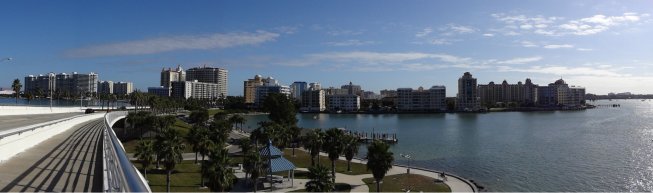
28: North Port-Sarasota-Bradenton, Florida
Total new-home closings: 3,591
Population: 748,708
The good: A population burst among those age 65 and older is fueling demand for new homes.
The bad: With this shift toward a niche market, the under $250,000 market subsided in early 2015.
The bottom line: With continued growth predicted for the next five years and prices trending upward, this market is one worth moving in on.
As the only metro statistical area with fewer than 1 million in population, yet posting more than 3,000 in new-home closings, this area’s numbers are impressive. With new-home starts up 1.6% quarter to quarter and annual starts rising by 2.5% year over year in the first quarter of 2014, increased demand amid those age 65 and older proved to have an impact on market activity, which is expected to continue over the next five years. And with those new buyers comes a shift in pricing focus. Annual new-home starts in prices above $250,000 were up 15.3% for the 12 months ending in March 2015, while those offered under $250,000 dropped by the same percentage. As of March 2015, the supply among finished vacant units for all of Sarasota-Bradenton reached 1.1 months, below Metrostudy’s estimated equilibrium range of 1.5 to 2.0 months, indicating this market is moving with momentum and therefore worth getting in on.
See complete North Port market data >
29: San Francisco-Oakland-Hayward, California
Total new-home closings: 3,483
Population: 4,594,060
The good: The start of 2015 signaled improvements to a market that previously raised red flags for weak demand.
The bad: New-home prices were forced upward in early 2015 by increased construction and land costs.
The bottom line: Even with higher new-home prices, the market shows signs of increased demand.
From third quarter 2012 through the first quarter of 2014, quarterly starts significantly outpaced closings, placing a fog of inventory over San Francisco and raising a red flag for too little demand. But beneath that fog, builders showed a shift in their pricing schemes in the first quarter of 2014, with prices among new-home starts shifting significantly to above $700,000, partly to offset increases in construction and land costs. Come February 2015, those numbers increased yet again, climbing year over year to $809,376 per unit, 5.9% higher than a year earlier. Even with those adjustments, 2014 ended strong in new-home closings, then followed with a 27.8% year-over-year hike in January 2015. In March, unemployment decreased year over year from 5.5% to 4.3%, and year-to-date single-family permits rose year over year by 24%—both indicating that this city can stand higher prices.
See complete San Francisco market data >

30: Baltimore-Columbia-Towson, Maryland
Total new-home closings: 3,481
Population: 2,785,874
The good: The new-home market proved flat, but steady in early 2015.
The bad: A decrease in the percentage of market share among new single-family homes registered.
The bottom line: There may not be anything to write home about in terms of market changes, but the area’s performance is steady for builders.
The start of 2015 signaled a relatively flat year for the new-home market in Baltimore, with a total of 3,372 units sold amid the 12-month period ending in January—equal to the period ending a month earlier in December. In the year ending March 2015, MLS sales figures for Baltimore registered an 8% increase, but the share of closings among single-family units fell year over year in January, from 59.8% to 46.4%. Unemployment remains unremarkable, dropping from 6.3% to 5.8% year over year in March 2015, still above the national average (of 5.5%). Coming off a solid year, steady will do for most builders, but gains in this market could occur if it manages to shed its foreclosures and REOs, which declined at the start of 2015, but continue to drag down the market.
See complete Baltimore market data >
Don’t forget to also check out BUILDER’S 2015 Local Leaders