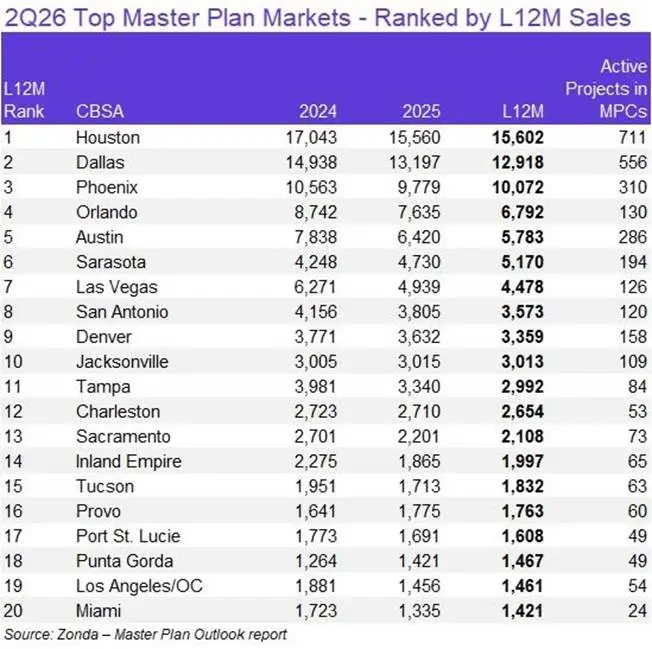
Zonda’s latest sales rankings underscore the outsized role master-planned communities (MPCs) continue to play in today’s new-home market. Houston and Dallas remained the two dominant MPC markets through the second quarter of 2026, generating a combined sales volume that matched more than half of the other markets in the national top 20. When Austin, San Antonio, and additional Texas metros are included, the Lone Star State accounted for more than one-third of all MPC sales recorded over the past 12 months.
The Sun Belt Is the Industry’s Growth Engine
The concentration of activity highlights a broader industry trend: MPC success remains closely tied to population growth, land availability, and development-friendly conditions. Nearly every market in the top 20 was located within the Sun Belt, reinforcing the region’s continued appeal to both builders and homebuyers. Denver and Provo stood out as the only non-Sun Belt markets to earn a place among the nation’s top-performing MPC markets.
Outside of Texas, Phoenix ranked third nationally with more than 10,000 MPC sales during the past year. After slipping below that threshold in 2025, Phoenix once again joined the exclusive group of markets generating five-figure annual sales volumes within master-planned communities.
Florida Continues to Dominate the Top Community Rankings
Florida also showcased remarkable breadth. Seven Florida metros landed among the nation’s top 20 MPC markets, led by Orlando in fourth place and Sarasota in sixth. Collectively, Florida accounted for roughly one-quarter of all master-planned community sales over the past 12 months, reinforcing its position as one of the country’s strongest growth corridors.
MPC Community Count Depth Has Emerged as a Key Competitive Advantage
Another common characteristic among the highest-performing markets was scale. Every market in the top 10 featured at least 100 actively selling MPC projects. That depth provides builders with greater product diversity and gives consumers a wider range of home styles, price points, and community offerings to choose from.
The sustained strength of MPCs reflects more than simple market momentum. As buyers navigate affordability concerns and growing economic uncertainty, many continue to prioritize the lifestyle benefits these communities deliver. Thoughtfully planned amenities, opportunities for social engagement, wellness-focused features, and a stronger sense of neighborhood identity remain powerful differentiators in today’s competitive housing environment.
The insights in this article were taken from a more in-depth research report published in Zonda’s Master Plan Outlook subscription.