A wave of new apartment supply is reshaping lease-up economics. Across the country, operators are relying more heavily on concessions to drive absorption, which is pulling effective rents below stabilized levels.
On average, lease-up properties are achieving about a 6% rent discount to comparable new product. This marks a notable shift from typical cycles, where new construction commands a modest premium. The gap reflects a broader strategy shift as operators prioritize occupancy and leasing velocity over near-term rent growth.
Concessions remain a key driver. “In today’s competitive environment, incentives such as free rent are widely used to secure tenants, reducing effective rent even when asking rents appear stable,” said Kimberly Byrum, Zonda’s managing principal and multifamily expert. Elevated concession levels across the market confirm this pressure on realized revenue.
Premium Markets Still Stand Out
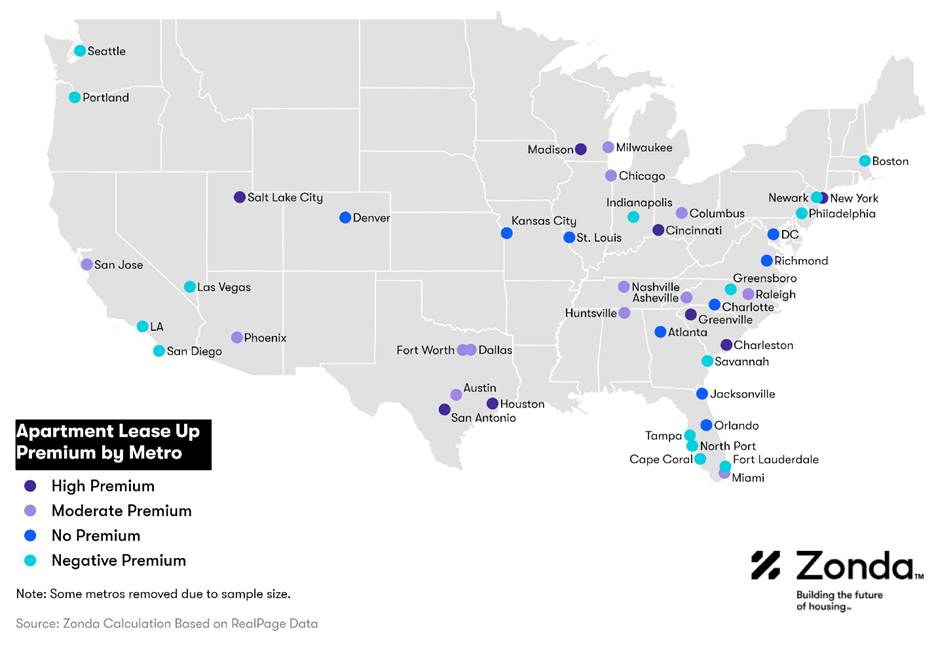
Despite national discounting, most markets still show at least some premium for lease-up product, consistent with renter demand for new, high-quality units.
In several metros, that premium is significant. Charleston, New York, and Salt Lake City all post lease-up rents at least 15% above stabilized product. These markets demonstrate that strong demand, location, or unique product positioning can offset broader supply pressures.
Growing Pressure in Discounted Markets
At the same time, a widening share of markets shows little to no premium or even outright discounts for lease-up product.
In the most challenged metros, effective rents for new properties fall materially below stabilized comps, in some cases by more than 10%. These conditions point to deeper supply-demand imbalances, where aggressive incentives are necessary to maintain leasing pace.
Implications for Builders and Developers
For home building and multifamily professionals, the takeaway is clear: lease-up performance is increasingly market-specific.
The national average points to softer near-term economics, but localized opportunities remain where demand and product differentiation support pricing power. As supply levels peak and begin to moderate, today’s discounting may ease, but in the interim, underwriting assumptions, timelines, and pricing strategies must reflect a more competitive lease-up environment.
The insights in this article were taken from more in-depth research published in Zonda’s Apartment Outlook.