
For years, millennials were widely characterized as urban-first consumers, only for that assumption to be challenged as life stage and affordability pressures pushed many toward suburban communities. The early data on Gen Z points to a similar trajectory, though with a key distinction that builders and developers should not overlook.
At the highest level, Gen Z’s stated preferences lean strongly toward lower-density living. Nearly three-quarters of Gen Z respondents said they would prefer to live outside of urban areas, highlighting the continued appeal of space, affordability, and a different pace of life. More than half (53%) identified the suburbs as their ideal location, while another 21% preferred an exurban or rural setting.
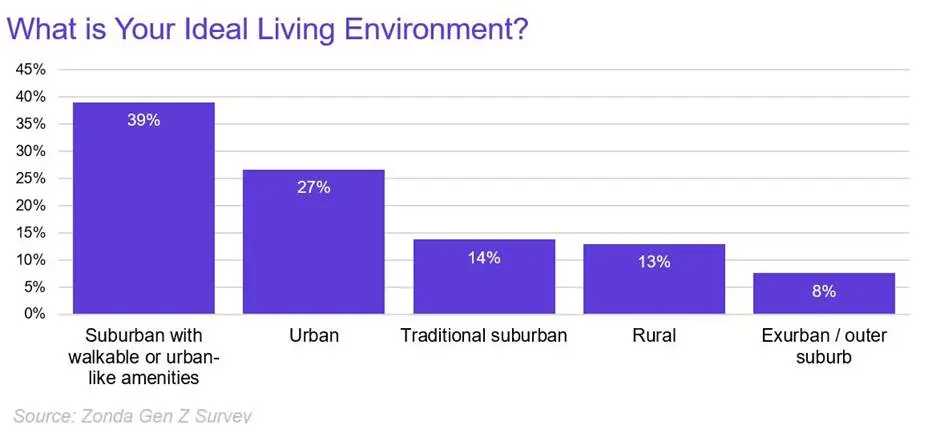
For builders, the implications are significant. Suburban demand is likely not a temporary trend but a structural reality that will continue to be reinforced by Gen Z as they age into homeownership. The desire for more space and affordability positions suburban and secondary markets as key growth areas in the years ahead.
However, location preferences should not be viewed as purely binary. Gen Z demonstrates flexibility, balancing affordability, lifestyle, and access in ways that cut across traditional definitions of urban and suburban. This suggests future demand will favor communities that can offer a blend of both, whether through mixed-use suburban developments or amenity-rich secondary markets.
The insights in this article are just a snippet of a more in-depth research report published in Zonda’s National Outlook.