
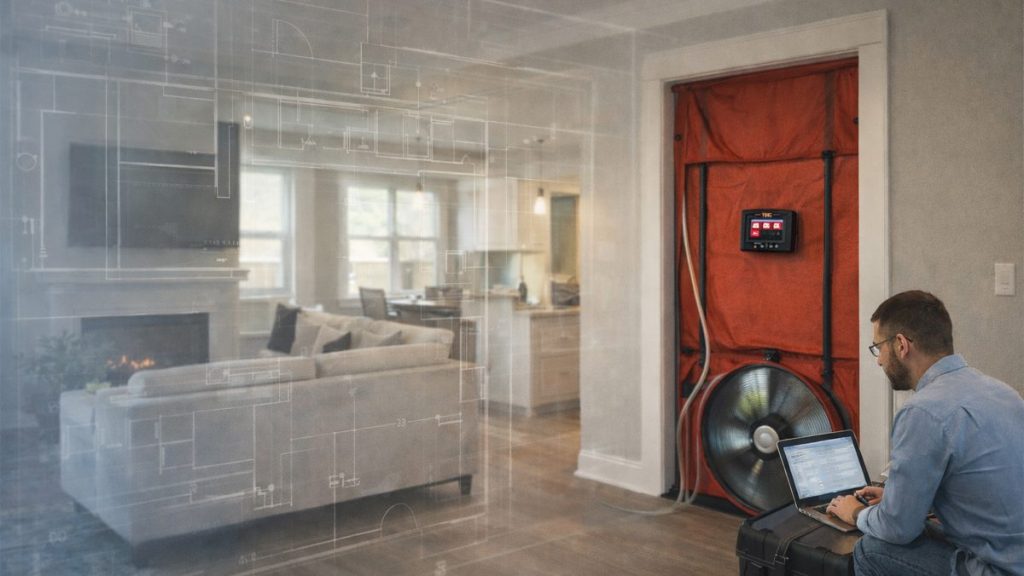
Energy code compliance is getting harder to treat like a checklist. In many markets, builders are balancing a web of decisions across the envelope, mechanicals, and ducts to land on a design that meets code, stays buildable, and delivers comfort buyers can feel.
That complexity is exactly why energy modeling is becoming an operational backbone.
Mark Keeton is the vice president of residential new construction at Aeroseal, a company that seals ductwork and building-envelope leakage using a measured, computer-controlled process. He’s experienced first-hand how energy modeling can streamline code compliance—especially when the model’s assumptions are backed up by consistent, verifiable jobsite results.
Aeroseal often works alongside energy raters such as Tacoma Energy, who build the compliance pathway, run the model, and verify performance in the field. The rater identifies the targets that the home needs to hit—whether that’s a blower-door threshold, duct leakage number, or overall performance score—and then coordinates with the builder and trade partners to ensure the home’s as-built performance matches what was modeled.
The point isn’t simply to pass code. It’s to make sure the plan is sound—buildable in the field, durable over time, and verifiable without a string of last-minute surprises.
From assumptions to execution
Performance-based compliance can give builders flexibility, but it also raises the bar for decision-making. Every trade-off has consequences, and those consequences aren’t always captured by a clean spreadsheet.
That’s why the rater’s value isn’t just in running software—it’s in understanding how choices behave on real jobsites and shaping recommendations around builder constraints. As Keeton puts it, Tacoma Energy stands out because its approach is centered on the builder’s realities, not just the paperwork.
“Many raters are just focused about trying to kind of get the job done, where Tacoma’s focused on understanding what the builder challenges are and delivering the most value through their recommendations in the energy model,” Keeton says.
That value can show up in practical ways—like steering builders toward strategies that reduce complexity, avoid costly details, or keep options open when budgets tighten. The best raters don’t just tell you what you need; they help you understand what you can change without breaking the whole system.
Make air leakage the baseline, not the variable
If there’s a single variable that can derail both modeling assumptions and jobsite outcomes, it’s air leakage. Traditional air sealing can be inconsistent because it’s highly dependent on crews and sequencing, resulting in missed bypasses that only reveal themselves at test time.
In the Tacoma Energy workflow Keeton describes, air sealing becomes a foundational lever—one that can create flexibility elsewhere in the model. He says Tacoma Energy has “gone to market with a very aggressive air sealing target which then allows more flexibility for the builder on other parts of their energy model.”
In other words: if the envelope target is dependable, a builder may have more room to adjust other specs that can introduce cost or constructability friction. “If you can foundationally deliver a low air sealing target, then your options are widened for the rest of your build on your energy model,” Keeton says.
Incentives can turn compliance into a financial lever
Code compliance isn’t always the only target. In some markets, hitting specific performance thresholds can unlock incentives that offset cost and improve homeowner value.
Keeton says Tacoma Energy identifies utility incentives for builders and uses performance strategy to help access them.
That’s the thread tying the whole process together: a repeatable plan, verified in the field, with fewer surprises—and, when available, incentives that improve the economics of building better.
For builders navigating performance-path compliance, Tacoma Energy works at the intersection of modeling, verification, and builder-focused guidance—helping teams understand the levers that matter and how to pull them without disrupting production. Learn more.