The Fourth of July is all about celebrating freedom, but for builders, it’s also a chance to roll up their sleeves and help create it. Across the country, builders, trade partners, and suppliers are teaming up with nonprofits to deliver homes that restore independence, stability, and dignity for veterans and their families.
Whether it’s building from the ground up or tackling critical renovations, these programs depend on industry expertise to bring projects to life. Below is a look at a handful of the organizations leading that effort, and how builders are turning their skills into meaningful impact well beyond the jobsite.
Building Homes for Heroes
Building Homes for Heroes’ (BHH) Home Program constructs, modifies, and gifts mortgage-free homes to injured veterans, first responders, and Gold Star families, removing financial burdens while supporting long-term recovery and stability. Each home is designed to meet the specific needs of physically or psychologically injured recipients, enhancing accessibility, independence, and day-to-day quality of life.
Celebrating its 20th anniversary this year, BHH began with a dream of gifting one mortgage-free home to a wounded veteran. That dream expanded into a national movement with a network of communities, corporate partners, volunteers, donors, and advocates. The current goal is to reach 500 homes by the end of 2026.
Just last month, BHH partnered with Florida students from The Villages Charter School to build two homes for deserving veteran families. The students also successfully collaborated with BHH in 2024 to build two homes and have plans to gift two more in 2027.
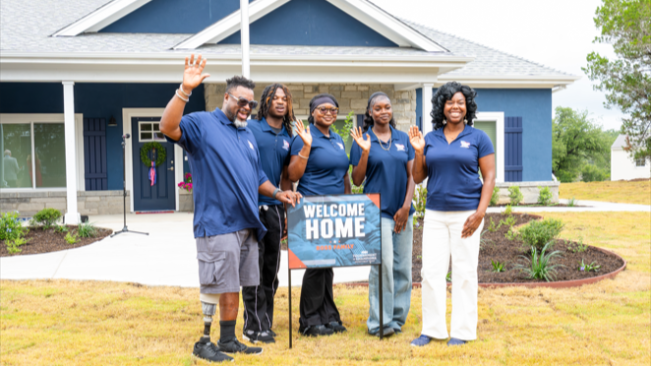
Courtesy Homes For Our Troops
Albert Ross Family in Spring Branch, Texas.
Homes for Our Troops
Homes for Our Troops (HFOT) is a publicly funded nonprofit dedicated to building and donating specially adapted custom homes for severely injured post-9/11 veterans, enabling them to rebuild their lives with independence and stability. Each home features more than 40 accessibility adaptations, such as wider doorways, roll-under counters, and automatic entry systems, and is designed to exceed ADA standards while supporting long-term comfort and efficiency.
Since 2004, HFOT has delivered more than 440 mortgage-free homes across 46 states, empowering veterans and their families to focus on recovery, education, and new career paths. In Florida, HFOT recently donated the 50th home in the state.
HFOT president and CEO Brigadier General, U.S. (Ret) Tom Landwermeyer says: “Celebrating our 50th specially adapted custom home in Florida is more than a milestone—it’s a reflection of our commitment to ensuring veterans like Army SFC Aaron Cornelius have the freedom to choose where they build their future. By selecting Lithia, he’s not just choosing a location, but a community that supports his health, well-being, and long-term goals. At Homes for Our Troops, we believe every veteran deserves a place that feels like home for a lifetime, and this moment underscores the impact of that mission in action.”
Habitat for Humanity’s Veterans Build
Since 2013, over 9,000 veterans and their families have partnered with Habit for Humanity’s Veterans Build. The program is a national initiative that delivers affordable homeownership opportunities, critical repairs, and community-based support for veterans, service members, and their families.
Through local affiliates, the program combines new construction, home preservation, and accessibility upgrades with financial education and volunteer engagement to support long-term housing stability. Rather than a one-size-fits-all model, Veterans Build adapts to local needs, offering pathways to ownership alongside repair programs that help aging or disabled veterans remain safely in their homes.
By integrating housing with community support and workforce opportunities, the program strengthens both independence and successful transitions to civilian life.
Gary Sinise Foundation R.I.S.E.
The Gary Sinise Foundation’s Restoring Independence Supporting Empowerment (R.I.S.E.) program builds mortgage-free, specially adapted smart homes for the nation’s most severely wounded veterans and first responders, tailoring each residence to the recipient’s unique needs. These one-of-a-kind homes integrate accessibility features and smart technology to remove everyday barriers, improving mobility, safety, and independence.
Designed in close collaboration with each family, the homes support long-term recovery while anticipating future challenges, creating a lasting foundation for stability and dignity. By restoring the ability to perform daily tasks independently, the program transforms housing into a tool for healing, enhancing quality of life not only for veterans, but for the families who support them.
Celebrating 15 years of service this year, the program has built 104 custom homes for heroes with more than 10 homes currently under construction.
Operation Finally Home
Operation Finally Home has delivered or planned nearly 500 projects since 2005, evolving from a single home remodel into a nationwide effort providing mortgage-free homes, modifications, and transitional housing for veterans, first responders, and survivors. As demand has grown, the nonprofit has shifted significantly toward home modifications, now the majority of its work, allowing recipients to age safely in place through accessibility upgrades and critical repairs.
Builder partnerships remain central, with industry professionals leading design and construction. Looking ahead, the organization aims to complete 100 projects in the next year, with a regional focus on veteran-dense markets such as Florida and Georgia, expanding its impact while maintaining a mission rooted in stability, dignity, and long-term support.
In a recent Q&A with BUILDER, founder Dan Wallrath said, “As Operation Finally Home continues to grow, we hope our legacy is one of lasting faith, gratitude, and tangible action. For the veterans and first responders we serve, that legacy is stability, dignity, and the knowledge that their sacrifice was seen, valued, and remembered—not just in words, but in meaningful support for them and their families.”