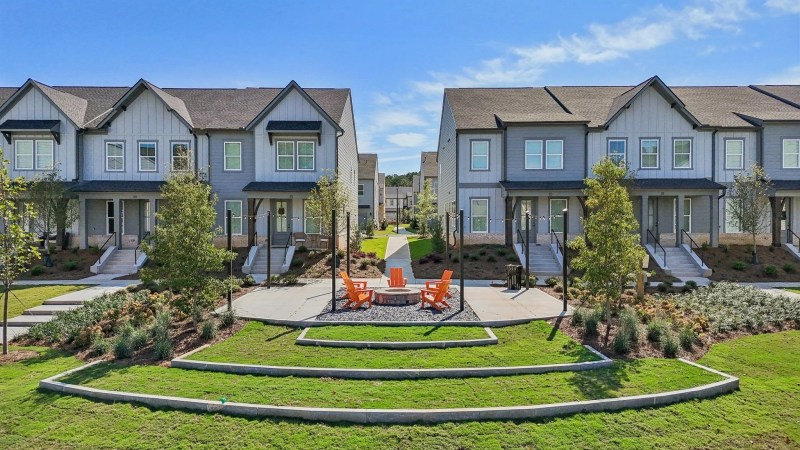
Foxgrove on Castleberry redefines the build-to-rent (BTR) model as a complete neighborhood, blending the character of a single-family community with the flexibility of rental living. Located on a former farmstead between the North Georgia foothills and Lake Lanier, the 198-home development combines 161 townhomes and 37 detached homes, creating architectural diversity while accommodating residents at different life stages.
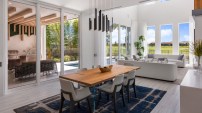
Rather than relying on a repetitive housing pattern, the community offers a mix of three- and four-bedroom homes ranging from approximately 1,700 to 2,300 square feet. Efficient floor plans provide generous living spaces, private outdoor areas, and the functionality expected of traditional homeownership. The combination of attached and detached residences allows the project to achieve density and operational efficiency while maintaining a human-scaled streetscape.
Dan Green
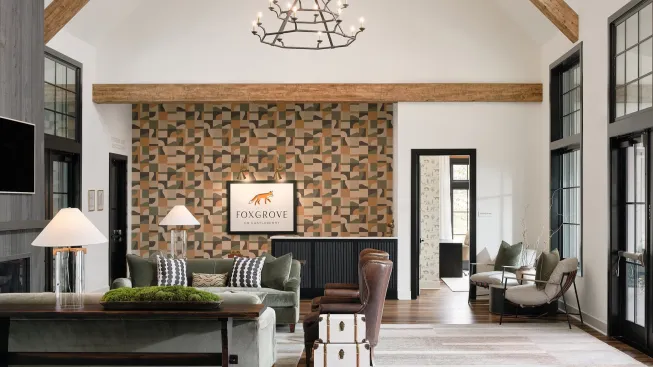
The site plan is shaped by the property’s natural features. Homes are organized around preserved green spaces, mature trees, pocket parks, and a restored freshwater pond, transforming the landscape into the community’s defining amenity. Nearly two miles of walking trails weave throughout the development, connecting residents to nature and encouraging daily interaction. A centrally located clubhouse, resort-style pool, fitness center, dog park, picnic areas, and outdoor gathering spaces further support an active and social neighborhood environment.
Project Details
Award: Grand
Category: Build-to-Rent
Developer: Pine Grove Communities
Architect: The KSE Group Architecture
Builder: KM Homes
Location: Atlanta
Foxgrove’s design emerged from significant site and entitlement challenges. Instead of treating these environmental features as obstacles, the design embraces them. Stream corridors were preserved, the existing pond was restored instead of replaced, and the community was carefully configured around the site’s natural systems.
By combining thoughtful land stewardship with a diversified housing mix, Foxgrove highlights how BTR communities can create lasting neighborhoods that are environmentally responsible, socially connected, and firmly rooted in their local context.