
Household composition is a fundamental driver of housing demand, influencing everything from floor plans and bedroom counts to community amenities and long-term land strategies. Understanding how household composition is changing can help inform product planning and identify opportunities to serve different types of buyers.
As of 2024, 25.4% of U.S. households had children under age 18 living at home, according to Zonda’s analysis of U.S. Census data. Put another way, nearly three out of every four households did not have children at home.
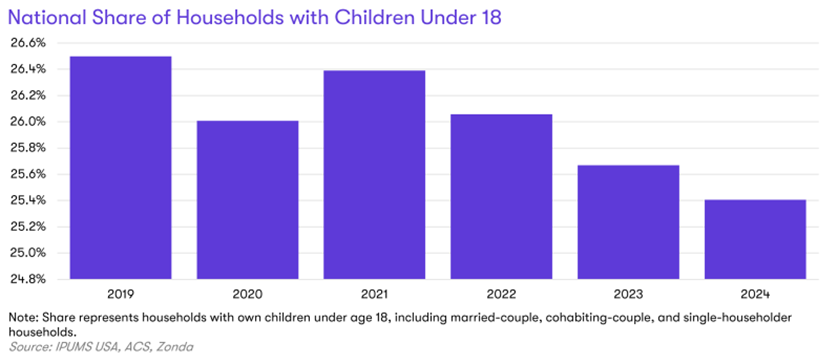
The finding is consistent with trends visible among home buyers: the 2025 Home Buyers and Sellers Generational Trends Report from NAR showed that only 24% of buyers had children under 18, a historic low.
Several structural demographic forces help explain this shift, including fertility rates below replacement levels, later family formation, and an aging population that has contributed to more empty nesters, retirees, and older adults living independently. At the same time, households without children, including DINKS (dual income, no kids), represent an important part of housing demand.
These shifts highlight the changing composition of household types shaping housing demand and reinforce the importance of segmentation over assumptions. The traditional family household remains an important customer, but understanding the needs of other household types can help inform product planning and identify opportunities to reach a broader range of buyers.
The insights in this article were taken from more in-depth research reports published in Zonda’s National Outlook subscription.