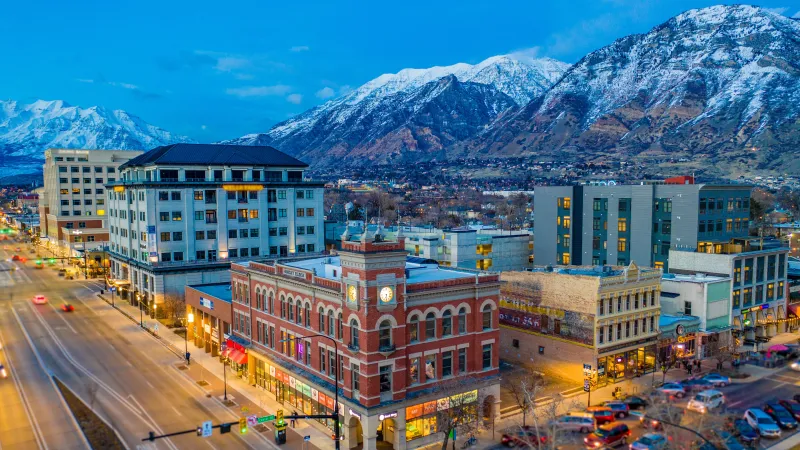
As housing conditions shift, a market’s local economy offers an important starting point for understanding where the market is headed. In the Provo, Utah, metro, total nonfarm employment reached 324,000 payrolls in August, up 1.1% from a year earlier, while the unemployment rate declined to 3.4%.
That economic momentum is encouraging, but it is being tested by softer conditions in the housing market.
New Homes Maintain a Pricing Advantage
One important competitive dynamic is the relationship between new and existing home prices. As of July, the median new-home closing price was $495,800, compared with $541,000 for existing homes. That pricing relationship gives builders an avenue to compete with the resale market even as affordability remains challenging.
Sales conditions, however, are mixed. Annualized new-home sales totaled 4,594 units in August, down 6.1% year over year (YOY). Annualized detached sales increased 5.3% YOY, while attached sales declined 17.8%, underscoring different demand conditions by product type.
Inventory Requires Attention
Supply is another increasingly important part of the story. Finished vacant inventory increased 18.9% YOY to 1,011 units as of Q2 2026. Zonda estimates the Provo market will be 3.89% oversupplied at year-end 2026.
The number of active detached new-home projects decreased roughly 1% YOY as of October while the number of active attached projects was flat. Total building permits are expected to decline by nearly 15% YOY in 2026.
Provo presents a market with two competing realities. Household and employment growth continue to support underlying housing demand, but elevated finished inventory, softer new-home sales, and affordability constraints argue for disciplined production. The projected decline in permitting could eventually help rebalance supply, but near-term execution will remain critical as builders compete for price sensitive buyers.
The insights in this article were taken from more in-depth market reports published in Zonda Enterprise.