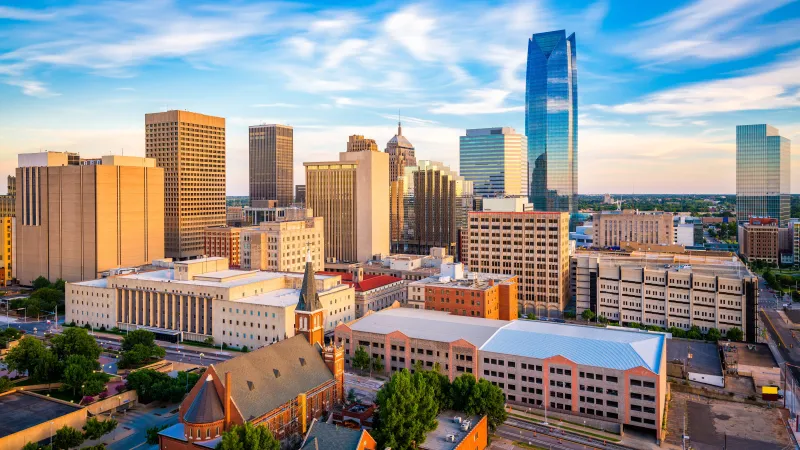
For years, Oklahoma City occupied a middle ground in the nation’s housing landscape: large enough to support meaningful home building activity but often overshadowed by faster-growing Sun Belt metros. Increasingly, however, the metro is becoming harder to overlook. A growing economic base, positive migration trends, and strong new-home demand are creating opportunities for builders searching for growth without the affordability constraints found in many larger markets.
The Fundamentals
While energy remains an important part of Oklahoma City’s identity, the region’s growth story is becoming increasingly diversified. Aerospace, bioscience, and logistics are playing larger roles in the local economy, helping attract businesses and investment. The aerospace sector alone includes more than 300 firms and generates more than $8 billion in economic activity.
Economic growth is translating into demographic gains. Oklahoma City’s population reached roughly 1.5 million residents in 2025, while household growth continued to outpace population growth. The metro’s median age of 36 also points to a relatively young population that should continue generating new households in the years ahead.
Perhaps the most compelling story for builders is demand at the entry level. Oklahoma City’s entry-level communities recorded sales rates of 3.5 homes per month in August, the strongest pace since Zonda began tracking the market. Meanwhile, annualized starts and closings both posted double-digit year-over-year gains.
A Market Worth Watching
Oklahoma City’s employment trends remain mixed, particularly among higher-income industries. But its combination of population growth, positive migration, increasing housing activity, and a diversifying economy points to a metro gaining relevance within the home building landscape.
The insights in this article were taken from more in-depth national research reports published in Zonda’s National Outlook.