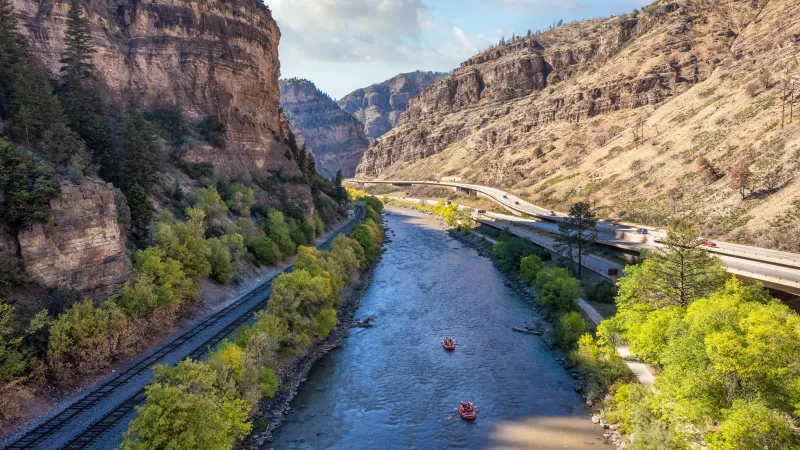
For decades, the Colorado River helped fuel the rise of some of the nation’s fastest-growing housing markets. Today, however, a combination of long-term drought, population growth, and aging water allocation agreements is forcing policymakers, utilities, developers, and builders to rethink assumptions about future growth across the Southwest.
At the center of the challenge is a simple imbalance: demand for Colorado River water has outpaced the river’s long-term supply. The system was originally governed by agreements developed more than a century ago, based on flow estimates that are now widely viewed as overly optimistic. Since then, major metropolitan areas across Arizona, Nevada, and Southern California have expanded dramatically while the river has experienced a prolonged period of drought beginning in the early 2000s.
The result has been a significant decline in storage levels at Lake Mead and Lake Powell, two reservoirs that are critical to both water delivery and hydropower production throughout the region. Federal officials have increasingly intervened to stabilize reservoir levels and protect the infrastructure that supports millions of residents and businesses, most recently outlining the largest mandatory usage cuts in the river system’s history.
Housing Market Exposure
The housing implications will depend heavily on where development occurs.
- Arizona faces some of the most direct exposure. Phoenix and Tucson rely heavily on water delivered through the Central Arizona Project, making future growth increasingly tied to water availability and long-term supply planning. Arizona’s existing requirement that many new subdivisions demonstrate a 100-year assured water supply already places water security at the center of residential development decisions.
- Nevada presents a different story. Las Vegas remains heavily dependent on the Colorado River, but years of aggressive conservation policies and waste water reclamation have demonstrated that growth and water efficiency can coexist. Restrictions on outdoor water use, septic systems, and other conservation measures have already become part of the development landscape.
- California’s exposure is more nuanced. The Inland Empire, one of the region’s strongest growth corridors, may face increasing challenges related to imported water supplies and infrastructure expansion as development continues moving outward. Coastal markets such as Los Angeles and San Diego are generally better insulated because of diversified water portfolios, but higher utility costs and ongoing investments in water resilience could further add to already elevated development expenses.
Looking ahead, the Colorado River is unlikely to trigger a single housing crisis across the West. Instead, it is poised to become one of several key variables shaping land values, development feasibility, and long-term market competitiveness.
The insights in this article were taken from more in-depth research reports published in Zonda’s National Outlook.