Before a master-planned community (MPC) has a logo, model homes, or a grand opening, it has a name. And according to developers across the country, that name has become far more than a marketing label.
Community names today are expected to tell a story, reflect the character of the land, communicate a lifestyle, and stand apart. From honoring local history and geography to conveying wellness, connection, and a sense of belonging, the strongest names help create an identity that can endure long after the first residents move in.
BUILDER tapped Brookfield Residential, Johnson Development, Convergence Communities, EMBER, and Tri Pointe Homes to learn about how they start the process of naming an MPC and all the details in between.
The Name is the First Amenity
Because it will last decades beyond the first groundbreaking, an MPC’s name establishes expectations and a sense of place before residents see physical amenities come to life.
“Naming plays an important role in shaping how people first understand a master-planned community, because the name is often the first thing they experience before they have any real context for the place. Before someone has toured a model, walked a trail, seen an amenity, visited a school or met a neighbor, the name has already started to create a first impression,” says Jennifer Taylor, vice president of sales and marketing at Brookfield Residential’s Houston division, who has been involved with the naming of many MPCs across their portfolio.
For Brookfield Residential, Taylor says the name of course must do more than sound good. “It has to help define what the community is going to mean in the market and, eventually, what it will mean to the people who live there. A name like this has to work for builders, brokers, and buyers, but it also has to work years later when residents are using it to describe where their family lives, where they walk their dog, where their kids play, or where they gather with neighbors,” she adds.
Christen Johnson, vice president of marketing at Johnson Development, echoes a similar thought. That an MPC’s name is often the first impression and helps to establish its personality and more.
“For us, a strong name should do more than sound attractive. It should help tell the story of the land, create an emotional connection, and support the lifestyle we are working to deliver,” Johnson says. “The right name can suggest heritage, nature, wellness, family, sophistication, or a sense of place. It becomes the foundation for the brand and influences everything from signage and marketing to the way residents talk about where they live.”
The process of naming a community often starts when developers are still studying the land, its history and natural features, while also helping to define the overall vision and site plan. “It involves collaboration across development, sales, marketing, and executive leadership teams, and every perspective is important. The development teams bring an understanding of the site’s history and physical characteristics, while marketing helps ensure the name supports the brand and resonates with prospective home buyers,” says Harry Masterson, managing principal at EMBER.

Courtesy The Grand Prairie
Authenticity Leads Inspiration
Looking at the land, history, and geography are often a starting point for developers, because it’s rooted in something real. Naming strategies for most begins with researching not only the land but its cultural heritage, its past uses, and natural features.
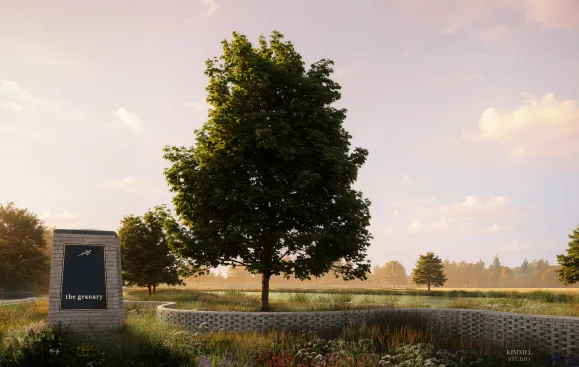
Brookfield Residential’s new Midline community is located between Houston and Galveston, Texas, and is anchored by a central trail called “The Line”, while EMBER’s The Grand Prairie in Hockley, Texas, nods to historical references of the area being described as a vast prairie. Convergence Communities’ The Granary in Milton, Delaware, is inspired by the historical use of a granary but also the symbolism of abundance, working together, and planning for the future.
“Several factors influence the naming process, but one of the most important is the history of the land. We look for meaningful stories, family names, natural features, former uses, or local references that can give a community authenticity. A name should do more than identify a place. It should reflect the land’s history, character, and the people or institutions that helped shape it, while creating a true sense of place for the future,” says Johnson.
Leaning into meaningful stories and family names, Johnson Development’s The George in Fort Bend County, Texas, was once part of The George Ranch, an institution in the County and the cornerstone of The George Foundation, one of the area’s largest charitable organizations, Johnson says. “When a place carries that kind of history, we believe it deserves to be recognized in a meaningful and lasting way,” she adds.
North of Houston in Montgomery, Texas, Kresston carries a deep meaning for the Johnson Development team. It was inspired by Kress, Texas, where founder Larry Johnson grew up, and was the first community to be named after his passing in 2022.
“That connection gives Kresston a direct tie to Johnson Development’s own history and roots. At the same time, it creates a name that feels distinctive, ownable, and well suited for a new master-planned community. For us, Kresston reflects both where we come from and the kind of place we are working to create one grounded in heritage, shaped with intention, and built for the future.”
Kimmel Studio
Convergence Communities considers many of the same factors as other developers but also adds a unique layer to the process. Colby Cox, CEO and founder, says “Beyond the traditional branding considerations, we also enjoy exploring more symbolic elements like numerology. It can be an interesting way to evaluate whether a name carries the kind of energy or characteristics that align with the community’s vision. When we’re creating a place intended to foster connection, growth, or belonging, it’s another lens that can inspire thoughtful discussion during the naming process.”
Balancing Emotion and Practicality
While authenticity and a tie to place leads the naming, practicality and lifestyle also must fall in line. “Because the name has to work across so many touchpoints, it is important to have both strategic and creative perspectives involved,” says Johnson.
Increasingly, developers want community names to communicate wellness, connection, nature, belonging, walkability, social engagement, and quality of life. All while having a usable name that works across signage, logos, and digital assets.
Jennifer Norwood, director of marketing at Tri Pointe Homes Inland Empire, says, “A great name is memorable, easy to pronounce, and reflects the lifestyle and home buyers you hope to attract. Once the name is established, it provides the framework for everything that follows, from the logo and messaging to the overall brand identity.
“For example, at Atwell, Tri Pointe Homes’ planned community in Banning, California, the concept of wellness was at the heart of the name, giving us a strong foundation to build around themes like ‘Live Well, Play Well, Be Well.’ That single idea shaped the community’s positioning and created a cohesive brand centered on wellness, connection, and a balanced way of living.”
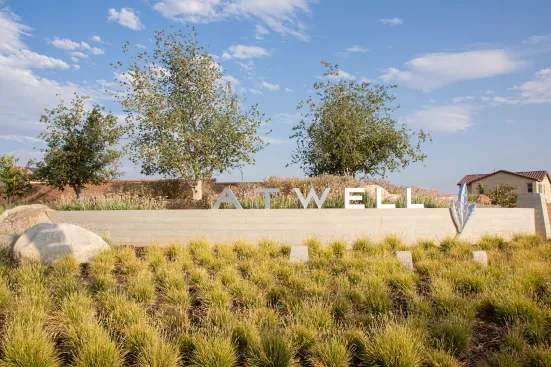
Courtesy Tri Pointe Homes
As Atwell ties to wellness, Johnson Development’s Jubilee embodies joy, and The Granary reflects intentional living, the storytelling and lifestyles are just the start. While the story comes first, practical considerations validate whether the name can survive in the real world.
“Before a name is finalized, we evaluate much more than how it sounds. We research trademark availability, domain names, search engine results, and competing businesses to ensure the name is distinctive and aligns with our brand. We also consider how it will perform across digital channels, including whether a unique social media hashtag is available and associated with positive, relevant content,” explains Norwood.
What Makes a Great Community Name?
According to developers, the best names are:
✓ Authentic
✓ Easy to pronounce
✓ Easy to spell
✓ Memorable
✓ Trademarkable
✓ Searchable online
✓ Visually strong on signage
✓ Connected to the land
✓ Flexible enough to last decades
✓ Distinct from competing communities
“Beyond the legal and marketing considerations, we think about practical applications like signage, readability, and long-term visibility. Ultimately, every step is about protecting the brand while creating a name that is memorable, marketable, and built to last.”
Johnson agrees that signage is a major consideration. “The name has to be readable on monument signs, directional signs, maps, brochures, and digital ads. It should be easy to pronounce, easy to spell, and strong visually. Those practical details can absolutely influence the final selection,” she says.
Brookfield Residential’s Taylor adds, “Those practical filters do not replace the creative and emotional work of naming, but they do help confirm whether a name has staying power. The right name needs to feel good, but it also has to function well enough to support the community as a long-term place brand.”
And while unique names make trademarking and domain availability easier, the top goal is differentiation. Johnson notes, “A unique name helps the community establish its own identity rather than sounding like something buyers have already seen several times before.”
Cox shares a similar sentiment, “Rather than chasing naming trends, we focus on uncovering the authentic story behind the land, the history of the area, and the vision for what the community will become. That connection to place is incredibly important because it creates authenticity, which is something today’s buyers recognize and appreciate.”
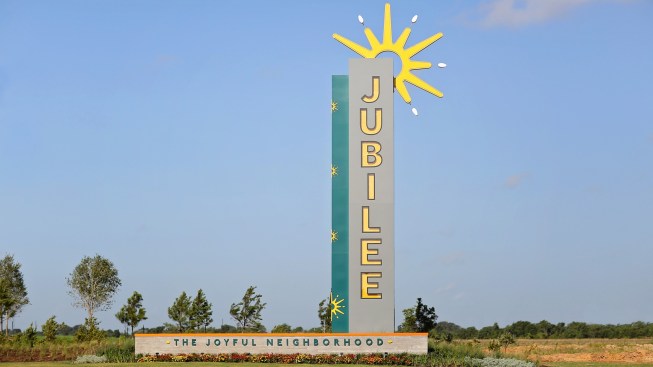
Courtesy of Johnson Development
What’s Out and What’s In
All five industry professionals agree that interchangeable, overused, and generic names are falling out of favor. “We do not want to create something that feels like just another ‘Heritage Oaks’ or a name that sounds like every other community,” says Johnson.
She says, “A unique name can help us avoid blending into a crowded field. It can also give the community more flexibility as the brand grows across neighborhoods, amenities, events, schools, and commercial uses.”
Oaks, creeks, ridges, and other similar descriptors are also on the way out it seems, as markets are saturated with these. “We’re seeing a shift away from generic combinations of words like estates, village, or reserve,” says Cox. Instead, developers are seeking names that are ownable and unique.
“There’s a move toward names that feel more authentic, place-based, and story-driven. Buyers are looking for communities with personality and purpose, so names increasingly reflect local history, environmental features, or a unique sense of place rather than simply describing the product. The strongest names create an emotional connection rather than just identifying a location,” Cox says.
Distinctive one-word names and those that feel established are also becoming increasingly popular. Taylor says, “The better trend is toward names that feel more ownable and more layered. A good community name can still be simple, but it should have enough character to support a broader story. It should feel like it could appear on a trail map, a welcome sign, a resident newsletter, or a neighborhood event and still make sense.”
And the residents are the key consideration as MPCs shift to lifestyle- and wellness-driven hubs. What they experience daily can fuel success, especially when the name is comfortable to say, easy to remember, and naturally identifiable. As naming philosophies continues changing and moving toward authentic, distinctive names rooted in place, it’s evident that the true sign of success comes generations down the way.
“Over time, the best community names become more meaningful because residents give them meaning. They attach the name to their routines, their neighbors, their children’s milestones, their favorite trails, their community events, and their sense of home,” says Taylor. “It starts as a brand decision, but if the community is done well, it becomes part of people’s lives.”