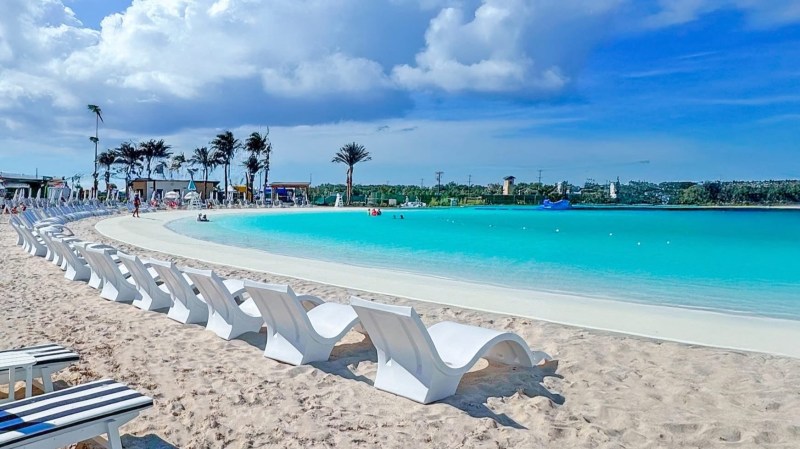
On a sunny afternoon, the scene could be mistaken for a coastal resort. Children playing in crystal clear turquoise water, friends set up along white sand beaches, and neighbors lingering at the waterside to close out the day. Increasingly, this scene isn’t only happening on seaside vacations. It’s taking place in even the most landlocked master-planned communities across the country.
For decades, the community pool and clubhouse have served as the main recreational amenities in developments. But today, developers are under pressure to offer something more memorable. In the search for differentiation, expansive lagoons have splashed for several years while other creative water amenities from surf parks to more approachable lagoons are making a wave.
These new generations of water amenities are creating a lifestyle for residents by combining recreation, placemaking, and community engagement in a way that traditional community pools cannot. “The amenity becomes a reason to choose one community over another,” says Jean Pierre Juanchich, global business director for Crystal Lagoons.
For developers and operators, the appeal of these amenities goes far beyond aesthetics. It can help communities stand out in competitive housing markets, encourage social interaction, and create the type of notable experiences that keep residents engaged long after move-in day.
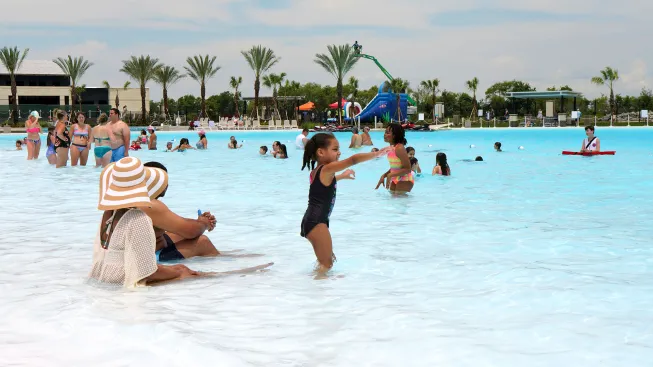
Courtesy Land Tejas
Lago Mar in Texas City, Texas.
Building on an Already Successful Staple
Even the simplest pools can be a top search for home buyers, in Zonda’s April Homebuyer Outlook, based on consumer activity from NewHomeSource.com, several Southeast and secondary markets held exceptionally high pool searches. In Spartanburg, South Carolina, nine out of every 10 amenity searches were for pools, while Raleigh, North Carolina, and Augusta, Georgia, each posted pool search shares above 80%.
But why not up the appeal if pools in general are a top want, especially in these markets? Juanchich says, “A pool is a feature meant just for swimming; a lagoon is a destination. A conventional pool or clubhouse gives residents somewhere to go, but it rarely defines how a community feels.”
That distinction is increasingly shaping how developers think about amenity design. Rather than serving solely as places to cool off, lagoons and other water amenities are being designed as social hubs where residents gather, relax, participate in events, and connect with neighbors.
Operators are seeing the same trend. According to Tim Johnson, director of community sales and marketing at Land Tejas, lagoons offer residents a resort-style experience close to home while fostering a more active outdoor lifestyle.
“Lagoons create a unique identity and help make a neighborhood feel special,” Johnson says.
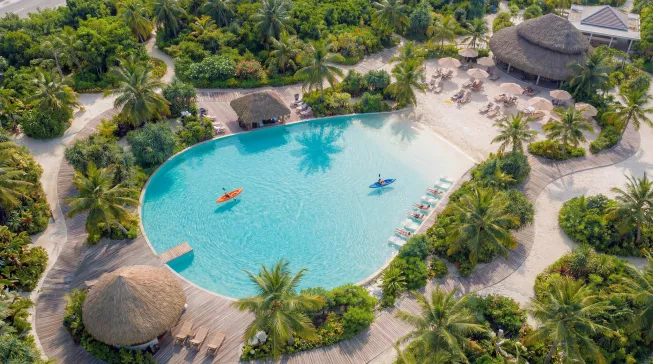
Beyond the water itself, features like beaches, obstacle courses, swim-up bars, and community programming help transform these amenities into gathering places that become central to daily life within a neighborhood.
And if a developer doesn’t have additional acreage to spare for a multi-acre amenity, Crystal Lagoons has rolled out new practical models ranging from 5,400 square feet up to one acre with the same worldwide-proven technology behind the large-scale projects, but to fit the scale and economics of a far wider range of developments.
“The 5,400-square-foot model is the smallest footprint that still delivers the full beach-life experience, with swimmable turquoise water, a white-sand edge, our signature Lagoon Lounge, and room to program activity around it,” Juanchich says, who notes there are other smaller models already in development.
Riding the Lifestyle
While lagoons are broadening the definition of what a community water amenity can be, surf parks are pushing the concept even further. Once viewed primarily as action-sports venues, today’s surf parks are increasingly being planned as mixed-use lifestyle destinations that blend recreation, hospitality, wellness, entertainment, and residential uses around a central attraction.
“Surf parks have evolved well beyond recreational amenities,” says Bruce Greenfield, partner at architecture and design firm AO. “Today, they serve as the centerpiece of a new generation of hospitality and mixed-use destinations where recreation, residential living, wellness, and entertainment are thoughtfully integrated into a cohesive guest experience.”
Like lagoons, surf parks represent a shift away from amenities that simply occupy space and toward amenities that shape entire communities. “While wave technology is the catalyst, the true architectural opportunity lies in designing everything around it,” Greenfield says. “The surf lagoon becomes the organizing framework for hotels, residences, restaurants, retail, wellness amenities, and public gathering spaces, creating a highly walkable environment where guests and residents can seamlessly transition between recreation, relaxation, dining, and social experiences throughout the day.”
That philosophy mirrors what developers and operators are seeing with lagoon-centered communities. Whether residents are gathering around a beach-entry lagoon or a surfable wave basin, the goal is increasingly the same. Create a destination that delivers experiences, not just recreation.
Greenfield says the trend reflects a broader evolution in destination design. “The greatest value is created not by the attraction alone, but by the architecture’s ability to connect the experience into a vibrant, enduring place,” he says. “When thoughtfully integrated, surf technology becomes more than an amenity, it becomes the spark for placemaking, community identity, and long-term economic success.”
Developments such as DSRT Surf in California illustrate how surf parks can become anchors for an entire lifestyle ecosystem. Rather than functioning solely as a sports venue, the surfing experience supports surrounding hospitality, residential, retail, and wellness components, creating activity throughout the day and across multiple user groups.
“DSRT Surf demonstrates how surf parks can anchor an entirely new lifestyle ecosystem and bring a premium to all the uses around it,” Greenfield says. “As developers continue seeking differentiated amenities that drive visitation and support residential value, surf parks represent an opportunity to create authentic, year-round destinations rooted in wellness, connection, and experience rather than recreation alone.”
Just as Crystal Lagoons’ newest small-format models are making beach-life destinations accessible to a wider range of residential developments, surf parks demonstrate how water-based amenities can operate at an even larger mixed-use scale. In both cases, the water itself may be the initial draw, but developers are finding that the real value lies in the experiences, connections, and sense of place built around it.
Courtesy Crystal Lagoons
Where Operations and Activation Swim In
Land Tejas oversees the operations of the Crystal Lagoons amenities at Balmoral, Lago Mar, The Angel Lagoon at River Ranch, and Grand Magnolia, all in Texas. River Ranch opened last year and offers white sand beaches, a swim-up bar, water slide, and restaurant. Johnson says the Grand Magnolia lagoon is currently under construction with plans to open this year.
Because Crystal Lagoons provides the technology for Land Tejas’ lagoons, they also are an active partner monitoring the water quality 24 hours a day. For all these communities, Johnson lays out three key elements for success. He says:
- Safety and cleanliness are paramount to a successful lagoon amenity. On the maintenance side, staying proactive is key. Regular water testing, equipment checks, and upkeep help keep the lagoon looking great and operating smoothly. If families do not feel safe or the water and beaches are not pristine, people will not visit the lagoon and will definitely not come back for multiple visits.
- Proper programming is a key element, too. Programming refers to the elements guests can enjoy when visiting a lagoon. From the floating obstacle course, white sand beaches, beach volleyball, or the swim-up bar, all of the elements in and around the lagoon must be functional and designed in a manner where people can easily access them and enjoy them.
- Activation is the other element that is important. Not only must the site be safe, clean, and properly programmed, but it must also have friendly and knowledgeable staff onsite to plan and start fun activities for guests.
“Having clear rules, trained staff, and regular inspections helps ensure residents can enjoy the lagoon safely,” he adds.
While the technology, sizes, and operation of lagoons continue to evolve, AO, Cystal Lagoons, and Land Tejas agree on one point: the most successful projects are those that transform water, whether big or small, into a plan where residents can gather, connect, and make memories.