May brings renewed focus to jobsite safety and while hard hats and other PPE are visible symbols, the industry’s most serious risks aren’t as easy to spot.
During Construction Safety Week and Mental Health Awareness Month, builders are taking a closer look at mental health as a critical safety issue. Hard Hat Courage is part of that shift, providing free, construction-specific suicide prevention training and resources designed to fit the realities of jobsite work.
To learn more about the initiative, BUILDER sat down with Ryan Price, senior director of special projects at the American Foundation for Suicide Prevention (AFSP). Having worked at AFSP for nearly 11 years, Price’s work largely is dedicated to construction initiatives, service members, veterans, as well as firearm suicide prevention.
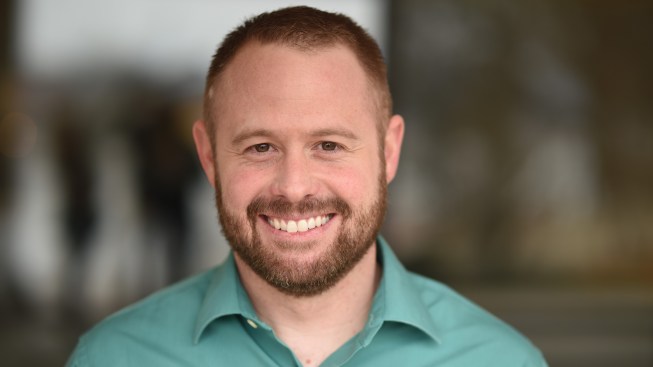
Courtesy American Foundation for Suicide Prevention
Ryan Price
What’s the background on Hard Hat Courage?
I’ll go back a little further and talk about AFSP for a second, because it’s important for the genesis of Hard Hat Courage. The work began at the American Foundation for Suicide Prevention, which is one of the only organizations in the country focused specifically on suicide prevention. We started as a research organization in 1986. The organization began when a group of families recognized that not enough was being done to understand the drivers of suicide. These were people who had lost loved ones to suicide. They came together to fund research, and that remains a core tenant of our work today, even as we’ve expanded into public health education and support for loss survivors.
Hard Hat Courage is rooted in AFSP’s history as a problem-solving organization. In 2023, a report based on 2021 CDC and other publicly available data looked at whether certain industries or occupations had higher suicide rates. The report found that construction has the second-highest rate of suicide among U.S. industries.
That finding echoed the same kind of call to action that existed in 1987: What’s happening here? Why do people develop thoughts of suicide? What drives it, and how can we understand it? Those same questions are now being asked within construction, and there’s been a lot of momentum since that report came out.
Hard Hat Courage began when Bechtel saw that data and said, “We want to do something about it.” We entered into a collaborative agreement—not to create something specific for Bechtel—but to allow AFSP to develop tools and resources informed by Bechtel and other strong voices in construction. Those tools are now designed for the entire industry. That report was foundational in highlighting that construction workers face higher suicide rates compared with other industries.
What has changed since that initial report in 2023?
That CDC data highlights opportunity—not inevitability. High suicide rates in construction are not a foregone conclusion. Younger workers entering the industry have greater exposure to mental health education, and upstream prevention efforts matter.
Construction has taken a more active role in changing culture than almost any other industry I’ve seen. Some recent data is promising, and while there’s more work to do, it’s important to recognize the industry’s leadership in this space.
How do construction companies Hard Hat Courage, and what does that look like in practice?
To create these tools, we formed several advisory committees with people in a range of roles across construction. They helped us understand what’s unique about the industry and how to tailor what we know from suicide prevention research in a way that’s useful.
There’s a strong body of research on what works in suicide prevention, but without tailoring the messaging, framing, and delivery to construction, it wouldn’t land. The advisory committees helped us understand what the industry needed and how to shape the messaging.
We say that Hard Hat Courage is engineered to scale, and that shows up in a few ways. First, there’s no cost to access the resources. They’re free. That doesn’t mean there’s no investment for companies, there’s still time, training, and internal commitment, but we wanted to eliminate as many barriers as possible.
We also equip individuals within companies, associations, and other groups to deliver many of our programs themselves. One key example is “Talk Saves Lives: Construction,” which is AFSP’s flagship prevention program. It’s adapted for construction and built off something in the Prevention Resource Center’s Best Practices Registry. It’s a scripted program, and we train presenters to deliver it.
Hard Hat Courage at a Glance
What it is:
Hard Hat Courage is a suicide prevention initiative created by the American Foundation for Suicide Prevention (AFSP) to address elevated suicide risk in the construction industry.
Why it matters:
A 2023 report based on 2021 CDC data found that construction has the second-highest suicide rate among U.S. industries—prompting growing industrywide action.
How it started:
The program grew out of a collaboration with Bechtel, which enabled AFSP to develop construction-specific tools informed by industry leaders and frontline workers.
What it offers:
Free, industry-tailored resources for companies of all sizes including “Talk Saves Lives: Construction,” a suicide prevention training available in both full-length and 20-minute formats; toolbox talks (12 available now, with 40 more planned for 2026) covering topics such as sleep, substance use, and mental health; and
practical guides and jobsite materials such as posters, stickers, and downloadable assets.
How it works:
Hard Hat Courage equips companies, associations, and individuals to deliver evidence-informed programs internally that are supported by AFSP training, scripts, and technical assistance.
Designed for construction:
Programs are tailored to the industry’s culture, time constraints, and jobsite realities, recognizing factors such as fatigue, chronic injuries, financial strain, and remote work.
Bigger picture:
The initiative emphasizes that suicide prevention in construction is not a foregone conclusion. Industry leaders say the goal is to change culture, reduce stigma, and improve safety by treating mental health as part of overall health.
Companies can come to Hard Hat Courage, get trained, and then receive technical support—examples of how other companies have implemented it, guidance on answering difficult questions, and support for scaling it internally. There are companies that have trained more than 100 people to deliver the program across their organizations.
It starts with leadership buy-in: leaders say this matters, they come to us, we train them, and then we equip them to reach everyone in the organization. We also offer free resources like guides and templates.
In construction, it’s common to have a response plan after a physical safety incident. Our CEO Advisory Council asked what that could look like for a mental health or suicide-related crisis. That led to a guide on creating a response plan for mental health or suicide crises. We know that how an organization responds after a suicide can reduce the risk of contagion. That’s why we created an “after a suicide” guide, which we encourage organizations to download before something happens, so teams and protocols are already in place.
What does “engineered to scale” mean for Hard Hat Courage?
Engineered to scale means two things: offering practical tools—posters, stickers, guides, policies—and providing training and technical assistance so organizations can deliver evidence-informed programming themselves.
We also offer toolbox talks. We currently have 12, and over the course of 2026 we’ll release 40 more covering a wide range of topics. Having 52 toolbox talks allows companies to meet people where they are, whether the need is sleep, substance use, or another mental health topic.
How do off-the-shelf programs fall short for construction?
There’s a well-established body of research showing that messages need to be tailored to their audience to be effective. In suicide prevention, if materials don’t reflect an industry’s culture, imagery, or reality, people won’t engage with them.
For construction, tailoring meant understanding the culture and landscape. After collaborating with Bechtel, we conducted an environmental scan to identify cultural drivers, barriers, and priorities. We then adapted mental health and suicide prevention research to meet people where they are.
Construction has unique dynamics: chronic injuries, fatigue, financial strain, long-distance work away from family, and time constraints. Many programs are effective in general settings, but construction often doesn’t have flexibility for hour-long trainings. That’s why we offer versions of “Talk Saves Lives: Construction” that can be delivered in about 20 minutes, without a projector or slide deck.
It’s not just about tailoring content and imagery, it’s also about respecting time limitations. Shorter formats make education more accessible and scalable.
How do you help companies overcome stigma, especially among workers who don’t want to talk about feelings?
One thing we’ve seen is that every jobsite has people who break the mold—workers who are respected, tough, and willing to speak openly about mental health. Encouraging leadership to identify and elevate those voices is critical.
The second part is helping people understand that mental health is simply part of health. Just like back health or elbow health, it’s something we all have and need to take care of. Physical health behaviors like sleep, nutrition, and exercise are deeply connected to mental health.
A third critical factor is framing mental health as part of safety. Struggles with sleep, anxiety, depression, or substance use can affect decision-making and awareness, increasing the risk of physical accidents. Addressing mental health improves safety and efficiency.
Reducing stigma happens through leadership commitment, widespread training, and normalization. We’ve seen companies commit to training 80% or more of their workforce, which creates momentum. Others form internal committees across HR, safety, leadership, and training to assess what resources exist and determine their role as an organization.
Find additional resources from Hard Hat Courage, including 988 You Are Not Alone stickers at hardhatcourage.com.