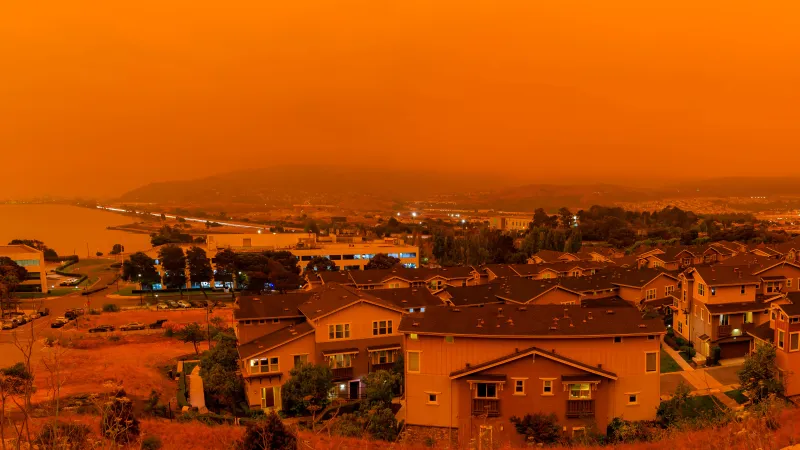
Smoke-filled skies have become a familiar sight across much of North America during wildfire season, and home builders are feeling the effects. As air quality alerts grow more frequent, builders must balance crew safety, project schedules, and regulatory responsibilities.
Dan Glucksman, senior director for policy at the International Safety Equipment Association (ISEA), shares insights on why wildfire smoke deserves the same level of attention as heat, severe weather, and other established jobsite hazards.

Courtesy ISEA
Dan Glucksman
For home builders, why should wildfire smoke be treated as a workplace hazard, not just a weather event?
First, there is much we don’t know about wildfire smoke. This is really an emerging area. Wildfire smoke becomes a workplace hazard the moment construction crews are expected to spend hours outside when others are being told to stay indoors.
Physical labor also increases breathing rates, which can increase the amount of smoke workers take into their lungs.
Wildfire smoke forecasts deserve the same planning as heat, severe weather, or any other hazard builders already manage on the jobsite.
How can home builders keep crews safe during these hazards?
Protecting workers during wildfire smoke starts with three things: monitoring air quality, pausing or adjusting work when possible, and providing appropriate respiratory protection when exposure can’t be avoided.
The Air Quality Index (AQI) should be monitored throughout the day, not just before the shift begins. Conditions can change quickly as winds shift or smoke settles closer to the ground, and a reading that looks acceptable at 7 a.m. might not reflect what crews are breathing by mid-afternoon. The on-site safety leader should be responsible for watching conditions and authorized to act when they get worse.
Before reaching for a respirator, builders should consider if the work might change. Physically demanding tasks could be moved to a time when air quality might be better. If assignments can be rotated, outdoor work times should be shortened and breaks provided in an enclosed space with filtered air.
When those steps can’t adequately reduce exposure, properly selected, NIOSH-approved respiratory protection should become part of the plan. The strongest approach combines monitoring, work modifications, and the right protection.
What are the biggest misconceptions about respiratory protection during smoke events?
One of the biggest misconceptions is that anything covering the nose and mouth provides quality protection. Workers might feel protected simply because they are wearing something over their nose and mouth, like a bandana.
There’s also a tendency to think that handing workers a box of respirators solves the problem. It doesn’t. Respirators must be worn correctly throughout the shift to provide the protection they’re designed to deliver. A respirator that doesn’t seal properly, gets adjusted repeatedly, or is removed during the hardest parts of the job isn’t doing its job.
Why aren’t cloth masks and surgical masks enough to protect workers from wildfire smoke?
Cloth face coverings and loose-fitting surgical masks aren’t designed to provide the close facial seal and tested level of respiratory protection workers need during wildfire smoke exposure. Wearing a cloth or surgical mask can give workers a false sense of protection because those products aren’t designed to seal to the face or reliably filter fine smoke particles.
Wildfire smoke contains microscopic particles known as PM2.5 that are small enough to travel deep into the lungs. Exposure can contribute to respiratory symptoms and worsen existing heart and lung conditions.
NIOSH-approved respirators such as disposable N95s and P100s can reduce exposure to fine airborne particles. For construction crews spending full shifts outdoors in smoky conditions, the difference between a cloth mask and a fit-tested N95 respirator isn’t a minor technical distinction. It’s the difference between using tested respiratory protection and relying on a product that may create a false sense of security.
How important are fit testing, training, and proper use when it comes to respirators?
Fit testing, training, and proper use are important. Also, facial hair can break the respirator’s seal to the face. Along with that, workers need to know how to put the respirator on correctly (we’ve seen workers put them on upside-down), how to perform a user seal check before starting work, and how to recognize when the respirator needs to be changed out or is damaged.
When respirators are required, fit testing is the process that confirms a specific make, model, style, and size seals properly on an individual worker’s face. It’s not a formality. It’s how you verify the employee is receiving the respirator’s full protection. Selecting the right respirator and then skipping fit testing and training is a common way protection breaks down in the field.
What’s the most common mistake employers make when trying to protect workers from wildfire smoke?
The most common mistake is waiting until the smoke arrives to assess how to respond.
That leads to rushed decisions, last-minute purchases of whatever respiratory products happen to be available and supervisors who are not sure when they are supposed to modify or stop work. Crews can end up with unverified equipment and no clear plan for changing conditions during the shift.
Smoke planning should happen before the AQI rises, just as heat illness planning happens before summer, and fall protection planning happens before work at heights begins.
Employers should identify who in their operation will monitor air quality, what conditions trigger action, which work can be modified or postponed, where crews can take breaks in filtered air, and how respiratory protection will be selected and managed. The employers that handle smoke events well are the ones that planned for them before the smoke arrived.
California and Oregon OSHA and the Washington State Department of Labor and Industries have adopted permanent rules to regulate on-the-job wildland fire smoke exposure.
What should home builders be doing today to protect construction crews as wildfire smoke becomes a more frequent part of the jobsite environment?
Home builders should add wildfire smoke to their normal jobsite hazard planning.
This includes determining who will monitor the air quality and establishing what actions will be taken as conditions move from acceptable to unhealthy or hazardous. It also means making sure supervisors have the authority to modify or stop work.
On the equipment side, approved respirators should be sourced before regional demand spikes. Purchasing teams should verify NIOSH approval. PPE purchasers may now have a new responsibility for respirator selection, training, and compliance. Crews should know in advance how changing conditions will be communicated and where they can take breaks in cleaner air.
All of this means wildfire smoke must be treated with the same seriousness already applied to extreme heat, severe storms, and other hazards that show up on jobsites regularly.
What else should home builders look out for?
Counterfeit respirators deserve more attention than they typically get. This is especially true during smoke events when demand spikes and purchasing decisions get made quickly.
When smoke moves into a region, the market for respiratory protection fills up fast. Not everything available is what it claims to be. Some products use phrases like “N95-style,” “N95 equivalent,” or “95% filtration”, but aren’t actually NIOSH-approved respirators. They can come in convincing packaging with official-sounding language, but they might fail to provide the filtration or fit they claim.
Builders and purchasing teams should buy from trusted manufacturers and authorized distributors.