Launch Slideshow

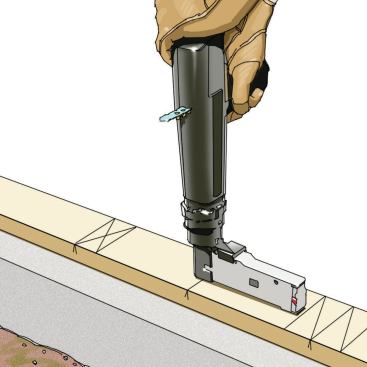
1. Tack It Down Frame as usual, using powder-actuated gun-driven fasteners to pin wood to concrete temporarily as needed.

Retrofitting Anchor Bolts

Retrofitting Anchor Bolts

  • 1. Tack It Down Frame as usual, using powder-actuated gun-driven fasteners to pin wood to concrete temporarily as needed.

    http://www.builderonline.com/Images/tmpEEB9%2Etmp_tcm10-1763381.jpg

    1. Tack It Down Frame as usual, using powder-actuated gun-driven fasteners to pin wood to concrete temporarily as needed.

    600

    Harry Whitver

    1. Tack It Down Frame as usual, using powder-actuated gun-driven fasteners to pin wood to concrete temporarily as needed.

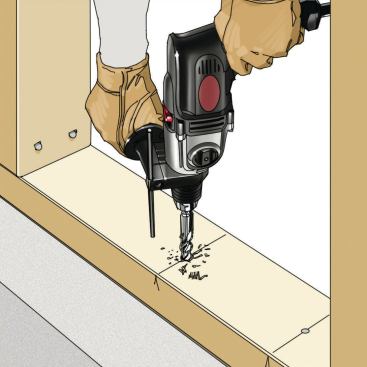
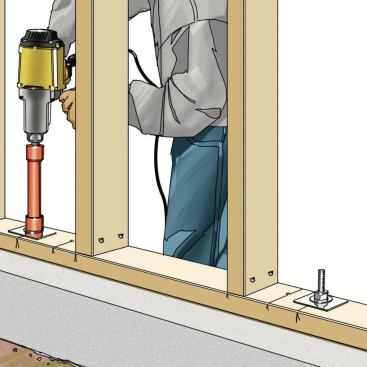
  • 2. Drill Precisely With the framing complete, mark the locations for the code-required anchors or engineer-specified hold-downs. Drill a slightly oversize hole through the wood and into the concrete at each required location.

    http://www.builderonline.com/Images/tmpE7A2%2Etmp_tcm10-1763365.jpg

    2. Drill Precisely With the framing complete, mark the locations for the code-required anchors or engineer-specified hold-downs. Drill a slightly oversize hole through the wood and into the concrete at each required location.

    600

    Harry Whitver

    2. Drill Precisely With the framing complete, mark the locations for the code-required anchors or engineer-specified hold-downs. Drill a slightly oversize hole through the wood and into the concrete at each required location.

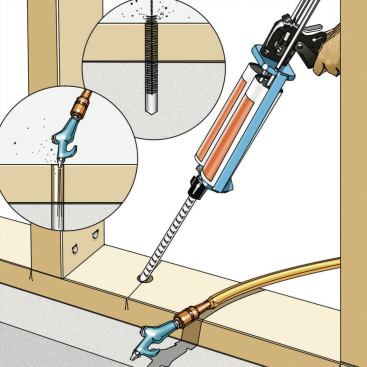
  • 3. Apply the Epoxy Use a special epoxy canister in a caulking gun with an elongated mixing nozzle to inject epoxy into each hole, inserting the appropriate threaded rod as you go. Temporarily attach plate washers and nuts, but don¢¬¢t tighten them yet.

    http://www.builderonline.com/Images/tmpE456%2Etmp_tcm10-1763357.jpg

    3. Apply the Epoxy Use a special epoxy canister in a caulking gun with an elongated mixing nozzle to inject epoxy into each hole, inserting the appropriate threaded rod as you go. Temporarily attach plate washers and nuts, but don¢¬¢t tighten them yet.

    600

    Harry Whitver

    3. Apply the Epoxy Use a special epoxy canister in a caulking gun with an elongated mixing nozzle to inject epoxy into each hole, inserting the appropriate threaded rod as you go. Temporarily attach plate washers and nuts, but don’t tighten them yet.

  • 4. Tighten the Nuts Allow the epoxy to cure to full hardness (which is stronger than concrete). Then, torque down the nuts for a positive, secure attachment between framing and foundation.

    http://www.builderonline.com/Images/tmpE01F%2Etmp_tcm10-1763349.jpg

    4. Tighten the Nuts Allow the epoxy to cure to full hardness (which is stronger than concrete). Then, torque down the nuts for a positive, secure attachment between framing and foundation.

    600

    Harry Whitver

    4. Tighten the Nuts Allow the epoxy to cure to full hardness (which is stronger than concrete). Then, torque down the nuts for a positive, secure attachment between framing and foundation.

In the old days, the only way to install anchor bolts between a wood floor sill or wall frame and a concrete foundation was to set the bolts into fresh concrete as you poured the foundation slab or basement wall. Later, framers had to carefully mark bolt locations on sill plates and drill the holes accurately—or the plates wouldn’t sit flush to the foundation edge.

Sometimes, bolt locations would fall at an awkward spot, right where the framers needed to put a doubled joist, door and window jacks, or just a regular wall stud. That bogs the carpenters down in notching or drilling wood to fit around the bolts.

With modern epoxy, however, you can locate and install bolts later in the job. You tack your sill into place using powder-actuated fasteners, then drill holes through wood into concrete and set the bolts after the frame is up. This adds efficiency even for standard framing in low wind speed zones, and it can make a big difference for accuracy when there’s a need to install beefy hold-downs for engineered shear walls in high wind speed areas near the coast. And it’s a good method to have in your bag of tricks for remodels or change orders.