
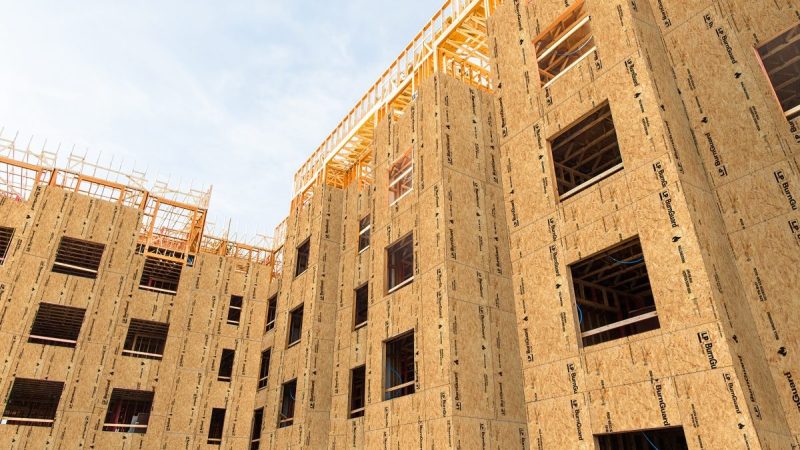
As multifamily and light commercial construction expand across the U.S., builders are working within a more complex set of constraints than ever before. Higher-density development, stricter building codes, and tighter timelines are reshaping how projects are designed and executed. Among these pressures, fire safety remains one of the most critical and increasingly scrutinized considerations.
In building types such as Type III construction, fire-retardant-treated (FRT) structural panels are often required as part of exterior wall assemblies. For decades, plywood has been the standard solution. But as building practices evolve, so does the range of materials available to meet fire-resistance requirements without complicating the construction process.
A newer option entering the conversation is LP BurnGuard™ FRT OSB, a fire-retardant-treated OSB panel that incorporates fire-retardant treatment directly to the wood fibers during the panel production process and serves as a direct competitor to FRT Plywood in Type III construction. It installs just like regular OSB and meets the same testing requirements as FRT plywood, with a 20-year limited warranty.
Rethinking Structural Panels
Traditionally, FRT plywood has filled the role of fire-rated structural sheathing in many assemblies. But advancements in manufacturing are expanding what builders can expect from structural sheathing.
Products like LP BurnGuard FRT OSB introduce fire-retardant chemistry directly during the panel manufacturing process. Instead of applying treatment after production, the fire-retardant properties are incorporated into the wood fibers as the OSB panel is formed.
From a builder’s perspective, the goal of this approach is straightforward: maintain the structural performance and installation familiarity of OSB while meeting fire-retardant requirements in assemblies where they are required.
This type of material can offer several practical advantages:
- Treatment designed to help reduce flame spread
- Support for meeting fire-rated assembly requirements
- Structural performance builders expect from OSB panels
- Flexibility for use in multifamily projects and select single-family applications
Rather than introducing a new layer of complexity, the goal is to integrate fire performance into materials builders already know how to work with.
Safety, Performance, and Buildability
As multifamily construction continues to grow and densify, the importance of fire-rated assemblies will only increase. Builders must balance safety requirements with the realities of project schedules, labor constraints, and construction efficiency.
Material innovations that combine fire protection with structural performance can help simplify that balance. By integrating fire-retardant capabilities directly into structural panels, builders may be able to meet code requirements while maintaining the efficiency of familiar building practices.
Build With Confidence
Fire-resistance-rated assemblies are an essential part of many multifamily and light commercial projects, but they don’t have to complicate the building process. Materials such as LP BurnGuard FRT OSB aim to provide builders with a way to meet fire performance requirements while maintaining the structural durability their projects demand.
To learn more about LP BurnGuard FRT OSB or find where it’s available, visit lpcorp.com/products/panels-sheathing/frt-osb