Gena Kirk had a couple of non-negotiables when she renovated her Southern California kitchen: a Moroccan door that would open to the pantry and a touchless faucet that she “couldn’t live without.” Turns out, Kirk’s design decisions are in lockstep with many homeowners today who prioritize multifunctional kitchens that are inherently personal.
“Home buyers are less afraid of taking some risk and making their kitchens more curated to feel like it’s their own,” says Kirk, vice president of KB Home Corporate Design Studio.
In fact, today’s more nuanced kitchen is reflected in the 2027 National Kitchen and Bath Association’s Kitchen Trends Report, released in October. Among the findings are expanding kitchen floor plans with more clearly defined zones and a growing preference for personalized gathering spaces over bland, impersonal kitchens designed with resale in mind.
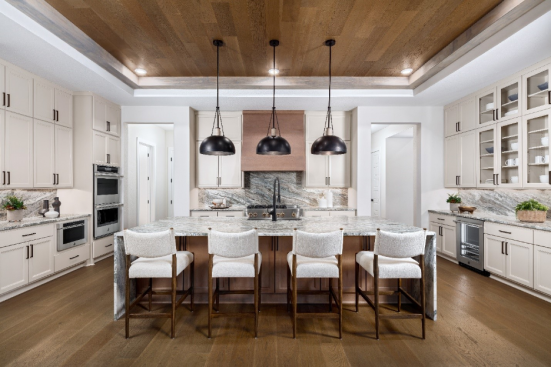
A kitchen at Toll Brothers at Thornebrook in Bulverde, Texas.
“While the kitchen has always been the ‘heart of the home,’ that idea has taken on new meaning,” said Bill Darcy, global president and CEO of NKBA, commenting on the report. “We’ve entered a new era of what the kitchen can do for homeowners—solving real problems … and elevating the way we live.”
A Growing Footprint
We ask more of our kitchens today. Beyond meal preparation, they serve as gathering places for everything from homework and family dinners to entertaining. As their role expands, so does their connection to surrounding spaces. Mudrooms, pantries, and back kitchens are becoming more common, along with dedicated coffee and beverage stations, baking centers, and pet areas.
“[Kitchen] design is becoming more intentional to reflect how people cook, entertain, and connect,” says Lisa McClelland, senior vice president of the Toll Brothers Design Studio. “The emphasis is on creating spaces that feel open and welcoming while providing distinct areas for preparation, dining, and conversation.”
According to the NKBA report, kitchen footprints are expected to continue growing over the next three years. Yet even as kitchens get larger, their layouts are becoming simpler, “with less clutter and a more spacious feel,” the report states. The traditional kitchen work triangle remains important, along with multifunctional features that support a wider range of activities.
“People are thinking about how they operate in their kitchen,” Kirk says. She also predicts continued growth in products designed to simplify everyday tasks, such as motion-activated faucets, workstation sinks that combine a cutting board and built-in strainer, and countertop cabinets and drawers to store small appliances.
“It’s really about form and function,” Kirk says. “People want to be organized so everything is in one place versus spread throughout the kitchen.”
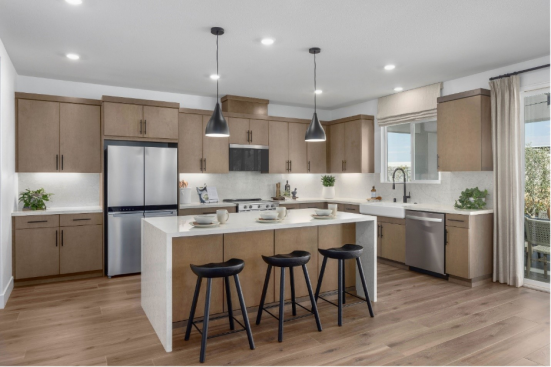
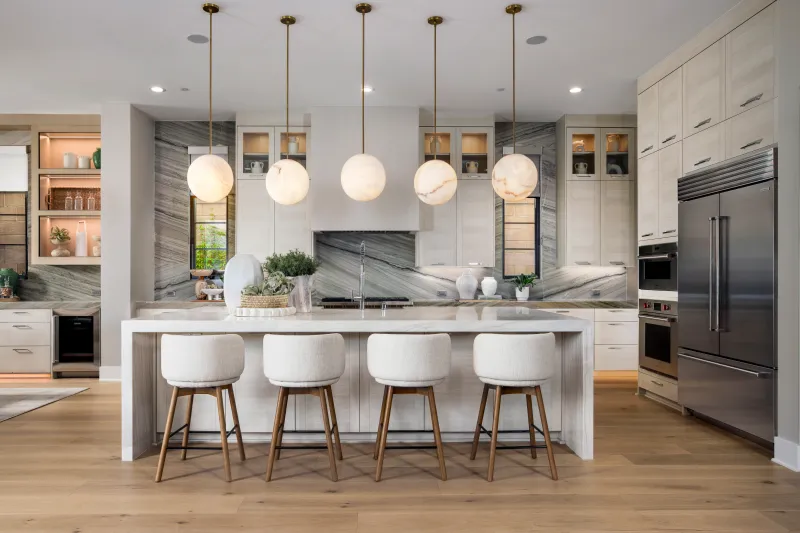
A kitchen at KB Home’s Primrose community in Lancaster, California.
Kitchen islands have evolved beyond their strictly utilitarian roots, too, becoming larger and more central to everyday living. Features such as “thoughtful seating, storage, and room to work” enhance their role as gathering spaces, McClelland says. “The goal is a kitchen that feels effortless, whether you’re making breakfast or hosting a large celebration with family and friends.”
Personality With Purpose
Although kitchens are working harder, homeowners want them to look as good as they cook. Furniture-like cabinetry, layered lighting, and handcrafted, artisanal details help seamlessly bridge kitchens with the rest of the home.
“Faucets, cabinet hardware, and lighting can coordinate without matching exactly, creating a layered, collected look that feels personal rather than overly designed,” McClelland says.
Kirk notes a marketplace shift toward using more natural materials, including quartzite countertops and backsplashes and woods such as walnut that show natural graining. The NKBA report highlights this shift, with quartzite and quartz as the top two countertop materials that will be a key design feature in the coming years.
“Consumers are more interested in natural products, period. Not only in what they’re putting in their mouths, but what they’re putting around them,” Kirk says.
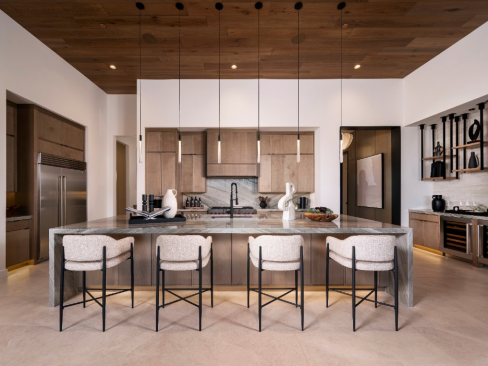
A kitchen at Toll Brothers at Sedona in Sedona, Arizona.
Lighting is emerging as a key design element, as well. “Good kitchen lighting gives you useful choices, and placement is critical, especially at work surfaces,” lighting designer Nathan Orsman notes in the NKBA report. Layered lighting designs include undercabinet, task, and decorative lighting, all part of the recipe that helps “shape a space that feels both practical and inviting throughout the day,” McClelland says.
Layered lighting designs include under-the-counter and built-in cabinet, task, and decorative lighting, all part of the recipe that helps “shape a space that feels both practical and inviting throughout the day,” McClelland adds.
Mixed metal hardware and plumbing fixtures that blend finishes, from brushed brass and gold tones to matte black, nickel, and stainless, are another way homeowners are expressing their individual styles, McClelland says. Likewise, she adds, “blending natural wood tones, creamy neutrals, and rich textures creates spaces that feel both refined and welcoming.”
Tech and Appliance Upgrades
Beyond the visible design elements, technology and wellness features are playing an increasingly important role in kitchen design. Solutions that enhance natural light, improve ventilation, and filter water are helping create healthier, more comfortable spaces. Multifunctional appliances are also gaining traction as homeowners look for greater convenience and versatility.
“Consumers are looking for convenience, form, and functionality,” Kirk says.
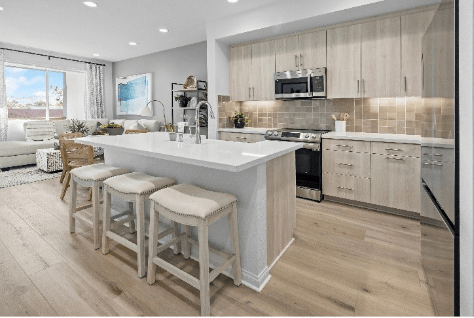
A kitchen at KB Home’s Gateway community in El Cajon, California.
According to the NKBA report, top appliance features include ovens with air-frying and steam-cooking capabilities, dedicated beverage units, and refrigerators with zoned storage that supports healthy habits.
“Manufacturers are getting smarter about the products they are producing that follow the health and wellness trends the consumers are after,” Kirk says.
Kitchens have long commanded a significant share of homeowners’ design budgets. More and more, though, their influence extends well beyond the kitchen itself, shaping design decisions throughout the home.
“We’re building the kitchen first, and then that’s leading to the rest of their home design,” Kirk says.
Although design preferences vary by region, the desire for kitchens tailored to homeowners’ lifestyles remains consistent. “The common thread is a desire for kitchens that feel warm, functional, and highly personalized,” McClelland says. “Buyers want spaces that support everyday living while still delivering the craftsmanship and luxury details that make a home special.”