Sustainability has moved from a long‑range aspiration to a day‑to‑day business reality for builders, manufacturers, and the trade partners who support them. From tighter energy codes and emissions targets to growing homeowner demand for efficient, electrified systems, sustainability decisions increasingly show up in product specs, installation practices, and purchasing strategies.
Rodrigo Cedeno, director of global sustainability at Rheem Manufacturing Co., shares how the company is translating ambitious sustainability goals into tangible action across products, manufacturing operations, and workforce training. Drawing on more than two decades at Rheem in engineering and product-focused roles, Cedeno explains how the company’s 2035 roadmap is shaping product design, supporting contractors in the field, and aligning sustainability with efficiency, performance, and long‑term business value.
Looking back, what brought you into the sustainability field?
Throughout my 21 years at Rheem, I have held roles within a range of functions including operations, R&D engineering, product, program management, all of them related to new product introduction. These roles gave me a unique experience, collaborating closely with both internal colleagues and external partners. Midway through 2024, Rheem was going through a pivotal period: reaching and surpassing our sustainability commitments for 2025 while preparing our next set of goals toward 2035. I became intrigued by sustainability being a strategic function that connects multiple aspects of the business, which we approach through our three-pillar framework: products, process, and people. With the outlining of Rheem’s next generation sustainability goals involving an opportunity to increase emphasis on our product solutions and given the alignment with my background, I was grateful for the opportunity to step into this role to continue the positive, long-term impact as we further embed sustainability in our business.

Courtesy of Rheem
Rodrigo Cedeno
You’ve been with Rheem for more than 20 years and have seen sustainability evolve from a “nice-to-have” to a business imperative. What’s changed most in how leadership and customers think about sustainability today?
Over the past several years, I have seen Rheem integrate sustainability into its core business functions and long-term strategy while anchoring the practice in measurable goals and product innovation. Our sustainability commitments: achieving zero waste to landfill across global manufacturing operations, meeting ambitious greenhouse gas reduction targets, and launching our 2035 sustainability roadmap, reflect how deeply integrated these priorities are in enterprise decision-making.
The program has matured beyond sustainability-specific information sessions for employees, to everyday contributions across all functions. Whether it is the proper waste diversion, optimizing manufacturing lines, product innovation, procurement partnerships or training the trade, Rheem’s sustainability program now operates in alignment with our business. Leadership today views sustainability through the lens of strategic alignment, operational excellence, risk management, and long-term value.
Simultaneously, customers expect high-efficiency, lower-emission products that support their own sustainability goals. Transparency has also become critical, and we hold ourselves accountable through annual progress reports that demonstrate sustainability as a measurable performance driver.
Rheem has outlined strong 2035 sustainability goals across emissions, waste, packaging, and training. Which of these goals has required the biggest mindset shift internally, and why?
The biggest mindset shift is within the broader approach for our goal to achieve a 30% greenhouse gas emissions (GHG) reduction. Due to our 2035 GHG reduction goal being placed in the product pillar, it now encompasses our products’ full lifecycle at a global scale, activating all colleagues in our company to reduce emissions from manufacturing, product use phase, and other upstream and downstream factors.
At Rheem, our product development process focuses on innovation and creating reliable product solutions that are the top choice for the trade while reducing use phase emissions. In collaboration with our channel partners, we will be able to offer solutions for homeowners with increased energy efficiency.
While we have implemented several initiatives in our global facilities to reduce manufacturing emissions, we will continue to foster a culture of responsible energy consumption and increased operational efficiencies as we pursue a holistic approach towards our goal.
To reduce greenhouse gas emissions intensity by 30% across the full product lifecycle, where do you see the greatest opportunities, and the toughest challenges, in achieving that reduction?
The greatest opportunities in my view are related to continuing to advance our product mix toward mid- and high-efficiency products and hybrid solutions, such as the ProTerra Hybrid Heat Pump Water Heater and dual fuel (heat pump and gas furnace) systems. While we have achieved impressive greenhouse gas emissions reductions in our manufacturing, this new goal includes the complexity of end-to-end emissions, including upstream and downstream factors often out of our direct control.
We can, however, innovate product solutions and empower trusted channel partners to promote these options to home and business owners. Additional challenges lie within the variability around incentives toward further adoption of higher efficiency solutions. However, Rheem will maintain its holistic focus around opportunities for optimization and emissions reduction across scopes 1, 2, and 3, while remaining aware that the greatest source of positive impact toward emissions reductions will come from our product use phase. Hence, making product efficiency levels, tiering strategy, and sales mix quite relevant at a global level.
How closely are product R&D decisions tied to the 2035 roadmap, and can you share an example where sustainability directly influenced product design?
The 2035 roadmap is closely aligned with Rheem’s business objectives and product development roadmaps. Rheem has long been a trailblazer in heat pump technology, and that commitment continues to shape our development priorities. For example, in the HVAC and water heating sector, the growing emphasis on high-efficiency, connected systems reflects both regulatory change and homeowner demand for smarter, more adaptable solutions. Within HVAC, innovation around Rheem products such as the Endeavor Line Side Discharge Universal Heat Pump (RD18AY) and the Endeavor Top-Discharge Universal Heat Pump (RP17AY) is the result of a product and R&D strategy focused on advancing efficiency, sustainability, connectivity, and serviceability, while keeping pace with rapidly evolving industry standards.
As energy regulations continue to evolve, including the DOE’s updated SEER2 standards and forthcoming shifts in heat pump water heating technologies, the team at Rheem is proactively engineering compliant, industry-leading solutions such as the ProTerra family of heat pump water heaters. Looking ahead, for heating and cooling solutions, we expect continued gains through advanced variable-speed technology, smarter connected systems, and optimized refrigerant use. As standards evolve and the pursuit of increased energy efficiency and affordability accelerates, our R&D efforts will remain focused on delivering solutions that raise the bar for efficiency, sustainability, and ease of installation, ensuring Rheem is ready for the next generation of performance requirements.
Courtesy of Rheem
Zero waste to landfill across all factories is already a strong achievement. As Rheem continues to grow through acquisitions, how do you ensure new facilities meet the same sustainability standards without slowing integration?
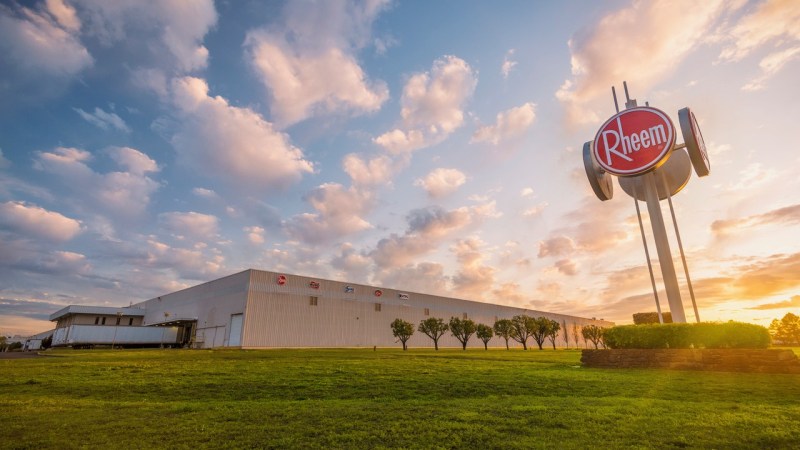
For us, a facility reaches zero waste to landfill when it achieves at least 90% diversion of non-hazardous solid waste away from landfills, waste-to-energy and incineration, in alignment with the Zero Waste International Alliance and TRUE Zero Waste standards. That definition sets a clear, measurable benchmark and it’s the same expectation we apply to both existing and newly acquired facilities. Our process is structured and repeatable. It begins with an on-site waste audit sorting 24-hours’ worth of materials to understand exactly what is being generated.
Our goal is also to onboard any newly acquired businesses to our zero waste to landfill program, bringing them up to speed to establish the infrastructure and culture needed to meet and maintain ambitious diversion rates. Looking ahead, as part of our 2035 sustainability goals, we are committed to maintaining zero waste to landfill across our global operations. This is a KPI we track on a quarterly basis (minimum 90% diversion rate target). We schedule the onboarding of any new facilities in alignment with other integration-related priorities and take production seasonality into account to avoid any operational disruptions.
Looking ahead, how do you expect refrigerant management and electrification trends to shape Rheem’s sustainability strategy over the next decade?
The HVAC and plumbing industries are at a pivotal moment. Shifting regulatory landscapes combined with accelerated innovation are creating new opportunities. Clean energy goals, utility initiatives, evolving refrigerant standards, and new testing protocols while meeting required efficiency standards are all reshaping the market. These forces require the industry to respond with smarter, efficient, and more connected solutions. Rheem’s government affairs team works closely with industry associations and policymakers at the federal, state, and local levels to inform on practical, achievable standards while also anticipating where regulations are headed.
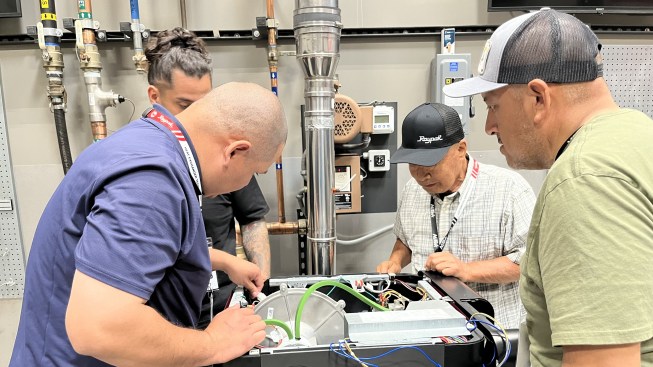
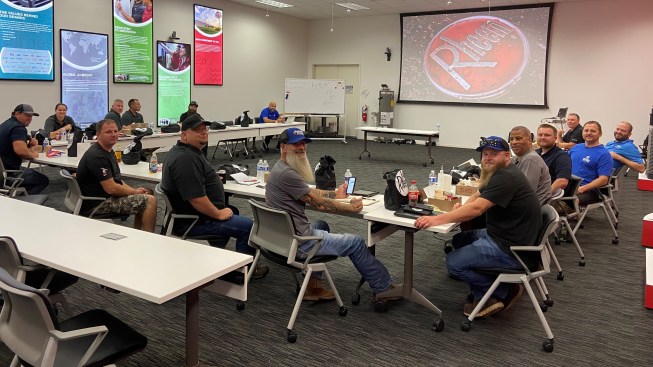
Rather than simply reacting to change, we are focused on proactively aligning product development, refrigerant transitions, and efficiency improvements with emerging policy direction. At the same time, we recognize that regulatory change doesn’t impact manufacturers alone. With shifting efficiency standards and refrigerant transitions accelerating, manufacturers, contractors and distributors alike are under pressure to adapt quickly. Ensuring the entire value chain is educated and aligned is important. That’s why Rheem is investing heavily in contractor training, technical education and product innovation to help our partners confidently navigate new requirements.
Courtesy of Rheem
Considering the multiple regions Rheem operates globally, and the diversity of your product portfolios, how do you balance global sustainability consistency with the realities of regional regulations, infrastructure and market expectations?
Our global sustainability goals definitions take into account our long-term business strategy, input from internal and external stakeholders, and benchmarking of sustainability programs in our industry. At a high level, our program’s 2035 goals are inclusive of our facilities and products in all of our regions around the world. To create global consistency, we regularly collaborate with regional teams to stay up to date on product roadmaps, business forecasts and regional regulatory landscapes. Our people make the difference to execute these goals on a global scale beyond our corporate headquarters. We approach this by having regular meetings for various time zones, helpful toolkits and idea exchanges to foster collaboration while allowing for regional adaptation to amplify the impact of our program around the world.
Beyond the 2035 goals, what does “what’s next” look like for Rheem? Are there emerging sustainability priorities or technologies you believe will define the company’s next chapter?
Based on current demand, market drivers and the ongoing shift toward efficient and hybrid solutions, Rheem expects the industry’s growth to continue while adopting a holistic approach and leveraging innovative technologies. Connectivity at a system level will be a key driver. We’re also excited about seeing contractors expand their capabilities to become one-stop shops, offering HVAC and plumbing services under one roof. The multi-trade approach is gaining traction as homeowners and builders look to streamline services and create trusted partnerships. This opens new opportunities for contractors who are interested in investing in integrated solutions. As a manufacturer of industry-leading heating and cooling and water heating products, Rheem offers a complete line of residential and commercial solutions designed to deliver a single-source solution for HVAC and plumbing contractors.