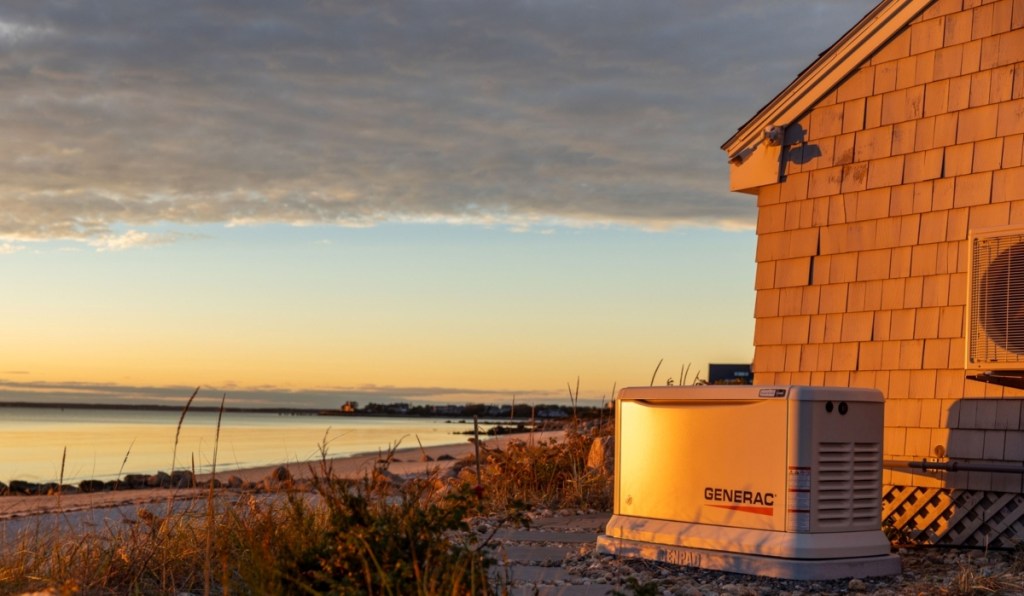
In too many cases, backup power isn’t considered until after the homeowner realizes they need it. However, proactive builders are including whole-home generators to deliver resilience from the start.
That is especially true in homes that use propane appliances. The reason is simple: The more major loads that can be shifted away from electricity, the less a standby generator may need to carry during an outage.
“To power appliances that are all electric would require a larger and more expensive generator,” says Bridget Kidd, chief operating officer for the Propane Education & Research Council (PERC). “But if you select propane appliances such as water heaters, furnaces, and ranges, they reduce the electric load and decrease the size and price of the generator required.”
That means a generator is no longer just a big-ticket emergency upgrade; it becomes one piece of a broader home-energy strategy that considers how the home will operate during normal conditions and what systems need to keep running when the grid goes down.
The key is understanding the relationship between the generator and the loads inside the home. Water heating, space heating, cooking, clothes drying, and other major systems can place significant demand on a backup system if they are all electric. When some of those systems are served by propane instead, the generator can focus on the loads that still require electricity: refrigeration, outlets, security systems, internet equipment, and other essentials.
That message is beginning to click with builders. PERC recently introduced a sizing tool that allows builders to compare how different appliance choices affect generator sizing. For example, when sizing backup power for selected major appliances—an electric kitchen range, clothes dryer, water heater, and air furnace—the tool shows a required generator size of 34.80 kW. When those same selected appliances operate on propane, the required backup load drops to 3.96 kW. Of course, the generator size would increase if the homeowner also wanted to back up additional electric loads, but the example illustrates how builders can dramatically reduce the backup power needed for key household functions during an outage.
That realization can lead to more sophisticated design questions. A builder using a heat pump, for example, may consider adding a propane hydronic system to reduce the backup load during cold weather. Likewise, solar and batteries may find that propane appliances reduce the amount of battery storage needed. Kidd says one modular-home builder recently evaluated a solar, battery-storage, hydronic-heating, and propane-appliance package and found that pairing those systems could reduce both generator size and battery-storage requirements.
Early planning can also make the feature easier to explain to buyers. A right-sized backup-power package keeps the home comfortable, functional, and marketable in a time when grid reliability is increasingly part of the home-buying conversation. For builders, propane appliances paired with a whole-home generator offer a practical way to make that promise more attainable: reduce the load, right-size the equipment, and build resilience into the home before the next outage arrives. Learn more.