
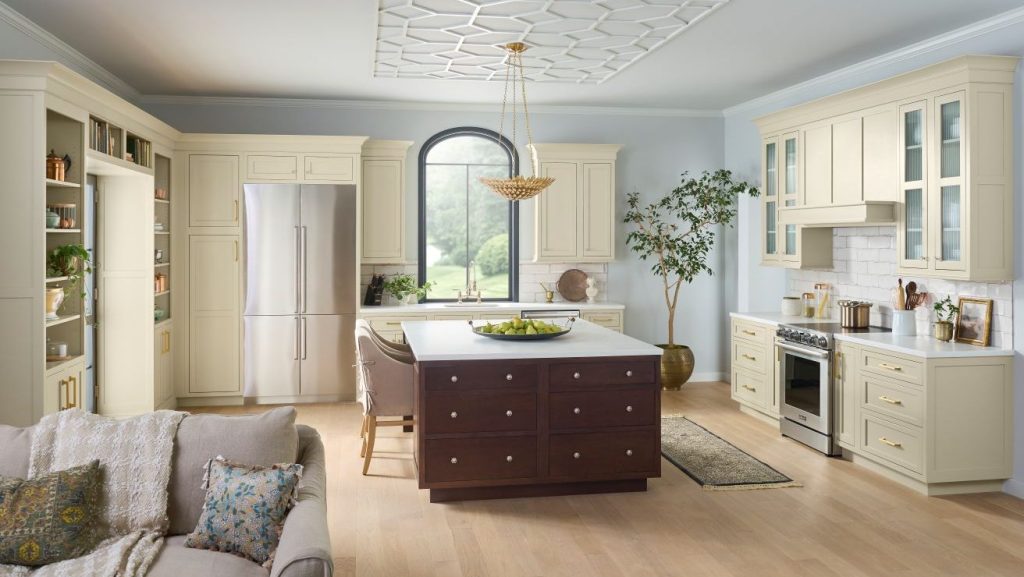
In 2026, these design trends in new homes and remodels will continue to be driven by flexibility, wellness, seamless connectivity and refined aesthetics. Appliances are central to that shift, and cutting-edge refrigerators, ranges and dishwashers are incorporating these features into design and functionality.
1. Kitchens that combine utility with elegance
High performance and refined design are taking center stage in modern kitchens. Kitchens are central living spaces that reflect both function and style. As a result, there is growing demand for high-performance appliances that also contribute to the overall aesthetic.
Features like touchscreens, guided cooking and remote monitoring are becoming more common, allowing homeowners to streamline daily tasks. At the same time, design considerations such as customizable finishes, mixed materials and subtle lighting details are helping appliances blend more naturally into kitchen environments or, in some cases, stand out as focal points.
Samsung’s Bespoke AI kitchen appliances are a case in point. All complete their necessary tasks but integrate SmartThings and AI to help them do it. For example, the Bespoke Wall Oven supports more than 100 recognized dishes via SmartThings Cooking, and internal cameras let you monitor cooking remotely. This functionality comes with a similar focus on design, too. Samsung’s Bespoke line and Dacor’s luxury lines are often built around customizable panels and finishes, so appliances blend or contrast with cabinetry, as desired.
2. Hidden or integrated appliances
Panel-ready, flush-mount and built-in appliances are increasingly popular, allowing kitchens to maintain clean lines and uninterrupted surfaces. This approach supports a more architectural feel, where cabinetry, appliances and materials work together as a unified system rather than separate elements.
Fully integrated refrigerators and dishwashers like those from Dacor reflect the growing preference for simplicity, with less visual clutter and toward a more seamless, modular aesthetic, allowing appliances to blend into cabinetry and surrounding surfaces. Options like multiple finish choices and features such as sliding hinge systems further support a flush fit, helping maintain clean lines and visual continuity throughout the kitchen.
3. AI as a true partner in home life
Intelligence in appliances is no longer experimental. It’s becoming an expectation. Rather than isolated features, homeowners are looking for systems that work together seamlessly and adapt to daily routines.
Appliances are beginning to incorporate more advanced capabilities, such as learning user preferences, optimizing energy use and offering real-time insights. These tools are designed to reduce friction in everyday tasks whether that’s adjusting cooking settings automatically or helping manage household inventories.
Lines like Bespoke AI appliances by Samsung point the way with their All-in-One Combo washers and dryers, ovens and refrigerators that automatically adjust cycles, suggest recipes and monitor contents. The AI Home feature works across multiple Samsung devices, learning usage patterns and preferences. AI Energy Mode — via the SmartThings app — adjusts appliance operation and compressor behavior to reduce energy use, potentially saving up to 10% in refrigerators, washers and dryers.
4. Multigenerational and flexible floor plans
Homes now need to accommodate different life stages and household compositions. Flexible layouts allow for aging in place, including in guest suites and accessory dwelling units.
Spaces like secondary kitchens, guest suites and accessory dwelling units (ADUs) are becoming more common, requiring compact yet fully functional appliances. Accessibility is also an important consideration, with features like easier-to-open doors, intuitive controls and adaptable configurations supporting a wider range of users.
The latest generation of appliances can help, too, with new kinds of features that shoulder some of the burden. For example, the Bespoke 4‑Door Flex Refrigerator with Family Hub+ employs AI Vision Inside to identify contents and update a grocery list. It also opens easily with a light touch of the door sensor, ideal for older people.
The compact and connected appliances also make it feasible to equip secondary kitchens and small apartments with full functionality. Dacor adds a layer of luxury to them, with appliances like the 24-inch Microwave-In-A-Drawer, Undercounter Wine Cellar and 30-Inch Induction Range. Dacor ranges add further support with LCD panels that have pre-programmed settings and step-by-step recipes to serve all members of the household.
5. Timeless technology, refined aesthetics
Homeowners are gravitating toward appliances and systems that feel cohesive with their surroundings, whether through understated finishes, customizable exteriors or simplified interfaces. Design-forward homes need technology that feels elegant rather than intrusive. Samsung’s Bespoke finishes are available in glass, steel, matte textures and bold color hues that let homeowners personalize their appliances to fit their aesthetic. This also turns ranges, refrigerators and washing machines into show pieces themselves. Luxury-level Dacor appliances also offer finishes and design-forward interfaces that blend style with performance.
Looking ahead
The next generation of residential design is not just more intelligent, personal and integrated; it also reflects the identity of the home and its owners. As such, appliances are no longer machines that simply get the job done; they are central to the home experience.
Learn more about Samsung’s Bespoke collection and discover Dacor’s innovative appliances.