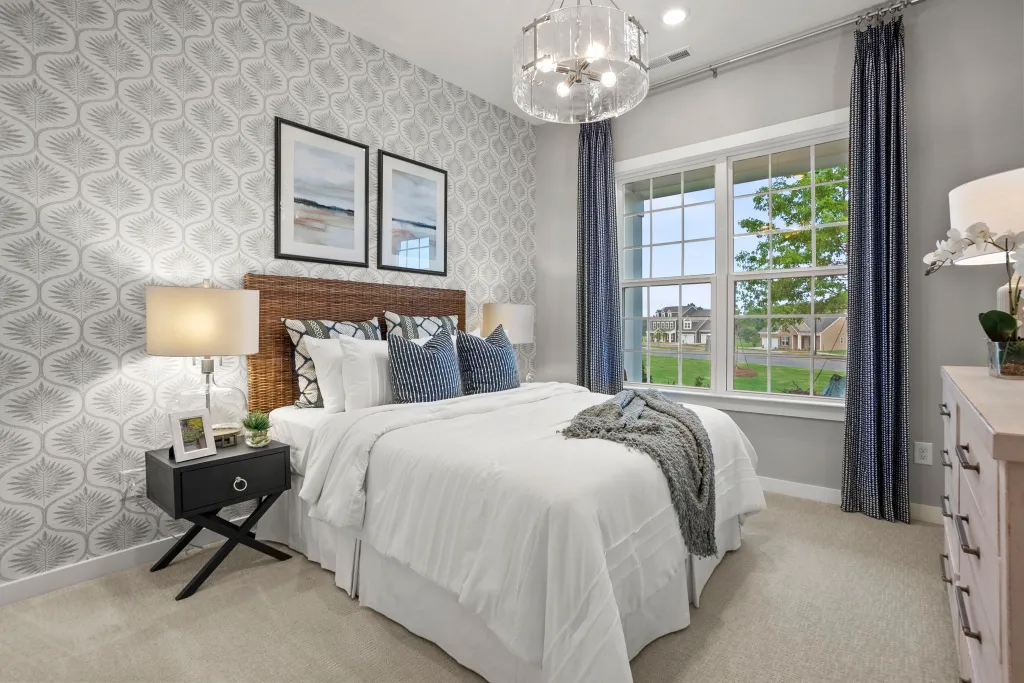
As consumers place an increasingly high priority on health and wellness in their daily routines, sleep has moved to the center of the conversation. Once treated as a passive part of life, good sleep is now widely recognized as essential to overall well-being.
This sleep obsession has fueled sleepmaxxing, a viral social media trend that treats sleep as a data-driven event. Through metrics that track quality and recovery, rest is no longer just experienced, but is measured, analyzed, and optimized.
The popularity of sleepmaxxing, and looking at sleep through a performance lens, has set off a chain of consumer behaviors. Wearable sleep trackers are on the rise, awareness of how environmental conditions affect rest has sharpened, and people are increasingly seeking ways to improve sleep, from supplements and circadian lighting systems to rethinking the bedroom itself—designed not just for style, but for performance.
Sleep by the Numbers
According to a survey by the American Academy of Sleep Medicine (AASM), 48% of adults report having used a sleep tracking device, a stat that has risen significantly over the last couple of years. More than half of sleep tracker users (55%) report taking action based on the sleep data presented.
As more consumers engage with sleep data, what was once intuitive has become something to track, measure, and evaluate each night. Metrics such as sleep scores and interruptions begin to shape perception.
The Downside of Data-Driven Sleep
Sleep is increasingly recognized as a pillar of longevity, so actively trying to improve sleep conditions is a positive step. However, when sleep becomes quantified and performance-driven, it can create anxiety, pressure, and self-judgment.
“One concerning trend we are starting to see is people who become overly worried about their sleep based on data from their tracker or device,” says sleep expert Dr. Shalini Paruthi with the AASM.
“According to the AASM survey, most adults (76%) have lost sleep due to worries about sleep problems,” noting that people should not rely on the overnight sleep report to determine the quality of the day that lies ahead.
A notable shift is how people are acting on the data received from sleep trackers, explains Paruthi.
“When adults notice results that are suboptimal, we see that many of them want to prioritize sleep hours, improve their sleep environments, and learn more relaxation techniques in the hope of improving sleep data.”
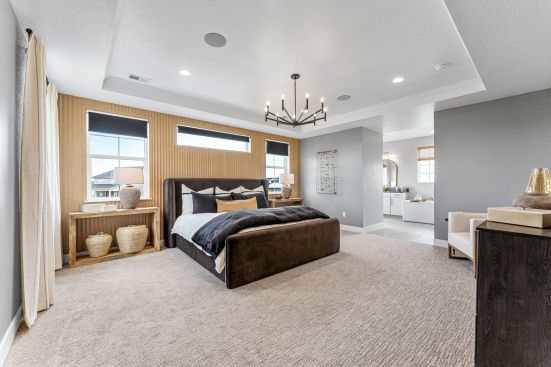
Courtesy Taylor Morrison
The Design Shift: How New Builds Support Better Sleep
Armed with data, consumers now expect bedrooms to support sleep. New build homes have an advantage, with built-in bedroom features that promote rest:
- Layouts that consider separation and privacy.
- Flex rooms, outside but still close to bedrooms.
- State-of-the-art climate control.
- High-quality materials with better acoustic performance.
Adding onto these new-build benefits, here are the must-have design and décor elements in a bedroom geared for good sleep.
Make sleep the bedroom’s priority: In recent years, bedrooms have become multipurpose spaces, including work from home and exercise, which works against sleep optimization.
“If the main goal for your bedroom is creating ultimate serenity and relaxation, make that your primary focus. Try to separate your workspace or workout area by putting your desk or gym equipment in another room to make sleep a priority,” says Lee Crowder, senior director, national design and model operations for Taylor Morrison.
Other sleep-friendly designs include separate dressing areas or a pajama lounge, removed from the bed area, for relaxing. A nearby flex room accomplishes the same.
Think small and cozy: While a sprawling primary suite seems luxurious, a smaller bedroom works like a cozy cocoon. Enhance the effect with tactile textiles and color drenching to envelope the space in calming tones.
Screen-free sleep: Keep screens out of bedrooms, as blue light from phones, tablets, and TVs triggers alertness and disrupts sleep cycles. If using a sleep tracker, check data in the morning only, outside of the bedroom.
Light that supports sleep: Humans rely on natural light cues to regulate circadian rhythms and the wake/sleep cycle.
To replicate this experience, there are a variety of smart lighting systems that intuitively follow the patterns of natural light throughout the day.
Or, a layered lighting strategy that mimics natural light variations as the day progresses can help keep rhythms on track. Include task, ambient, and decorative lighting, focusing on warmth and direction. Crowder suggests avoiding overhead bulbs over 3500K, which are too intense; use lamps and dimmable circadian bulbs instead.
Natural light is beneficial but use blackout window coverings for uninterrupted sleep. If you like to rise with the sun, sheer covers suffice. Consider bedroom orientation and where light is strongest.
Dreamy décor: Paint color significantly affects sleep, as some colors trigger physical responses that help or hinder rest. Red raises blood pressure, while greens and blues are calming, making them better choices for a sleep-focused bedroom.
Natural materials are inherently calming, making them ideal for accents, décor, and bedding, says Crowder. “Splurge on good quality sheets and bedding, as these make a significant difference in a bedroom’s comfort and serenity. Bedding should be made of natural materials that breathe and allow for the best sleep quality.”
Sleep may be driving a wave of data, devices, and optimization strategies, but the most effective solution isn’t another tool—it’s the space itself. As awareness grows around how environment impacts rest, bedroom design is shifting from a stylistic choice to a functional necessity.
This article was originally published on NewHomeSource.