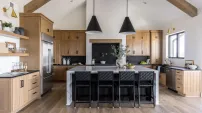
Traditionally, model homes have showcased floor plans and features while creating important emotional connections that compel buyers to choose a home.
But buyers are looking for more from models today. In addition to its traditional function as a sales tool, the model home has a new job: affirmation.
“Buyers are visiting models much further along in their decision-making journey. They’ve spent endless hours online comparing floor plans, features, and pricing,” says Ali Richert, enterprise sales, head of home builder at Wayfair Professional.
“This shifts the model home opportunity for builders from introducing a product to reinforcing the purchase decision. When a model home creates an emotional connection by helping buyers envision a lifestyle that feels both aspirational and attainable, it can give them greater confidence in their buying decision,” says Richert.
“The model home plays a critical role in helping buyers move beyond evaluating a floor plan and features to envisioning themselves living there,” says Richert.
In today’s market, buyers face affordability constraints and keenly feel the pressure to buy the “right” home. Moving has to feel worthwhile too.
That puts confidence at the center of a new emotional dynamic: buyers need to feel certain enough about the home to take that leap. Model home design now balances inspiration with affirmation.
Making the Model Feel Like Home
The key is for models to move beyond showcasing homes to demonstrating routines, because buyers are making both practical and emotional decisions simultaneously, says Richert.
“The practical decision is cognitive: Does this home meet my needs? Will my furniture fit? Is this layout functional?
The second is emotional: Can I see my life here? Does this feel like home? This emotional connection can become the deciding factor between two otherwise comparable homes,” says Richert.
Today’s models need to meet the buyer where they are in their house hunt, typically armed with information, and initial decisions already made. It’s similar to the experience now for consumers when purchasing a car. They’ve researched and built the car to their needs online. The test drive confirms what they already feel—or creates doubt.
In the model home, anticipating a buyer’s mindset, considering how a buyer might use various spaces in detail, and translating those functions into design elements is crucial, explains Hannah Sloan, creative marketing specialist with Unscripted Interior Design.
“When a buyer walks in (to the model) knowing what they do and don’t want, our design has already met those needs.”
“No matter what stage of life the buyer is at, whether they are a first-time home buyer, empty nester, or move-up buyer, from the beginning phases of the design, we’ve factored in how that specific buyer lives so it reflects in the functionality and livability of the design, allowing the buyer to fully envision a life in that home,” says Sloan.
“Thoughtful design: furnishings, decor, artwork, and lighting can transform an empty house into a home, helping buyers to really envision the lifestyle they’re buying into,” says Richert.
Richert notes that furnishings and decor can address both emotional and cognitive needs for buyers, and make spaces feel both aspirational and attainable. Furniture in particular helps to define scale and reveal the functionality of a layout in real life.
Building Confidence by Giving Spaces Purpose
What works against confidence? Ambiguity and doubt. That’s why the role of the vignette in model home design is so important right now. A vignette, a small, intentionally styled area that communicates purpose, makes spaces emotionally recognizable, and reinforces purchase decisions.
“Some of the most effective details are those that help buyers see themselves living in the home and create an emotional connection to the space. We like to incorporate lifestyle vignettes such as a coffee station, reading nook, or thoughtfully merchandised children’s room that give buyers a glimpse into how the spaces could function in their everyday lives,” says Megan Calmes, director of sales and marketing with Creative Design.
“We use details such as trim, wallpaper, room dividers, built-ins, and other architectural features to demonstrate how a space can be both beautiful and functional. These elements help buyers understand the possibilities of the floor plan while making the home feel more personalized, memorable, and livable,” says Calmes.
Designing for Real Life
But showing how a room functions is only part of the equation. Sloan says the goal is “designing the journey of how someone will live in their home, not just how they will see it on the day they move in.”
“We consider the daily routines of the buyer and look for opportunities to build in solutions that make life easier—from thoughtful drop zones and decluttering spaces to dedicated Costco storage, built-in media solutions, and technology needs,” says Sloan.
Memory points in models still rely on wow-factor impact, but there is an extra layer of functionality that helps buyers anticipate lifestyle needs, which in turn builds confidence and a more solid emotional connection.
For example, in a model focused on traditional memory points, a dining room might have been styled opulently, with great attention to decor details.
Now, a dining room should be intricately styled and also include a fully set table for a crowd that helps buyers understand how a room works for entertaining.
A primary bath is typically merchandised as a spa-like retreat, with plush towels and decorative accessories. But demonstrating how the space supports morning routines, like two people getting ready at the same time, with dual vanities, strategically placed chargers and outlets, and separate bathing and dressing areas, helps buyers see lifestyle value.
Previously, a flex room might have been styled as a simple bonus room but now designing the room to accommodate multiple uses at once, like with a home office with daybed, or a multipurpose, zoned layout, creates more options for buyers in the same space.