If a single home embodies the thinking behind Sustainable 9’s approach to building, it may be the Scandinavian-inspired house the firm recently built in a new St. Paul, Minnesota, neighborhood. Built on the site of a former Ford Motor Co. manufacturing plant, the modern home presents a striking silhouette, clad in blue lap fiber cement, wood, and aluminum trim beneath a standing-seam metal roof. A two-level porch and roof deck overlook sunsets and the tree-lined public trails along the Mississippi River. But while the house delivers plenty of curb appeal, the more revealing story is found in the systems and decisions beneath the surface.
“The client came to us with a mindset of, ‘I’m not choosing you just for the design; I really care about sustainability,’” says Paul Trieu, director of engineering at Sustainable 9. “We got to have some fun about what this project was going to be.”
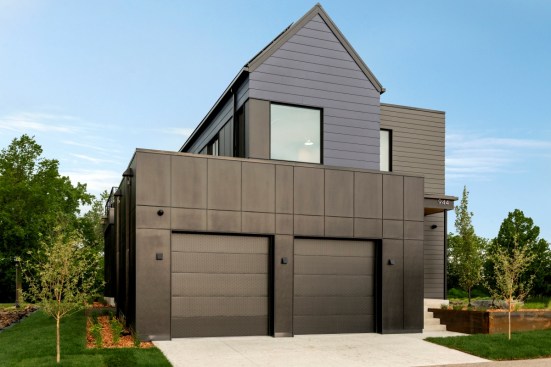
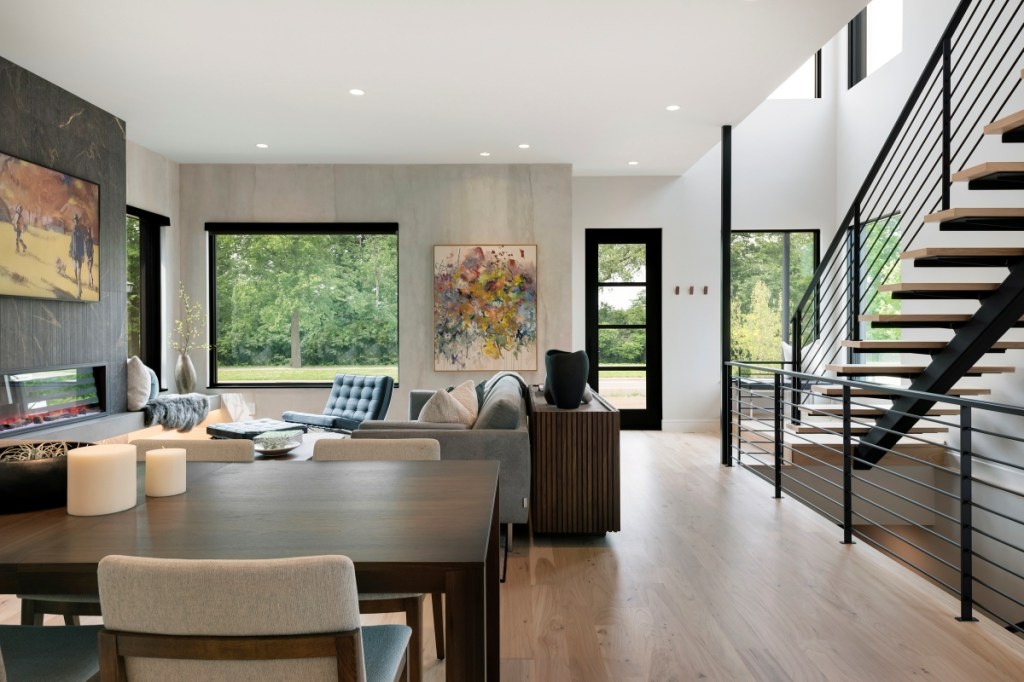
Montreal Avenue Residence in St. Paul, Minnesota, by Sustainable 9 and Unfold Architecture. Photo by Spacecrafting
Designed around an age-in-place concept, the all-electric house is wrapped in 2 inches of continuous exterior insulation and relies on geothermal heating and cooling. Other features include cellulose interior insulation, triple-pane windows, Tesla Powerwalls, hemp wool insulation, LED lighting, and photovoltaic solar technology.
The house also acts as a prototype for other homes in the firm’s portfolio. It earned certification as a Department of Energy Zero Energy Ready Home, one of its four third-party verified certifications tied to the project. “The home is approaching true net zero,” Trieu says. “And it’s very beautiful.”
Homes no longer have to choose between good design and high performance. Government incentives, growing consumer awareness, and advances in sustainable products and building systems are reshaping expectations around what a home can deliver—not only in energy efficiency, but also in durability, comfort, and indoor air quality.
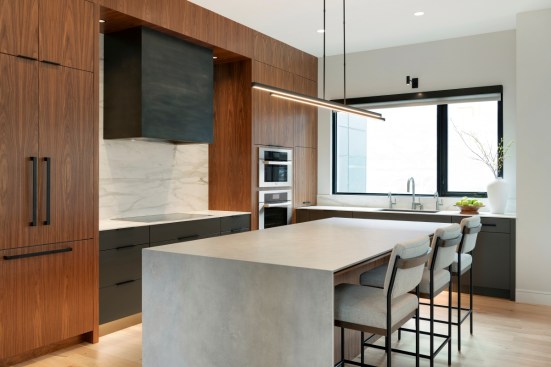
Montreal Avenue Residence in St. Paul, Minnesota, by Sustainable 9 and Unfold Architecture. Photo by Spacecrafting
Buyers are responding. Nearly 80% prioritize features such as energy savings, indoor air quality, and long-term durability, according to a 2026 report from the National Association of Home Builders.
Healthy Building Materials
At a foundational level, locally sourced natural materials remain central to sustainable home construction. “That’s still a really smart way to create a healthy home, and that hasn’t changed,” says Stephen Aiguier, founder and president of Green Hammer Design Build, based in Portland, Oregon. “But what has changed is the evolution of materials over time, and the knowledge and reporting around those materials’ health and safety.”
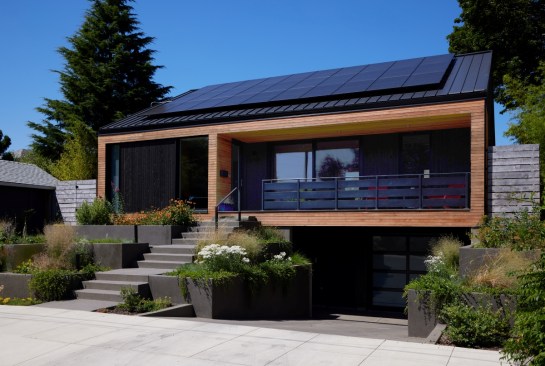
Richmond Residence in Portland, Oregon, by Green Hammer. Photo by George Barberis
That knowledge matters. According to the Environmental Protection Agency (EPA), indoor air can be up to five times more polluted than outdoor air, raising the stakes around the materials used inside homes. But unlike Food and Drug Administration food labels, building materials in the United States are not required to carry the same level of ingredient disclosure.
Instead, green builders often look for companies that voluntarily use the International Living Future Institute’s Declare labels to identify healthier building products. Much like a nutrition label, Declare lists a product’s contents, including “Red List” ingredients—the institute’s designation for “worst-in-class” materials, chemicals, and elements linked to health and environmental risks.
The scale of the issue is significant. As of early 2026, the EPA’s Toxic Substances Control Act Chemical Substance Inventory contains more than 86,000 chemical substances that are manufactured, processed, or imported into the U.S.
“There are estimates that between 12,000 and 16,000 of these chemicals are harmful for human and environmental health,” Aiguier says. “In other parts of the world, those are regulated.”
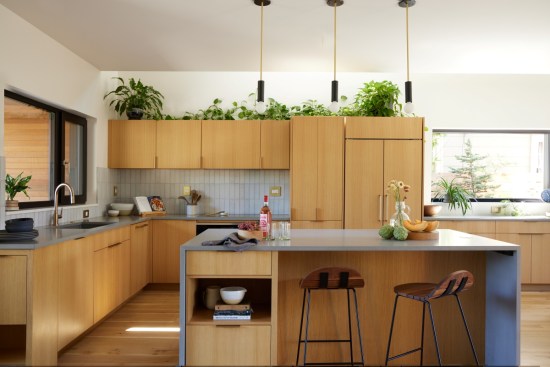
Richmond Residence in Portland, Oregon, by Green Hammer. Photo by George Barberis
The International Living Future Institute maintains a free, searchable database of companies using its Declare labels.
“We’re looking for transparency in materials first and foremost,” Aiguier says. “There are a lot of big manufacturers these days, like Mohawk carpets and Kohler, declaring their products and telling you what ingredients are in them, so you can be an informed consumer.”
Other resources include the Parsons Healthy Materials Lab, which maintains a database of building products, searchable by category, that have been vetted for harmful toxins.
Armed with knowing what they need, some builders forge direct partnerships with local vendors to ensure green materials are close at hand. “We started owning our whole supply chain,” Trieu says. “We have vendors where we might say, ‘Hey, this product is similar to something you already stock, but it has a lower global warming potential, and I want you to carry it.’”
Green Certification Road Maps
Nearly 30 years ago, the U.S. Green Building Council launched LEED (Leadership in Energy and Environmental Design), helping establish one of the most influential frameworks for sustainable construction in the U.S. Since then, programs such as the Passive House Institute standard and the Living Future Institute’s Living Building Challenge have become important benchmarks for green builders, many of whom view standard building codes as only a starting point.
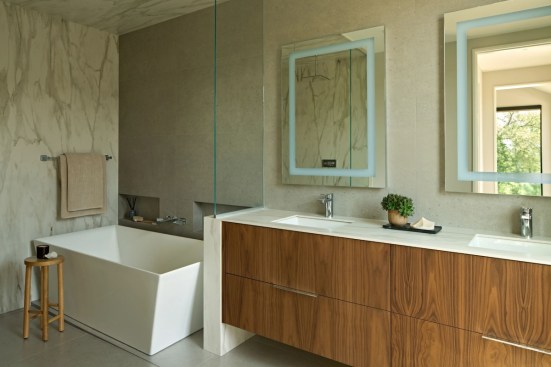
Montreal Avenue Residence in St. Paul, Minnesota, by Sustainable 9 and Unfold Architecture. Photo by Round Three
“We like to joke that [building to] code is the worst legal home you can build,” Trieu says. “It’s meant to be a floor not a ceiling; it’s the lowest starting point.”
Trieu says Sustainable 9 is working toward a future in which every home it builds meets baseline Passive House standards. “To date, there are actually shockingly very few residential Passive Houses in the country for how well known the idea is,” he says.
A few years after Aiguier launched Green Hammer in 2002, the company participated in the LEED residential pilot program. More recently, Green Hammer completed a project that was certified through the Living Building Challenge.
“It’s the highest level of certification with 20 imperatives you have to meet, and it’s very, very challenging,” Aiguier says. “But you’re seeing an evolution over time where big players like Gensler and Skanska are taking on the Living Building Challenge as a framework for thinking differently about their operations and projects. We’re doing the same thing, but at a much smaller scale.”
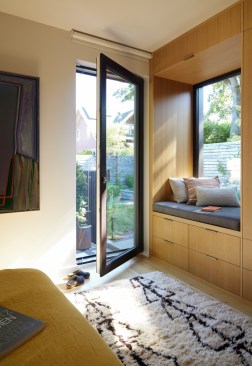
Richmond Residence in Portland, Oregon, by Green Hammer. Photo by George Barberis
One example is a home Green Hammer built in Portland following Passive House design principles, with an airtight, super-insulated envelope and triple-pane windows and doors. The compact, 1,757-square-foot house uses minimal energy, and a 9,000-gallon cistern supplies the home’s annual potable water needs through rainwater harvesting, on-site filtration, low-flow fixtures, and right-sized plumbing design.
Green Hammer also minimized construction waste by partnering with Lovett Deconstruction to salvage, recycle, and reuse as much of the original 1908 house as possible.
“We’re trying to get to a point where buildings relate to the natural world in a true way—to have the kind of impact a flower would where it gets all of its water and energy from the site that it’s on,” Aiguier says. “Then when it degrades, it’s going back and regenerating that site. Let’s use that as inspiration for how you create buildings.”