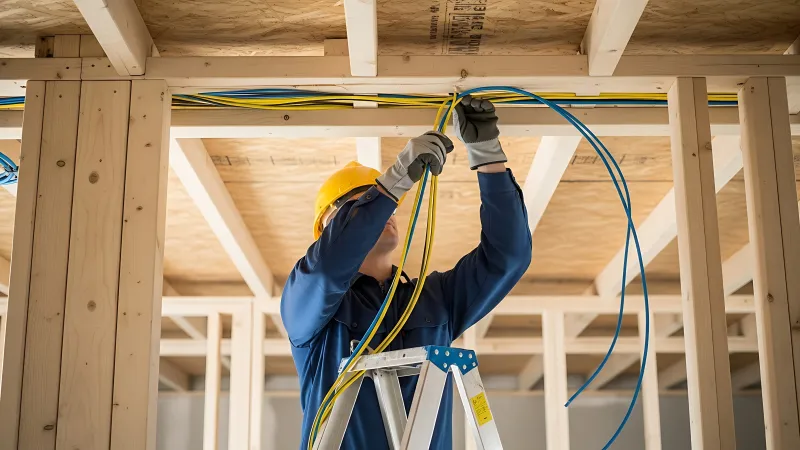
A study by the Simplar Foundation found that multiskilled construction crews completed work in approximately 22% to 38% fewer workdays than crews following a traditional single-trade labor strategy. The findings are based on nearly 90,000 labor hours across 18 construction projects involving 11 contractors.
The research, analyzed by Associated Builders and Contractors (ABC), highlights how training workers to perform multiple trades and tasks can help contractors better allocate available labor, reduce downtime, and keep projects moving as workforce demands change.
“America faces a fundamental challenge: We have more to build than our workforce can currently support,” said Michael Bellaman, ABC president and CEO. “This research demonstrates that a solution is already within reach. By investing in our craft professionals, expanding their skills and removing unnecessary barriers to using those skills, we can create more opportunity for workers and greater capacity for contractors to build America.
He continued, “As a new Congress prepares to take office, lawmakers now have powerful evidence to guide policies that strengthen our workforce, promote fair and open competition, and deliver better outcomes for owners and taxpayers. This is an opportunity for the entire construction industry to win.”
Researchers found that relying on single-trade staffing would have left at least one trade short of available labor on 73% of project days. A single-trade approach also required more than one-third additional staffing on the busiest project days.
The study documented 80 unique trade and skill combinations across 18 trades, with multiskilled workers performing an average of 3.2 different trades or skills during their projects.
The findings build on two earlier reports in the foundation’s three-part research series, which found that multiskilling increased the share of workers’ time spent directly advancing construction by 39% and reduced waiting and idle time by 68%. Controlled field trials also showed production rate improvements of 37% to 50%.
The research also emphasizes that productivity gains do not require workers to perform tasks faster or work harder. Instead, allowing properly trained and qualified employees to apply multiple skills can reduce delays between activities, minimize trade handoffs, and improve workflow continuity.
Brian Lines, Ph.D., P.E., the study’s principal investigator and an associate professor at the University of Kansas, said the findings provide measurable evidence of how workforce flexibility can translate into stronger project performance.
ABC is encouraging policymakers to support competency-based workforce development, expand training and upskilling opportunities, and preserve the flexibility of qualified workers to safely perform tasks across multiple skills and trades.
The research was conducted by the Simplar Foundation in collaboration with Arizona State University, the University of Kansas, and the University of North Carolina at Charlotte.