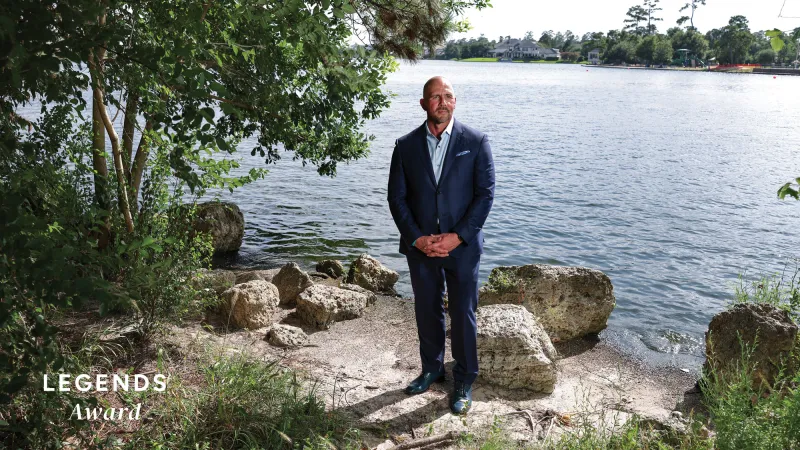
Ask David O’Reilly what legacy he hopes to leave behind, and his answer isn’t about transforming Howard Hughes Communities in his own image. Instead, he talks about the leaders who came before him, and the responsibility of carrying forward what they started.
As CEO of Howard Hughes Communities, O’Reilly sees himself less as an architect of a new vision and more as a steward of one that has been evolving for decades. From The Woodlands near Houston to Teravalis in Phoenix’s West Valley, the company’s expansive communities were built on the belief that thoughtful planning can improve quality of life, strengthen social connections, and create lasting value.
“Everyone just thinks it’s the building that sets a master plan apart. Or when you build this, that’s the inflection point, but I think it is the sequence in which you build has a greater impact than what you build,” O’Reilly says. “You have to sequence it right to meet needs and to create that flywheel of growth and value creation.”
That philosophy aligns with O’Reilly’s own journey. Armed with a background in civil engineering, real estate development, and investment banking, he has spent his career at the intersection of physical places and financial discipline, a spot that perfectly aligns with planning impactful communities. Today, he leads with a simple but powerful conviction: great community building happens when human-centered design and long-term value creation work together rather than compete.
“Great master plans have great quality of life when they are functional,” he says. “It has to have functional completeness, economic completeness, social completeness, and aesthetically must be beautiful. You get that through short commutes, connectivity to nature, and fostering great schools and environments. You add all of those ingredients up, you throw it in a bowl and bake it at 350 [degrees], 50 years later, it comes out as a quality-of-life cake.”
Howard Hughes Communities has two of the top four MPCs in the country—Summerlin and The Woodlands—based on total historical sales, according to Zonda data. In terms of scale, four of Howard Hughes’ MPCs are in the top 20 based on total planned units, with Teravalis leading the way by 113,000 total units planned.
The scale, baked-in quality of life, and legacy of success instilled in Howard Hughes Communities is what has earned O’Reilly and his team the 2026 Legends Award, where he will be recognized at Zonda’s Future Place event in Irving, Texas, on Sept. 28 to 30.
O’Reilly points to the honor as the result of his team and the organization as a whole, “Community building at its core is a team sport.”
Courtesy Howard Hughes Communities
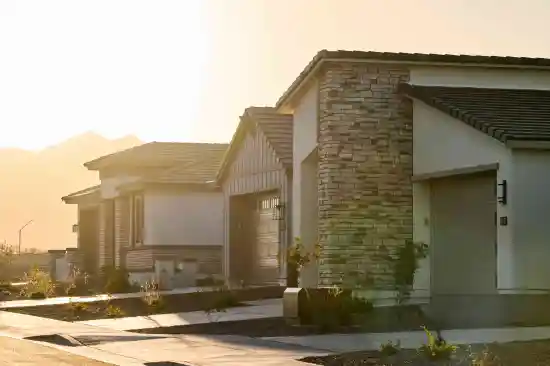
A sunny streetscape in 37,000-acre Teravalis.
Steering the Ship
The son of a school teacher, O’Reilly grew up in Boston where his mother pressed education and hard work from a young age. O’Reilly was accepted into the Naval Academy following high school, but he was soon turned down when they found out he had asthma. It was June and he had no back up plan.
Future Place
September 28-30, 2026
The Ritz-Carlton, Dallas Las Colinas
Future Place is the premier gathering of the nation’s largest landowners, builders, and capital leaders. Discover the forces driving growth, value, and vision in master-planned communities.
O’Reilly says, “I called every hockey coach I knew and there was one guy that said he could still get me into the school. It was Tufts. I studied civil engineering there and it is where I learned the physicality of how things work and creative problem solving.” Following Tufts University, O’Reilly spent time in real estate development learning under Bill Poorvu. Poorvu encouraged him to learn the finance side, so he went to Columbia University to get his MBA.
“I expected to work on Wall Street for a couple of years and go back into development, but those couple of years turned into nine pretty quickly,” he laughs. But that time is where O’Reilly married the physical interaction of machines and places from civil engineering with how capital works, how risk is priced, and how value is created over time.
“Master plan communities really sit at the intersection of design, infrastructure, capital, public-private partnership, and when you put those together it impacts human behavior,” says O’Reilly.
In 2016, O’Reilly joined Howard Hughes as chief financial officer before serving as president and interim CEO. He was appointed CEO at the end of 2020.
When asked what the transition from CFO to CEO was like, he says, “As CFO, you can be largely right, but you can be focused on numerical analysis. As CEO, you have to be right in that numerical analysis, but you also have to be right in judgment, people, timing, communication. As CFO, they wanted me to have the answer. As CEO, they want to know what I stand for.
“If you could ask anyone at Howard Hughes, the math still matters to me a lot. It’s ingrained in me. But I think as you rise up that corporate ladder, leadership gets broader. And more human. You’re setting the pace, you’re setting the standards, you have to have clarity and conviction for the organization.”
Mark Felix
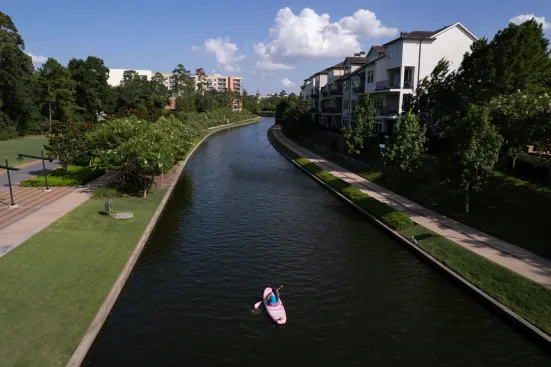
The Woodlands Waterway winds through its town center offering water recreation and attractions along the way.
Planting Communities That Last
In the 10 years that O’Reilly has been at Howard Hughes, including over five years as CEO, he has aimed to carry on the visions of James (Jim) Rouse, George Mitchell, Victoria Ward, and Howard Hughes. O’Reilly says that while they all had very specific visions for their communities, all mostly centered around creating a sense of place.
“As Jim Rouse said, he was designing a garden for growing people—free of discrimination, free of religious persecution, all walks of life, in harmony,” O’Reilly says.
That sense of place that O’Reilly is chasing can be felt throughout Howard Hughes’ MPCs, but not because they have stuck to a concrete plan for each. It has been flexibility and a willingness to pivot that has changed the trajectory for even the most established MPCs, like The Woodlands.
“Every great community, every small to large to massive master plan community has this master plan that overhangs it. And every six months, we just take an eraser and erase it, and say, ‘All right, what should be changed?’ Because consumer sentiment changes, consumer demand changes, our residents needs and wants change. And we have to anticipate those, deliver on those, and that drives great community, great sense of place, great quality of life,” he explains.
“Being flexible is one of the most important keys and flexibility in a 40-year plan, it sounds like they’re opposites, but they’re so harmonious if you do it right.”
Courtesy Howard Hughes Communities
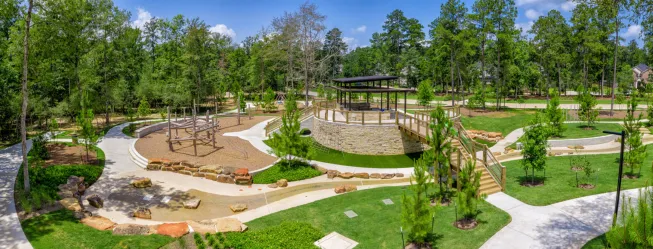
Founders Park in The Woodlands Hills is located at the heart of the 2,000-acre community.
In Texas, Howard Hughes has The Woodlands, The Woodlands Hills, and Bridgeland, all in the Greater Houston area and home to nearly 160,000 residents. Across 28,500 acres, The Woodlands has 151 parks, 220 miles of hike and bike trails, 7,790 acres of green space, the 200-acre Lake Woodlands, and three award-winning school districts, with a mix of single-family, multifamily, retail, dining, healthcare, and entertainment.
“You don’t experience life thorough a windshield. You experience life on your feet,” O’Reilly says about the connectiveness of The Woodlands trails, parks, and green space. “What makes these master plans so different is that you have one entity that is the master developer of these communities that is entirely aligned with their residents. And that’s easy to say because we’re also the residents.”
He continues: “We don’t have a parcel of land in these communities, fly in, build something that’s going to make a lot of money and leave town, right? No, we still have to drive by that every day. Our kids are going to go to school down the street from that every day. We’re going to walk on a trail by that development every day. And if it doesn’t fit cohesively into the community, it’ll be value destructive for everything around it.
“And I think because Rouse, Mitchell, Hughes, and Ward had these cohesive visions and envisioned continued ownership of the vast majority of the land and assets, all of them are treated in that way because it’s not just the value of what we build on the postage stamp, it’s how that postage stamp impacts the land all around it.”
Courtesy Howard Hughes Communities
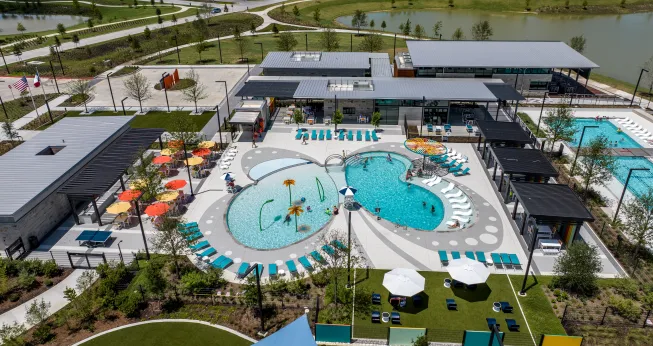
Longwing Landing in Bridgeland offers a leisure pool and a lap pool alongside other family-friendly amenities.
Just north of The Woodlands is The Woodlands Hills. Near Conroe and Willis, Texas, the 2,000-acre community is nestled in trees and nature with a 17-acre Village Park, 20 neighborhood parks, tennis courts, pools and spraygrounds, bike lanes, and a 10,600-square-foot activity center with event-friendly indoor and outdoor space, and fitness center.
Bridgeland, which expects 70,000 residents at full build out and currently has approximately 30,000, consistently sits in the top 10 MPCs for sales, according to Zonda. Spanning 11,500 acres, Bridgeland has 250 miles of trails, over 75 parks, activity centers, pools and spraygrounds, offices, retail, and restaurants, and five distinct villages designed to foster connection with community and nature.
Courtesy Howard Hughes Communities
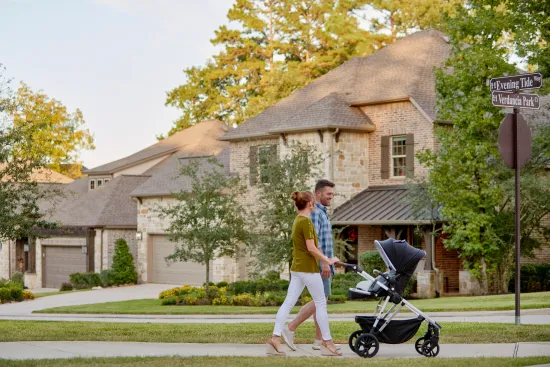
Residents of The Woodlands Hills have access to 20 neighborhood parks and expansive amenities.
“David’s vision for what a community can be, and his passion for bringing that vision to life, has given our Houston team the foundation and inspiration to honor The Woodlands’ remarkable legacy. That same vision has guided us in elevating Bridgeland to national prominence and extending those same values of design excellence and human connection to The Woodlands Hills,” says Jim Carman, president of the Texas region for Howard Hughes Communities.
“His belief that great communities don’t just house people but transform how people experience life today and for generations to come, is reflected in everything we do across the region every day,” Carman says.
Outside of the Lone Star State
Planned to be one of the largest MPCs in the country, Teravalis in Buckeye, Arizona, opened last year. The 37,000-acre MPC is projected to have 113,000 homes, 340,000 residents, and 62 million square feet of commercial development at completion. The first village within Teravalis is Floreo, which will encompass 3,000 acres and up to 8,500 homes for 25,500 residents, despite only accounting for just under 10% of the overall MPC.
David O’Reilly, CEO,
Howard Hughes Communities
Hometown: Boston. O’Reilly credits his upbringing and his mother, a lifelong teacher, with instilling the values of hard work, education, and perseverance that continue to shape his leadership approach.
Family: O’Reilly and his wife have two sons. Family remains his greatest source of perspective and grounding outside of work.
Favorite Community Amenity: Cynthia Woods Mitchell Pavilion in The Woodlands. The concert venue doubles as a community gathering place, hosting everything from performances to holiday celebrations and seasonal activities. O’Reilly appreciates how it is woven into the community rather than existing as a standalone attraction.
Favorite Advice: “Work hard and think big.” The lesson came from his mother, who encouraged him to focus on effort rather than natural talent. One piece of advice that has stayed with him since childhood: “You can be the one on the ice that works hardest, because that’s a decision you make.”
What Inspires Him: Supporting veterans through Southern Cross Service Dogs, a nonprofit he and his wife helped form. The organization trains service dogs for disabled veterans, helping them regain confidence and independence.
A Few Surprises: O’Reilly describes himself as a devoted Taylor Swift fan and enjoys spending weekends baking elaborate cakes with his youngest son.
What’s on His Desk: Photos commemorating key moments from his tenure at Howard Hughes Communities, along with books about the company’s founding visionaries—George Mitchell, Jim Rouse, Victoria Ward, and Howard Hughes.
Personal Philosophy: Whether in business or life, O’Reilly believes the best outcomes come from balancing discipline with purpose. “Finance taught me that every decision has a cost of capital. Community building taught me that every decision has a human impact.”
Floreo at Teravalis will feature over 30 miles of paths and trails, a state-of-the-art community center, shopping and dining, pools, courts, and parks. At the grand opening of Teravalis, there was a heavy emphasis on commitment to water efficiency, low-impact development, and honoring the desert landscape. The massive MPC will have roughly 7,000 acres of open space.
“People today are more aware than they ever have been about the difference between a place that was just developed and place that was truly planned,” adds O’Reilly.
Set beside Red Rock Canyon National Conservation area in Nevada, Summerlin is minutes from the Las Vegas Strip and is centered around a walkable 400-acre downtown. The 22,500-acre MPC offers over 200 miles of trails, over 300 parks, 26 schools, and 949,000 square feet of Class A owned office.
Having opened in 1990, Summerlin still has approximately 3,700 gross acres reserved for future growth whether that’s residential opportunities, infrastructure, commercial, or open space. That reserved space is a perfect example of not only planning for future needs but operating with a long game mindset. O’Reilly believes the next big innovation or adding the hottest amenity of the time isn’t the answer to success. “The bigger opportunity is in becoming more holistic,” he adds.
“We spend a lot of time talking about durability, optionality, and whether we’re being properly paid for the risk we’re taking. We operate 20- to 30- to sometimes 50-year assets inside of a quarterly reporting vehicle. So you always have to have long-term vision and present tense discipline,” O’Reilly says.
And the ability to see both is a rare quality that O’Reilly, and the leaders before him, have embraced.
O’Reilly says, “Finance taught me that every decision has a cost of capital. Community building taught me that every decision has a human impact. And if those can work together, that can drive the best results possible because human-focused design should not be a tug of war with financial discipline and company returns. They can work together and be synergistic. And I think that’s what we’ve really tried to do across our communities.”
The common threads of quality life, a connection to nature, and a sense of community are exactly what drives O’Reilly to keep carrying the founders’ visions forward. While many developers focus on the next quarter, O’Reilly measures success decades into the future. The real challenge, he says, isn’t building fast, it’s creating places that retain their value and purpose five, 10, or 20 years later.
“If we do our job right, we’ll have kept improving the quality of life of our residents,” O’Reilly says. “The final judge of whether I can be proud of this will be our residents at the end of the day.”