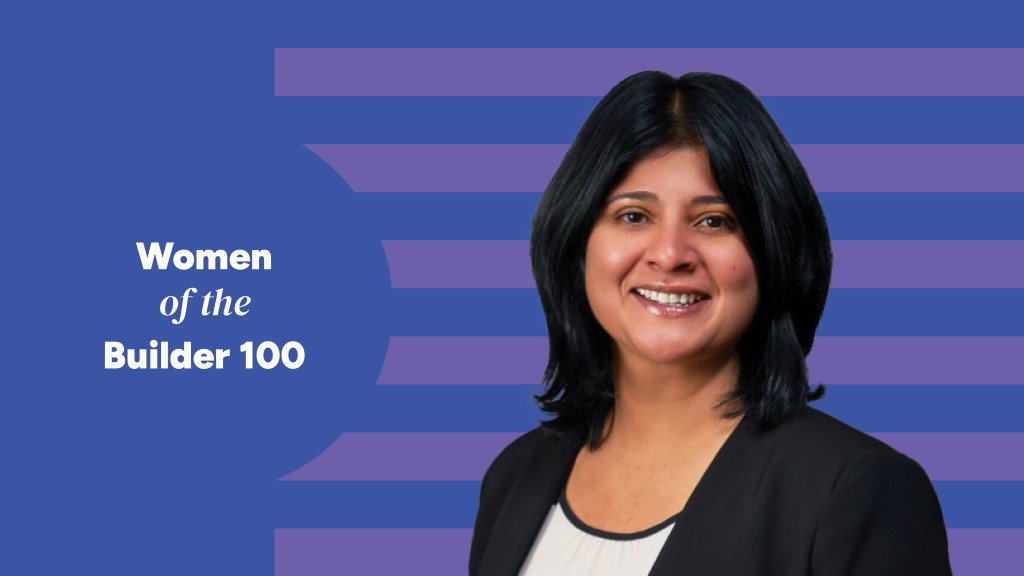
Stepping into the CEO role at View Homes, Natasha Gandhi brings more than two decades of experience across virtually every corner of the home building business. Having grown through architecture, sales, marketing, operations, land, and finance, Gandhi arrives at the top job with a deep, cross‑functional understanding of what it takes to scale a home building operation through changing cycles.
Succeeding founder Randy O’Leary, Gandhi takes the helm in a moment defined by both near‑term market uncertainty and long‑term opportunity. Below, she discusses how she plans to honor View Homes’ culture while sharpening operational discipline; why balance‑sheet strength and execution matter more than ever; and how diverse leadership can be a competitive advantage as builders adapt to evolving buyer needs.
Gandhi also reflects candidly on her journey as a woman rising through a traditionally male‑dominated industry, what it took to earn a seat at the table, why sponsorship matters more than mentorship, and how she intends to develop the next generation of leaders within View Homes, which is No. 73 on the Builder 100 list this year.
You’ve spent more than two decades in the home building industry and are now stepping into the CEO role at View Homes. What does this milestone mean to you personally as a woman who has went through the ranks of a traditionally male‑dominated industry?
This role is deeply meaningful to me, but I think about it less as a personal milestone and more as a responsibility. Earlier in my career, even though there weren’t many women in the rooms where key decisions were being made, I did not let that hold me back from expressing my opinion. I often had to prove myself in ways some of my peers didn’t. That experience shaped how I lead—it made me more resilient, more prepared, and more intentional.
Now that I’m in this role, I feel a real obligation to use the seat well—not just to grow a strong company, but to help make the industry more accessible and more inclusive for the talented women coming up behind me. That’s what this moment represents to me.
As you take the helm following founder Randy O’Leary, how do you balance honoring the company’s legacy while bringing your own vision and leadership approach to the organization?
Randy built something truly special at View Homes, a culture, a reputation, and a customer experience that people trust. That doesn’t happen by accident, and I have tremendous respect for what he created.
My role isn’t to come in and reinvent the company overnight. It’s to listen first—to the team, our customers, and the markets we serve—and to understand what’s working and why. View Homes has a clear direction and strong momentum, and my focus is to help the organization execute consistently and at scale. From there, I bring my own lens: operational discipline, cycle‑time efficiency, team development, and scalable growth. The strongest results come from building on a solid foundation rather than tearing it down, and I’m fortunate to have inherited a very strong one.
Having previously led regional operations at Richmond American Homes, what leadership lessons prepared you most for this transition?
Leading a multidivision operation taught me that you can’t scale without trust—trust in your people, and their trust in you. When you’re overseeing thousands of closings across multiple markets, success depends on empowered teams who are accountable and aligned.
I also learned that the discipline you establish in strong markets is what sustains you when conditions tighten. KPIs, financial controls, and forecasting processes may not be glamorous, but they’re what separate organizations that endure from those that struggle when the cycle turns. Those lessons are central to how I approach leadership today.
Women remain underrepresented in executive leadership across construction and home building. What barriers have you seen firsthand, and what steps can companies take to change that?
The barriers are real, and it’s important to name them. Early in my career, I was often the only woman in the room—sometimes the only woman in the building. There’s an invisible tax that comes with that: having to work harder to establish credibility, being spoken over, or seeing your ideas attributed elsewhere. Over time, that fatigue pushes talented women out of the industry and sometimes we as women create our own barriers. I have never viewed myself or any other woman as less capable in any capacity. In fact, one of my old bosses used to say, ‘If you want something done, give it to a woman.’
Change starts with examining the pipeline, not just the executive team. If women aren’t advancing beyond mid‑management, something needs to be addressed there. Companies also need to move beyond mentorship to real sponsorship. Mentors offer advice but sponsors open doors. And leadership has to be honest about culture. You can’t claim to be inclusive while rewarding behaviors that don’t promote inclusivity.
As someone who has moved through various departments in home building, how important is cross‑functional experience for women who aspire to leadership?
It’s essential—and really, it applies to anyone who wants to lead at the highest levels. Home building is an incredibly integrated business. Decisions in land acquisition ripple through construction, finance, and sales. Without that broader context, it’s hard to make consistently good decisions.
My career has spanned architecture, sales, marketing, operations, land, and finance, and every one of those perspectives informs how I lead today. My advice is to stay curious and be willing to be uncomfortable. Raise your hand for roles that stretch you, even if they take you outside your comfort zone. That breadth pays dividends over time.
In your new role, how do you plan to mentor and elevate the next generation of female leaders within View Homes and the broader industry?
I plan to be very intentional and visible about developing talent across the entire team. Developing talent requires more than good intentions, it requires consistent action. That means creating clear development pathways, ensuring access to high‑visibility projects, and making promotion and succession processes transparent and equitable.
I also plan to remain engaged with industry efforts focused on bringing more women into home building, from early recruiting pipelines to leadership forums for mid‑career professionals. I’ve benefited from people who invested in me along the way, and I take that responsibility seriously.
Looking ahead, what opportunities do you see for innovation and growth in home building, and how can diverse leadership help shape the industry’s future?
The housing supply challenge isn’t going away, and that presents a real opportunity for builders who are willing to rethink how they operate. There’s significant room for innovation in cycle time reduction, construction technology, and product design—particularly in attainable housing that maintains quality and customer experience. Builders who combine disciplined operations with thoughtful innovation will be best positioned to win across cycles.
Diverse leadership plays a critical role in that future. Teams with varied perspectives make better decisions, build better products, and serve a broader range of buyers. It’s not just the right thing to do, it’s a competitive advantage. The companies that recognize that will be the ones leading the industry in the next decade.
Anything we missed?
I’d just add that I’m genuinely excited about this next chapter. View Homes has a talented team, strong momentum, and a lot of opportunities ahead. My early focus is on listening, learning, and building relationships—with our people, our partners, and the communities we serve.
Great companies are built from the inside out, and I intend to lead with that belief every day.