
Harry Whitver
One of the trends of the New Economy is to simplify a new home’s exterior architecture and finishes. That means reducing the number of gables, trimming the variety of claddings, and not cutting up the roof into a mishmash of angles and intersecting slopes.
That’s good advice—not just to reduce hard costs and boost curb appeal, but also to mitigate callbacks. A cut-up roof, specifically, is a recipe for potential surface and latent water damage that can result in peeling shingles and worse, a moisture-induced problem that may necessitate a whole new roof.
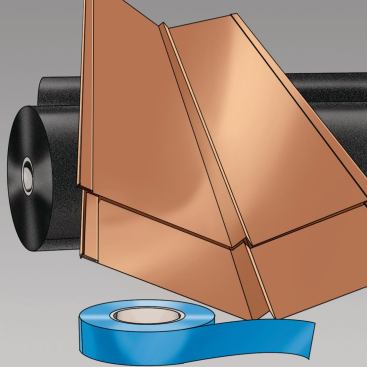
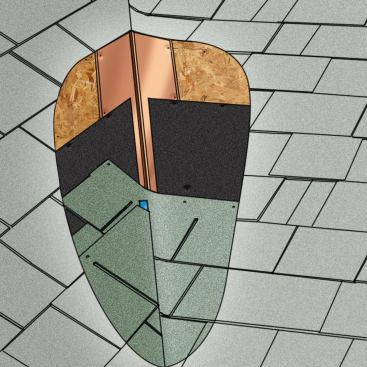
A lot of that damage happens at the valleys, where improper or non-existent flashing allows water and melting snow to get caught up along that path and work its way under the shingles and wick out along the roof decks instead of flowing straight to the gutter. Like most flashing specs, this one requires the right materials and attention to detail.
There are no secrets here, no unreasonable costs. Properly trained and supervised, any roofer worth his salt can and should be able to flash a valley so that water runoff goes where it should.