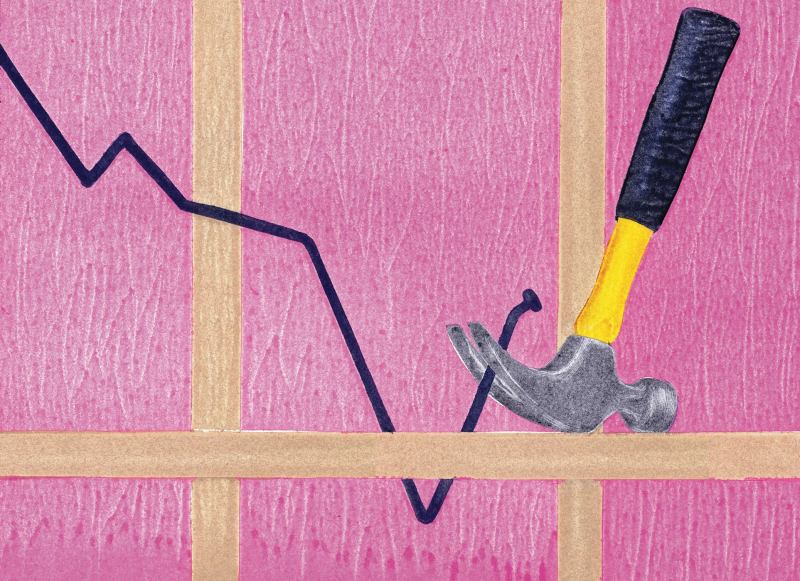
After two months of disappointingly weak job growth numbers, the question looms as to whether the economy can really recover without housing and new construction leading it or, at the very least, improving simultaneously.
Following the recession of 2001, housing became a key driver of the economy. From 2001 to 2006, residential construction accounted for roughly twice the contribution (on a percentage basis) to overall GDP than it does today. It also became the centerpiece of a growth industry that fueled a boom and enabled growth in other sectors of the economy such as financial services and manufacturing. The construction employment at the core of this trend directly accounted for 13 percent of the total U.S. job growth.
As the bust years continue to drag on, a substantial part of the total unemployment number consists of the structurally unemployed, workers whose skills are not needed in the current economy and for whom construction jobs are not likely to return in the foreseeable future. Nationally, construction employment has fallen 29 percent since 2006, amounting to over 2.2 million jobs.
In contrast to the last recession, it is now widely believed that for the housing market and construction employment to achieve recovery, improvement is required in the broader economy. But that broader economy is still struggling after a half decade of losing one of its most important growth mechanisms.