Walt Disney might not be the most obvious influence for a real estate developer. For Southern Land Co. founder and CEO Tim Downey, however, Disney’s obsession with the details that shape an experience has provided a blueprint for four decades of business.
Downey started his entrepreneurial career cleaning buildings while he was still in college. Forty years later, Southern Land Co. has grown into a multibillion-dollar real estate business with projects across the country spanning single-family and multifamily housing, master-planned communities, mixed-use development, and hospitality.
Through that growth, Downey has held onto a deceptively simple idea, that a memorable place is about more than the building itself. Architecture, landscaping, walkability, amenities, hospitality, and even how people move through a community should work together.
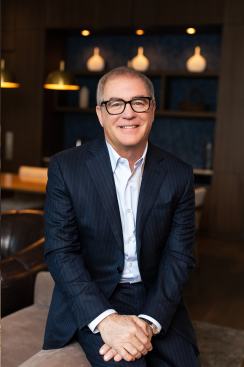
Courtesy of Southern Land Co.
Tim Downey
That philosophy also helps explain why Southern Land continues to bring more pieces of the real estate experience in-house. The company has expanded its home building capabilities, launched SLC Lending, and grown a hospitality operation that recently opened Lupo Notte, its first fully owned and operated restaurant.
BUILDER caught up with Downey to discuss what real estate can learn from Disney, why Southern Land resists a one-size-fits-all development formula, and what he believes the next generation of American neighborhoods will demand.
You’ve often cited Walt Disney as a leadership influence. What specifically about Disney’s approach has shaped the way you build communities and lead Southern Land Co.?
I have long been fascinated by Walt Disney’s ability to create a unique experience by investing in small details that make a trip unforgettable. At Disney resorts and parks, landscaping, architecture, hospitality, food, and how people move through a space aren’t disconnected elements. Disney found a way to ensure they complement each other to culminate in a lasting memory.
I’ve spent 40 years applying the same holistic philosophy to how people live in our communities. Every element of a place—from design and architecture to landscaping and programming—shapes how people interact with the space and each other. For me, that means thinking beyond the finished product. Attention to detail allows us to engineer how every component of a home, community, or mixed-use project works together to create a place people genuinely want to experience.
Disney obsessed over details that many guests never consciously noticed. What are the details in a neighborhood or development that you think most builders overlook?
Understandably, many builders and developers focus on the home or building itself. The missing piece is considering how the surrounding environment affects people. Bespoke landscaping, community harmony, walkability, architectural features, and thoughtful amenities can encourage people to gather and connect organically.
I built this company by looking beyond each home, apartment, and space to consider how it supports residents’ lifestyles and how visitors engage with our buildings and communities. How does someone move through the community? Are the outdoor spaces genuinely usable? Are there places to gather? Does the architecture work in harmony with the local landscape? Those details help create a community that feels intentional, not assembled.
How do you determine what residents actually want in a market before you begin designing a project?
We don’t use a specific blueprint to develop our communities just because something worked in one market. Different markets have different demographics. When we consider introducing a new Southern Land community, we carefully study the local area, market conditions, and what people value before finalizing our project vision.
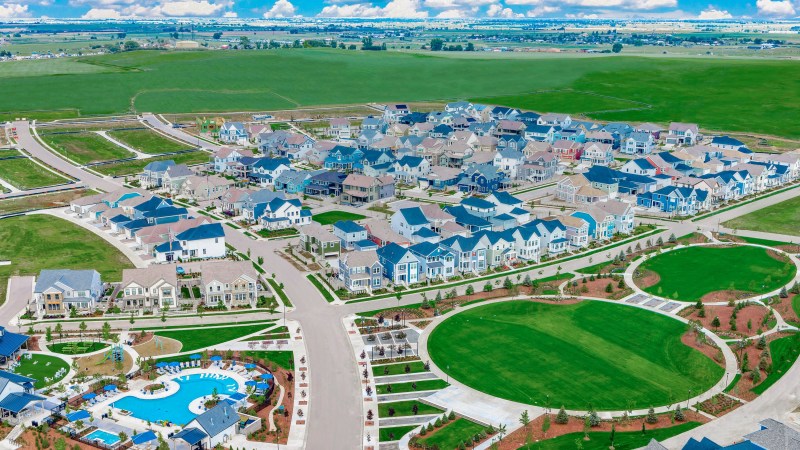
In Las Vegas, for example, we have built a collection of luxury rental high-rise communities, creating a new kind of rental offering in the city that puts residents in the heart of it. In Texas Hill Country, our intimate master-planned community, Lunaroya, offers customizable, estate-size homesites for buyers seeking space and personalization. In Colorado, Westerly is an approximately 800-acre master-planned community that provides a single-family neighborhood experience between two of the state’s biggest employment hubs: Denver and Boulder. In White Plains, New York, Juliette offers luxury rentals for people who want a suburban lifestyle with proximity to all of the culture, entertainment, and employment opportunities in New York City. Fairington in Nolensville, Tennessee, is a master-planned community that will bring more than 700 homes to market and is designed for people who want to live in a master-planned community while working 30 miles away in Nashville.
Each project we undertake is unique because people and the places they live are all different. This is fundamental to our nationwide approach to development.
You’ve steadily brought architecture, construction, landscaping, property management, hospitality, and now lending under one umbrella. Why do you believe controlling more of the customer experience creates a competitive advantage?
Delivering a community with elevated features and stunning design while maintaining consistent quality requires taking greater responsibility for the entire process, from land acquisition to construction to move-ins and beyond. By bringing expertise in-house across development, design, construction, landscaping, property management, home building, lending, hospitality, and more, we can uphold our high standards and make the homeownership or rental process easier to navigate.
It also lets us incorporate details that foster connection and create moments for wellness and recreation, which are equally important to our philosophy. It’s not just where you live; it’s how you live that matters. For us, amenities, communal spaces, walkable streetscapes, spacious front porches, and parks and trails create a holistic experience for residents, homeowners, and guests.
As a developer, having multiple disciplines in-house grants us quality control you don’t always have when working with external contractors and firms. We are fortunate to work with several trade partners and contractors who help bring our objectives to life, but the vision always starts with our team of in-house experts.
Many companies are simplifying their businesses, yet Southern Land keeps expanding into new areas. How do you decide which parts of the value chain belong in-house and which don’t?
I evaluate what is essential to placemaking. As we continue to grow our footprint across the country, we continually look at the best way to grow our team while maintaining our legacy.
A recent example is within our home building division, SLC Homes. Our new national president of home building, Tony Marchbanks, is helping scale single-family home building in our master-planned communities still under development, as well as communities on our horizon, like Southern Land’s newest single-family venture in North Carolina’s Chatham Park. Tony brings more than 30 years of home building experience from Highland Homes, where he learned the business from the ground up and helped scale the company’s Texas operations to produce thousands of homes annually, including launching their Houston market.
We’ve taken the same approach with mortgage lending. Rather than having homeowners work with a third-party lender, we created SLC Lending, a modern mortgage platform designed to streamline the home buying process. To lead that charge, we hired seasoned mortgage executive Bobby Frank, vice president of mortgage operations. By bringing this capability in-house, we have introduced a new, seamless option for buyers looking to become homeowners.
The end goal remains taking greater responsibility for the elements that matter most to our customers and maintaining the level of quality and consistency reflected in our product for the past four decades.
You recently launched a hospitality division and opened your first restaurant. Why does a real estate company belong in the hospitality business?
Food and hospitality are another important layer of the experience we aim to create, so hospitality is at the core of everything we do at Southern Land Co. It has always been top of mind when we design our homes and communities.
Launched in 2023, our in-house hospitality division is what helps set us apart from the competition. Most of our communities feature prominent restaurants and retail space. And we are just as intentional about the operators that become part of our mixed-use communities. We don’t fill a space just to get a lease signed. We take the time to vet and contract top-tier restaurant operators and fitness clubs to bring unique offerings not just to our residents, but to the neighborhoods they are in.
For example, we recently opened our first full-service restaurant, Lupo Notte, in September. Located at Vertis Green Hills, our flagship mixed-use community and company headquarters, the upscale eatery demonstrates the benefits of thoughtful development by adding something truly unique to the destination. When a restaurant space became available, we first searched for a truly distinct concept that would add to the neighborhood’s culinary offerings. But instead of simply filling the space, I decided to take matters into my own hands and create our own restaurant.
We believe hospitality creates real opportunities for connection and adds a vital dimension to a neighborhood or mixed-use community. It’s a thoughtful placemaking approach beyond the front door and into local communities that makes the difference.
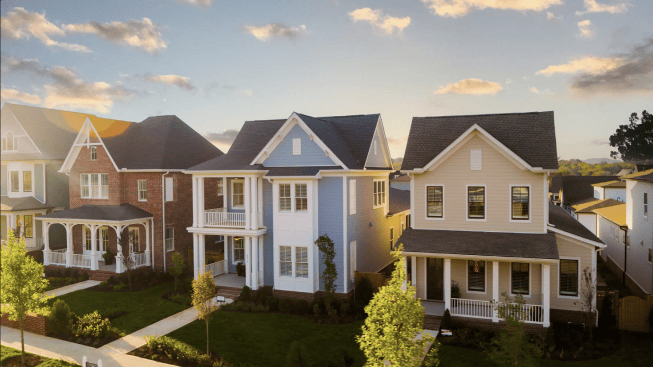
Courtesy of Southern Land Co.
Fairington is a master-planned community bringing more than 700 homes to Nolensville, Tennessee.
What separates a truly memorable community from a collection of homes?
Intentional design, cohesive planning, and a deep focus on human connection distinguish a collection of homes from an experience. A truly memorable community integrates diverse architecture, open space, walkability, landscaping, and shared amenities so people feel a genuine sense of belonging and connection rather than simply living in adjacent houses.
As developers, we should not simply ask, ‘What can we build here?’ We should ask, ‘What should exist here?’ Those are very different questions. The goal is to create an environment where the individual home is part of a much larger picture.
Housing today faces challenges ranging from affordability and financing costs to changing lifestyle preferences. Which trend do you think the industry is underestimating?
I think the industry may be underestimating how strongly buyers and renters value health and wellness-focused environments. Even in challenging economic cycles, people prioritize lifestyle, recreation, and a strong sense of community connection over commoditized housing.
The key is recognizing that consumers have different, evolving needs and designing communities that respond to those differences, rather than assuming one definition of how people want to live.
Looking ahead 10 years, how do you think the American neighborhood will be different from the neighborhoods we’re building today?
Neighborhoods aren’t just places where people live. They are the foundation for community spirit. I think future neighborhoods will blend residential living with wellness, dining, flexible workspaces, outdoor spaces, and sustainable design. We recently brought on a dedicated national wellness director to curate programming that weaves health and wellbeing into the fabric of our communities from day one. We will continue to see a shift from traditional subdivisions toward these more comprehensive communities built around lifestyle and connection.
But I don’t think one dominant model will emerge for the American neighborhood. Some people will want the flexibility and service of a luxury high-rise building while others will want a single-family home, more space, and a long-term connection to a community. Some will prioritize living close to or in a fast-paced urban center, while others will seek a slower pace to take in nature and wide-open spaces.
The future will require us to understand those differences and adapt rather than apply a single formula.
Forty years after starting a business cleaning buildings as a college student, what’s the biggest leadership lesson you’ve learned that still guides you today?
Starting my own commercial cleaning business reaffirmed my belief that hard work is critical to success. Working late nights with my teams in the buildings we were hired to clean after a day full of classes was no easy feat, but it showed others my dedication. That ultimately opened the door to bigger opportunities, such as developing my first row of houses in Chattanooga.
That early entrepreneurial journey laid the groundwork for the people-first philosophy that is Southern Land Co.’s North star and still guides us as we celebrate our 40th anniversary this year.
After 40 years, I’ve also learned the importance of listening and adapting. Markets, consumer preferences, and the real estate industry are dynamic. We often say, ‘When the market speaks, we listen.’ That means being willing to adjust our approach and build for how people actually want to live, rather than force a predetermined formula onto a market.
One lesson has stayed constant: success starts with understanding the people you are building for and, as Walt Disney demonstrated throughout his career, if you prioritize creating an unforgettable experience for them, the rest will follow.