Over the course of Stanley Martin Homes’ 60 years in business, countless strategic decisions have helped the Reston, Virginia-based company grow from a single-market operator to a regional powerhouse that ranks No. 18 on the Builder 100 list.
However, for CEO Steve Alloy one of the most significant moments for Stanley Martin was a philosophic shift that occurred eight years after he assumed the CEO role. With this shift in the mid-2000s, Stanley Martin Homes went from being a project-oriented company to a people- and culture-oriented one.
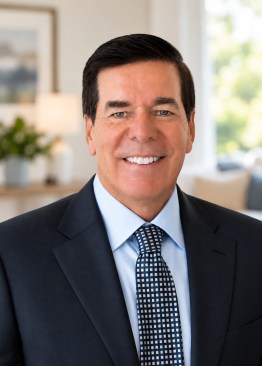
Stanley Martin
Stanley Martin Homes CEO Steve Alloy
“We shifted away from [project-oriented thinking] and said ‘We’re building an organization for the long term, and the projects will come and go,’” Alloy tells BUILDER. “That really changed everything, because we attracted a different type of person to join us.”
This people-focused approach has shaped the strategic decisions Stanley Martin Homes has made in the ensuing years, from its first expansion of operations to Charlottesville and Richmond, Virginia, and Raleigh in 2013 and 2014 to partnering with Daiwa House in 2017 to the six builder acquisitions the company has made in the past decade.
Building Around Local Expertise
The people-focused approach is particularly noticeable in Stanley Martin’s approach to M&A.
With most of its acquisitions, the company’s intention is to retain the team and allow their local market expertise to guide Stanley Martin’s approach in each new market.
“Our approach has been to bring in local expertise for relationships, for long local history, all of those things, and then combine it with our operating platform,” Alloy says. “Where we’ve got capital access, low cost of capital, great technology, strong processes, strong quality control and blend that with the local deep market knowledge.”
This approach allows for many synergies to occur, according to Alloy. Cost structures, finance costs, and insurance costs go down while rebates increase. However, beyond the synergies, Stanley Martin’s goal is always to provide the local teams with more resources to succeed than they could have had operating independently.
“You get local talent and it has a platform that allows them to do more than they were doing before,” Alloy notes.
The strategy does have exceptions, though. The acquisition of United Homes Group was unique for Stanley Martin in a number of ways. Firstly, United Homes was a public company with many overlapping markets with Stanley Martin. While recent deals to acquire Windsor Homes and Holiday Builders gave Staney Martin access to almost exclusively new markets in North Carolina and Florida, the United Homes Group acquisition provided entrance to the Myrtle Beach market while also enhancing existing divisions across South Carolina and Georgia.
Additionally, with United Homes Group, many of the corporate leadership team had the intention to depart after the sale of the company rather than stay on following the merger. Alloy says the broader model has remained consistent through its acquisitions of Windsor Homes, Avex Homes, Essex Homes, FrontDoor Communities, and Holiday Builders.
Partner for the Long-Term
Stanley Martin’s partnership with Japanese company Daiwa House has provided the builder with low-cost capital, a long-term focus, and a goal to expand rapidly.
When the companies joined forces in 2017, Stanley Martin was coming off a year in which it closed just over 800 homes. When the company reports its annual numbers for 2026, Alloy says its closings will be 10 times greater.
Daiwa House’s approach to its U.S. subsidiaries is more hands-off than other Japanese companies with stakes in the U.S. home building sector.
“Daiwa House doesn’t drive Stanley Martin’s strategy, Daiwa House defers to their U.S. team,” Alloy explains. “Our CEO believes that there are major cultural differences and business practice differences between Japanese businesses and U.S. businesses. His belief is to find the right U.S. leaders and enable them to make the key decisions in the U.S.”
As a result, Stanley Martin’s relationship with its parent company is an extension of how it approaches its own acquisitions: pair local leadership and expertise with the capabilities and resources of a much larger organization.
The relationship has helped transform Stanley Martin and helped open Alloy’s eyes in terms of what is possible for the regional builder.
“In terms of scale, I never imagined we could be a top five or a top three home builder back in the day,” he says. “But that’s what we intend to do. The sights are set higher because we’re part of something that’s just so much bigger. It really never occurred to us that it was possible before.”
Filling Out the Southeast
While unit closings are not the lone metric for success at Stanley Martin Homes, the past 13 months represent the builder’s aspirations to become a top-five builder. Between the acquisitions of United Homes Group, Holiday Builders, and Windsor Homes, the company added approximately 2,400 annual closings and fully fleshed out its southeastern portfolio.
“The thing that ties them together is each of those companies were in strategic markets for us that were adjacent to where we were,” Alloy explains.
The tagline of Stanley Martin’s strategic plan for 2024 to 2026 was to become a dominant Southeast builder. The builder’s “concentration strategy” in this period was focused on building up a bigger presence in the Southeast rather than expanding nationally.
In the Maryland-to-Georgia territory, the lone two major housing markets Stanley Martin was not in were Greensboro, North Carolina, and Myrtle Beach. With the acquisitions of Windsor Homes and United Homes Group, respectively, helped fill out the portfolio.
The acquisition of Holiday Builders helped address Stanley Martin’s limited presence in Florida.
“The big missing piece was that we were too small in Florida. In 2025, we were the 25th biggest builder in the state. We were in Orlando, with a little bit in Tampa,” Alloy says. “Next year, we’ll be No. 6 in the state because we pursued a company in Florida that added all the adjacent markets that we weren’t in.”
After addressing market holes through expansion, Stanley Martin’s strategic plan for 2027 to 2029 is focused on scaling within its existing markets. The builder’s concentration strategy calls for Stanley Martin Homes to have a top-three market share in each of its 23 markets.
Currently, Alloy says, Stanley Martin has a top-three market share in eight markets and a top-five market share in 12 markets. According to Zonda Local Leaders data, Stanley Martin Homes is the second-largest builder in the Washington, D.C-Arlington, Virginia-Alexandria, Virginia; Richmond, Virginia; and Columbia, South Carolina, markets.
“Our strategy for the next three years is more reliant on concentration than new markets and spreading out,” he says. “We have 15 markets that we have to move from where we are to the top three.”
A Culture of Growth
Maintaining a unified culture across 23 operating divisions is more difficult than when Stanley Martin operated in a single market. Each division inevitably takes on some characteristics of the leadership team in place at the division level, Alloy notes.
“There’s an overlay of how we approach culture and we’re very disciplined around our approach to people as well as our approach to technology,” he says.
Instead of a traditional human resources team, Stanley Martin has a team and culture department. The department’s function is to ensure cultural alignment and prioritize investment, systems, and processes that can be implemented to ensure it is maintained.
“We are continuing to focus on how we keep the culture that has made us successful, and we help the people side by giving them the best and easiest tools to succeed,” Alloy says.
Internal projections suggest Stanley Martin should be a top 10 builder by 2028 as a standalone company. Yet he says size itself will not be the ultimate measure of success moving forward. Instead, the same ingredients that helped turn a single-market builder into the regional player Stanley Martin is today will remain at the center of the strategy.
“The key ingredients are getting the people right, getting the technology right, enabling people to make decisions, and drive the business,” Alloy says. “In the end, if we have the right outcomes for our people and we have the right outcomes for our customers, everything worked.”