
The new-home market continues to move sideways, with sales activity showing little momentum in either direction. According to Zonda’s August New Home Market Update based on July data, national new-home sales declined 1.1% year over year, reinforcing the industry’s current “treading water” narrative. Yet beneath that headline is a more encouraging story for builders: inventory levels remain surprisingly disciplined.
Quick move-in (QMI) inventory, often viewed as a key measure of supply pressure, declined across much of the country. Nationally, builders averaged 2.1 QMIs per community in July, down 7.9% from a year earlier. Because QMIs are homes that can be occupied within 90 days, rising levels can signal weakening demand or an imbalance between construction activity and buyer absorption. The latest data suggests most builders have avoided that scenario.
While incentives remain prevalent and consumers continue to face affordability challenges, many operators appear focused on protecting margins and managing risk through disciplined inventory strategies.
The trend is particularly evident in several of the nation’s largest housing markets.
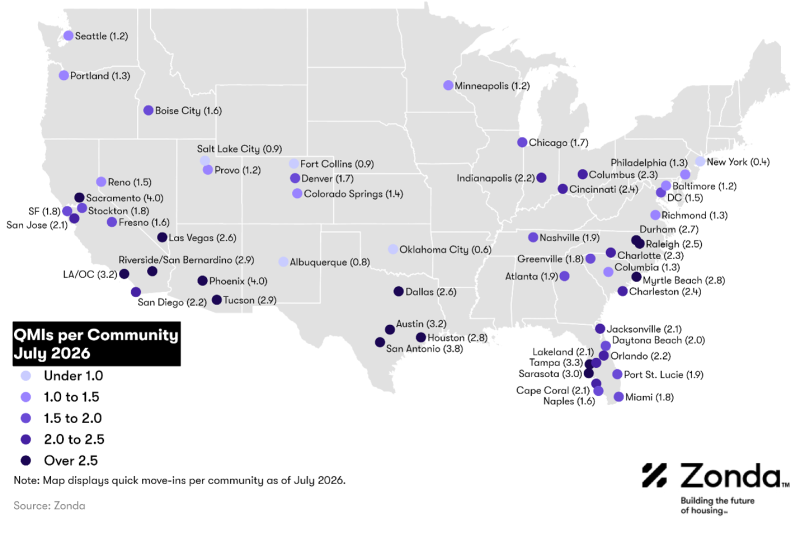
Dallas reported 2.6 QMIs per community as of July, down from 2.9 a year ago. Houston also saw a slight reduction, falling to 2.8 from 2.9. Phoenix posted one of the most notable improvements, with inventory dropping from 5.0 to 4.0 QMIs per community. Atlanta experienced a modest decline from 2.0 to 1.9.
San Antonio stood out as the only major market where QMI inventory increased, edging higher from 3.6 to 3.8 homes per community. While the increase is relatively small, it highlights the varying local market conditions builders continue to navigate.
Historically, slower demand has lead to inventory accumulation as completed homes outpace buyer activity. Today, however, many builders have adjusted starts, pacing, and product offerings to better align with current market realities.
The insights in this article were taken from the New Home Market Update published in Zonda’s National Outlook.