
Consumer prices rose 3.4% year over year in July, according to the Bureau of Labor Statistics, while shelter costs increased 3.2%. That’s a significant slowdown from a few years ago, when shelter inflation was running above 7%.
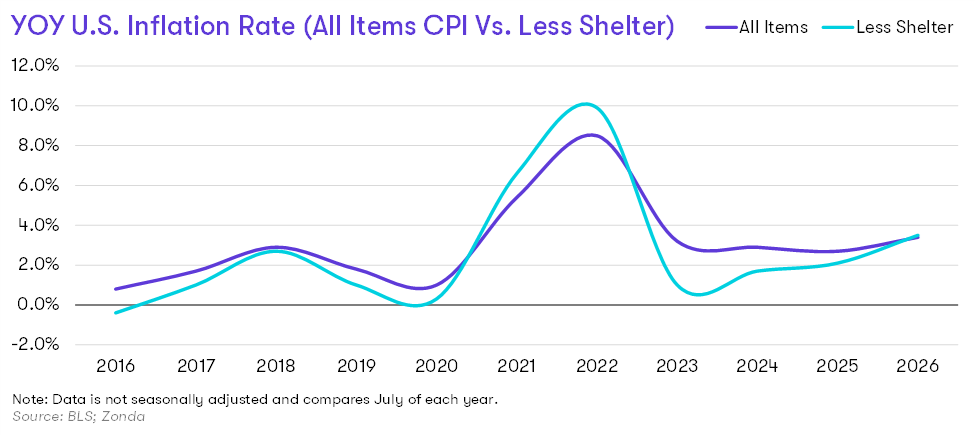
The slowdown is notable given shelter’s large weight in the Consumer Price Index. Rapid growth in rents and owners’ equivalent rent was one of the biggest contributors as inflation proved persistent following the pandemic. While shelter remains an important inflationary factor today, the magnitude of that pressure has eased substantially.
“It’s good to see that shelter’s contribution to inflation has diminished, but other categories are beginning to pick up the slack,” said Ali Wolf, chief economist for Zonda and NewHomeSource. Energy is the most notable example: energy prices were 14.7% higher in July than a year earlier, driven in large part by a 24.6% increase in gasoline prices. That marks a notable shift from much of the prior two years, when energy was often a neutral or moderating force on headline inflation.
The monthly data tells a more nuanced story. Energy prices fell 1.5% from June to July, including a 2.9% decline in gasoline prices, underscoring the volatility of the category. More recently, renewed geopolitical tensions have pushed oil prices higher again.
The direction of energy prices is worth watching as energy touches several parts of the residential construction process, including the transportation of materials and equipment, deliveries, and travel to and from job sites. Sustained increases could add another source of cost pressure at a time when builders are already navigating elevated construction costs.
Energy could also matter for the broader interest rate environment. If higher energy costs keep overall inflation elevated, they could complicate the path toward lower interest rates. With borrowing costs still a key constraint for housing, the persistence of the latest energy pressures may matter well beyond the price consumers pay at the pump.
The insights in this article were taken from a more in-depth presentation available to Zonda National Outlook subscribers.