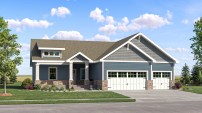
The next generation of master-planned communities (MPCs) will be defined by experiences, not amenities alone. And while pools and clubhouses remain part of the mix, Mattamy Homes is investing in farms, nature preserves, public art, trail networks, and mixed-use town centers all designed to foster connection, wellness, and a stronger sense of place.

Dan Grosswald
As No. 24 on the 2026 Builder 100 list, Mattamy builds in Arizona, Texas, Florida, and North Carolina, as well as Canada. BUILDER sat down with Dan Grosswald, president of Mattamy Homes’ Southeast Florida division, to learn more about some of the unique amenities found in Mattamy’s Florida developments and how they’re approaching affordability and evolving buyer expectations.
What’s driving developers to invest more in parks, public spaces, and mixed-use amenities instead of the traditional clubhouse model?
At Mattamy, we like larger projects because they allow us to make long-term investments and create amenities that smaller communities typically can’t support. These MPCs create economies of scale and give us an opportunity to build a true sense of place.
People want to live in a place, not just own a house. They want to know their neighbors, feel connected to the community, and be part of something larger. By creating amenities and destinations, we can generate stronger returns while also providing something meaningful for residents.
We also try to differentiate each community and tailor amenities to different buyer groups, whether they’re active adults, move-up buyers, or first-time buyers.
Courtesy Mattamy Homes
Communities like Tradition and Newfield are only about 10 miles apart. What amenities have generated the strongest response in those communities?
Although they’re close geographically, they’re very different communities.
Tradition is a more conventional MPC with thousands of homes and acres. One of its strongest features is connectivity. We have a 20-mile trail system that links neighborhoods, parks developed in partnership with local government, and the town center.
Newfield also emphasizes connectivity, but it’s a Traditional Neighborhood Development (TND), which makes it naturally walkable. Residents can walk or bike to the town center because of the compact design.
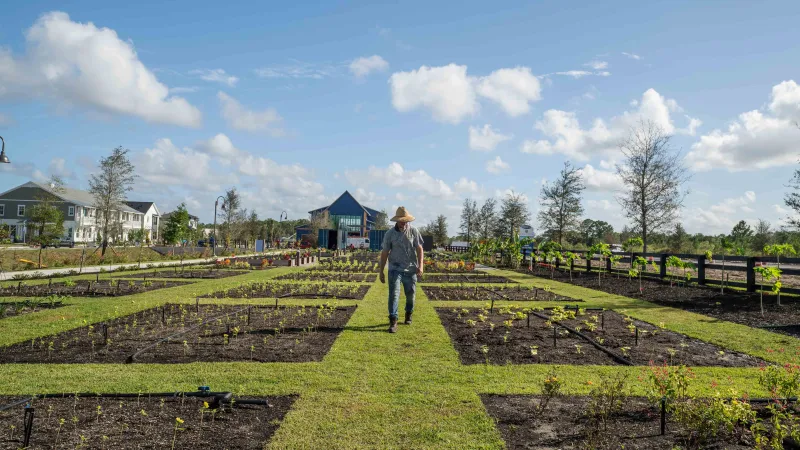
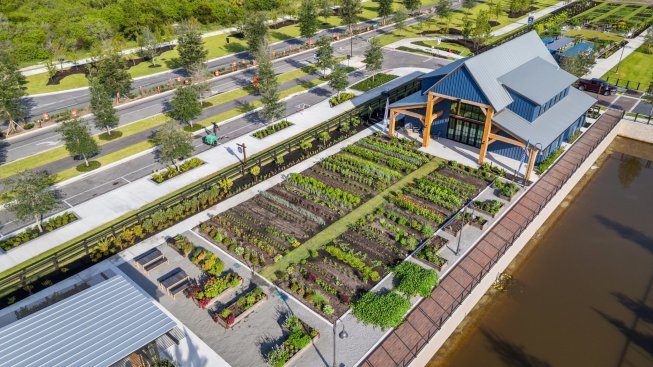
What has really resonated at Newfield is its focus on health and well-being. We have a 175-acre farm that grows food naturally without pesticides. Residents can learn about food and how to grow it. The farm also serves as a gathering place, with events such as “Farm Jam” on Friday nights.
Another significant feature is the nature preserve. While the community spans 3,411 acres, more than 2,000 acres are dedicated to preserved land. That preserve has become the second-largest public park in Martin County. Residents can use the trail system, spend time in nature, and enjoy both physical activity and a sense of peace and relaxation just steps from home.
These features reflect how MPCs are evolving beyond traditional suburban models toward communities centered on connectivity, wellness, and quality of life.
Courtesy Mattamy Homes
How has the growing emphasis on wellness influenced design?
People today are looking for greater peace of mind, and communities are responding to that demand.
Many of the design elements we focus on, such as walkability, preserved natural areas, and environmental stewardship, also align with sustainability goals. As communities become denser and environmental concerns become more important, people want to feel that they’re living in a way that has less impact on the planet.
At Newfield, for example, we incorporated water-quality treatment areas and preserved significant open space. The preserve itself contributes environmental benefits while also giving residents access to nature. Buyers are increasingly attracted to communities that support both personal well-being and environmental responsibility.
What role does placemaking play in attracting buyers and creating value?
In an MPC, placemaking is everything. Without it, you’re simply building rows of houses where people drive into their garages and never interact with their neighbors.
When we plan communities, we carefully study the amenities we want to provide, how many amenities are appropriate, how many homes each amenity should serve, and how those amenities can offer different experiences.
We want to provide a variety of experiences that appeal to different lifestyles and interests whether that’s a racquet club or aquatic facilities, so residents feel like they live in a real place with meaningful activities and opportunities.
Courtesy Mattamy Homes
How does public art contribute to the placemaking strategy?
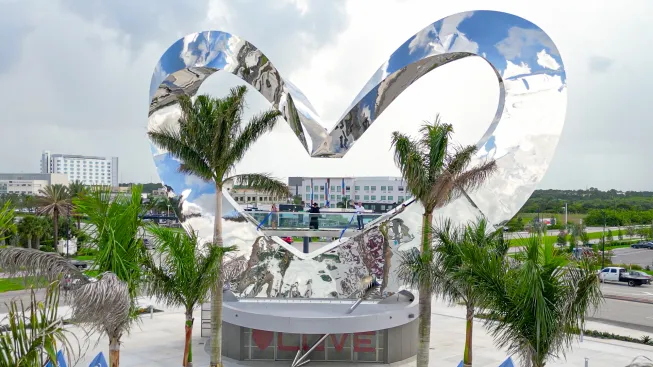
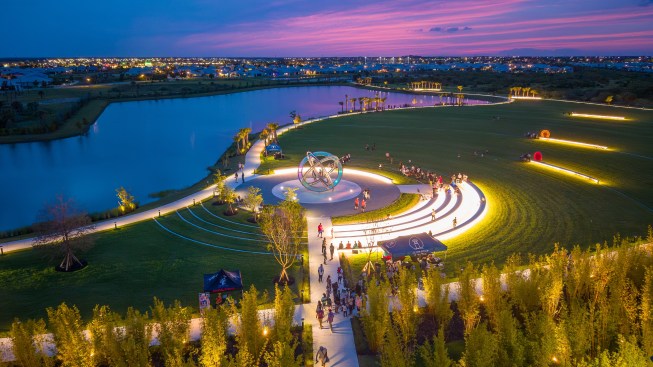
We incorporate art both directly and indirectly into our communities. At Tradition, we have what we call the world’s largest heart sculpture. It’s located in an urban-style park surrounded by shops and connected to the community trail system. Residents can take a shuttle, walk, or bike there to gather, dine, or spend time with friends.
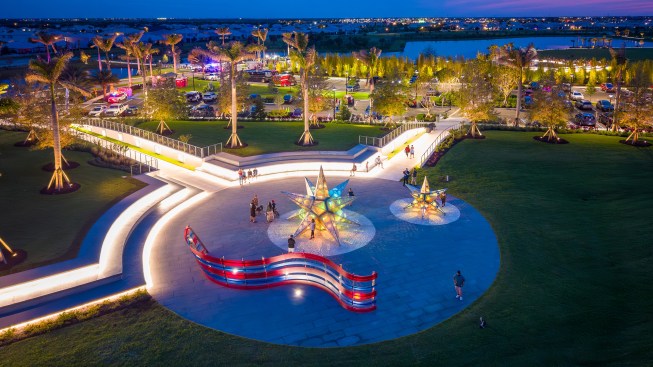
We also helped create Stars and Stripes Park through a public-private partnership. The park includes a scale model of the solar system and a giant sundial made from colored glass that serves as an educational feature for children.
The second part of that park honors veterans and first responders. During COVID, we worked with an artist from Creative Machines in Arizona, who interviewed 180 people from St. Lucie County, including veterans, nurses, police officers, firefighters, and Gold Star families. Their words were incorporated into three large, approximately 25-feet tall star-shaped structures. At night, the illuminated installations project some of those quotes onto the ground. The result is a meaningful public space that connects residents to the community’s shared experiences and history.
How do public-private partnerships help make these amenities possible?
Building true places is expensive, whether you’re talking about parks, town centers, art installations, or other community features.
At Tradition, we partnered with the city of Port St. Lucie to develop a regional park. Mattamy contributed several million dollars to help design and initiate the project and guided it through approvals. Additional funding came from the city and federal grants.
Future Place
September 28-30, 2026
The Ritz-Carlton, Dallas Las Colinas
Future Place is the premier gathering of the nation’s largest landowners, builders, and capital leaders. Discover the forces driving growth, value, and vision in master-planned communities.
Mattamy also offered to serve as the general contractor at no additional cost, helping save roughly 20% in construction expenses by utilizing our existing staff resources.
The first phase includes four baseball fields, three soccer fields, and a football field. The city also partnered with a private operator to build and manage a pump track.
These partnerships allow projects to move forward sooner than they might otherwise and create amenities that benefit both residents and the broader community. Public-private collaboration is also important for infrastructure projects such as roads and utilities.
What are the benefits of mixed-use town centers for residents, developers, and local governments?
There’s a symbiotic relationship between a town center and the surrounding population. These are usually the densest parts of an MPC, and the presence of residents helps support the town center economically.
From a developer perspective, town centers create value. At Newfield, for example, we saw home prices rise after announcing the town center. The town center also generates commercial returns as a business district.
For local governments, town centers expand the tax base. In Martin County, the growth associated with Newfield contributed additional tax revenue that helped the county maintain or lower its millage rate.
Town centers also reduce traffic impacts because residents can access restaurants, shopping, services, and even employment opportunities without leaving the community. The traditional “live, work, play” concept becomes a reality when those destinations are integrated into the community itself.
Courtesy Mattamy Homes
How do you balance investment in amenities with affordability concerns?
We use several approaches, including public-private partnerships and Community Development Districts (CDDs), to help fund infrastructure and amenities.
Timing is also important. At Newfield, we plan to have nine villages and nine amenity centers, but we won’t build all of them at once. Amenities are phased in based on the growth of the community so that the investment aligns with the number of residents who will use them.
We also look for high-impact investments that can be delivered early. At Newfield, we began developing the 2,000-acre preserve before home construction started. Compared with major facilities like a clubhouse or town center, the preserve was relatively inexpensive to create but immediately provided value to the broader county.
That decision generated goodwill with residents and local officials because it delivered a public benefit early. It also helped demonstrate that Mattamy was following through on its vision for the community.
Looking ahead, what do you think the next generation of master-planned communities will look like?
I believe communities will continue moving in the direction of wellness, connectivity, and compact development.
Land is becoming harder to acquire, which will push communities toward greater density and more creative planning solutions. Approaches such as TNDs can help create compact, livable communities with meaningful amenities.
Rather than endless rows of houses with few shared spaces, I think we’ll continue seeing communities designed to offer experiences, connections, and amenities that support a higher quality of life while minimizing environmental impacts.