It’s hard to call the moment when the center of gravity changes, but there appears to be more to the K-shaped trend in housing spend than meets the eye.
To be sure, the broad economic picture suggested in headline economic indicators is uncertain and volatile. Oil prices, mortgage rate volatility, and underlying uncertainty among homeowners are driving deferral and caution. Further, the quality and usefulness of several key economic indicators are deteriorating due to data problems.* That said, there are some early indications of a shift beneath the surface, which could indicate a potential inflection point in housing demand. Some of these shifts are appearing in ‘alternative indicators.’
‘Alternative indicators’ are the behaviors not captured in ordinary data, but represent real behavioral change. Often reflecting changing conditions before they appear in official data, typically around inflection points. A few examples include:
- Neighbors selling boat or motorcycles because times are tough
- Stretching out periods between haircuts or nails to save money
- Side hustles growing (including new solo-owned AI companies)
- ‘Browsing not yet buying’
- ‘Low-key’ luxury consumption, particularly around housing. The topic of interest today.
Digging into ‘low-key’ luxury consumption. Not long after the fallout of the Great Financial Crisis, sales at Tiffany’s jewelry grew in 2009, but consumers asked for jewelry to be packaged in nondescript brown paper bags because conspicuous consumption during a financial crisis is not a good look, regardless if buyers could afford it. The effect spilled over into housing and building products, with high-end luxury manufacturers developing matte luxury finishes shifted to suite appetite for ‘low-key’ luxury consumption. Spending was recovering, but felt opportunistic, deliberate, and ‘low key.’ Luxury was the first to recover if you knew where to look.
Today, it feels like something similar is occurring in housing. Luxury is quietly shifting despite the SAAS-Pocalypse, oil price volatility, conflict, and continued progression of housing headwinds. Luxury is different than it was a year ago. Aspirational is pulling back, but the wealthy are identifying opportunity.
How we got here: There is evidence that luxury housing experienced an entirely different post-COVID pull-forward/deferral dynamic versus the broader housing market, which is now impacting spending. Amid the supply chains squeeze post-COVID, upstream components and inputs for many luxury home products were simply unavailable, and luxury buyers were faced with the dilemma of settling for third-tier selections, or purchasing nothing at all.
Fast forward to 2026, and the scale of luxury deferral becomes more meaningful: Zonda analysis reveals appliance spending among top-income decile households was roughly 15% to 20% below 2019 levels in 2023, after adjusting for prices.** That was three years ago, and the implications are now becoming visible. As a result, luxury buyers drove essentially no ‘surge’ of volumes post COVID, but have had plenty of deferral. These projects are now tipping into required replacement, often triggering broader home updates in the process. As a result, luxury growth appearing now is not just ‘growth,’ but plausibly the initial wave of deferred luxury housing activity stemming from the 2020 to 2023 mismatch. Luxury buyers are identifying opportunities, and historically was the early signal of a market in early stages of recovery.***
Examples of ‘low-key luxury’ in housing include:
- Wellness, including infrared saunas, cold plunges, gym
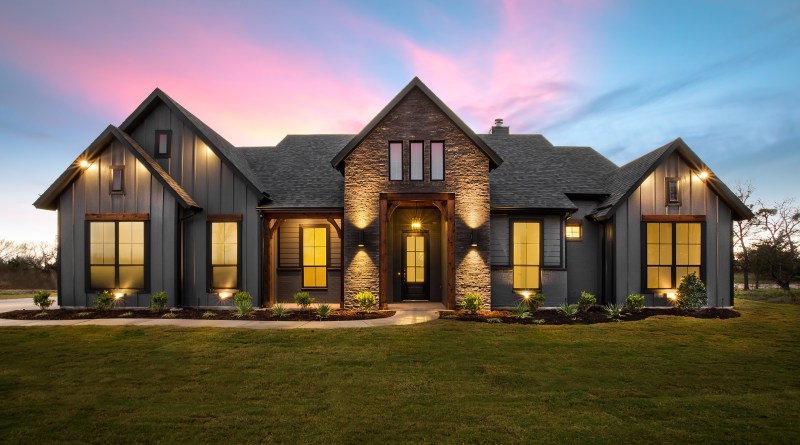
- The $50,000 mechanical room, with premium HVAC, water filtration, backup battery, or smart electrical panels. Completely unseen to neighbors, but valuable to those who know.
- Instead of moving to a bigger home, a household spends:
- $250,000 on remodel
- $50,000 on landscaping
- $45,000 on outdoor living
- $25,000 on home technology
- The luxury in the above case is avoiding disruption. Preserving a home that fits so well, no move is required.
- Anything ‘comfort, health, resilience, privacy, convenience, etc.’ that is unseen but a form of ‘low-key luxury’ spend.
It’s hard to pinpoint when cycles change, but often the process begins unevenly (as today). There does appear to be something shifting presently (not entirely positive, but certainly change). For example:
- Existing-home sales improving marginally over prior six months after essentially 36 months of zero change, despite volatile macro.
- Zonda new-home click index showing growth in numerous markets among higher priced homes ($1M to $1.5M+), despite softer overall volumes.
- Building product manufacturers seeing strength in luxury products, particularly products that are curated to drive experience over display.
- HELOC originations growing, with some debt paydown, but primarily reflecting longer planning and staged deployment of home improvement projects.
- Fastest homeowner growth year over year in three years in Q1 2026, driven by modest shift from rental growth to owner growth (1.3 million homeowners added year over year in Q1, levels seen only 2017 to 2018 and briefly post COVID)
- Luxury builders outperforming despite challenging macro. Toll Brothers reports buyers spending $220,000+ after signing contract on customizing a spec home, with much of the upgrade on:
- Better homes (as opposed to bigger)
- Friction reduction (as opposed to larger square footage)
- Wellness
What does it mean? Pay attention to changes in ‘low-key luxury.’ Luxury spending historically behaves differently than overall consumer spending, but this time ‘low-key luxury spending’ on housing also involves deferral. As the industry shifts, the first fruits of housing stabilization are appearing in ‘low-key luxury’ housing spend.
*In the last five years, the quality of the information contained in official economic statistics (including housing) has gotten worse. For example:
- Consumer Sentiment (University of Michigan) signal breakdown identified from Chicago Fed researchers in the past month, due to difficulties in data collection.
- Likely overstatement of official income statistics, including real personal income (which drives spending on housing, furniture, appliances, etc.). Census analysts estimate that official statistics have probably skewed roughly 3% too high over the past few years, and Zonda analysis suggests real personal income might be overstated 0.5% to 0.7% in the past 12 months.
- The Census American Housing Survey struggling with collecting data, and undergoing strategic adjustment.
- Official estimates of immigration growth misstated rate of change by at least 2 million residents, due to problems collecting data (also identified by Chicago Fed).
- Inflation measurement problems. Experiencing numerous measurement challenges related to difficulty in data collection, which seem to be accelerating. Imputation in BLS commodities and services has increased from 29% April 2025 to 40% April 2026. BLS has ceased publication of CPI inflation statistics for Buffalo, New York, and Provo, Utah.
- Disconnect in measuring AI output we measure spend on data centers, but not the AI artwork associated with making your dog look like a superhero.
**Reflects spend levels among top-decile income of households, estimated per square feet of occupied housing, adjusting for changes in appliance prices. Appliance costs grew roughly 24% from 2019 to 2023/2024, but actual spending per household was essentially flat versus 2019 levels (implying lower volumes). Owner-occupied households also grew 4% during this period, suggesting deferral could be even more than Zonda analysis implied.
***Something similar happened in 1983, after deferred wave of moves and home improvement projects amid Volcker-era tightening to fight inflation. The earliest green shoots for housing showed up in initial improvements in consumer sentiment among a very small group of top-income (33%) households who began identifying homes as ‘good time to buy’ because deals could be identified, and prices would rise in the future. At the time, that turning point among higher income households led a broader bottom in housing by roughly three to four quarters.
Read the earlier iterations of this six-part series below. The insights in this article were taken from a more detailed review in Zonda’s Building Products Outlook.
-
From Cars to Housing: A Familiar Industry Shift Reemerges
Part three of six issues housing and building product leaders need to consider in 2026.

-
E-Commerce and ‘Workflow Capture’ in Housing Supply
Issue two of six key issues housing and building product leaders need to consider in 2026.

-
The Great Reset in Building Product Pricing
Issue one of six key issues housing and building product leaders need to consider in 2026.