The vision behind The Granary didn’t begin with a single design move. It began with a set of questions about what modern communities are failing to provide. As isolation and fear-driven messaging increasingly shape daily life, Convergence Communities founder Colby Cox began exploring whether intentional community design could help restore connection to nature, to others, and to oneself.
Planned across 10 phases on 451 acres in Milton, Delaware, The Granary translates that inquiry into a human-scale master plan defined by walkability, distributed amenities, and land-led design. Cox discusses how those values became physical form, and why success will ultimately be felt more than measured.
You’ve said modern life pulls people into “noise” and fear-based messaging and that The Granary is a counterpoint. What was the personal moment or insight that made you believe community design could be an antidote to that?
There wasn’t a single moment. It was a series of realizations that eventually clicked into place. But if I had to point to one, it was a conversation I had in Bali. I asked a local why he was happy, and he said, very simply, “We focus on three things: connection to nature, connection to each other, and connection to God.” That struck me because I had spent years building communities around pieces of that idea without fully understanding it in its entirety.
At the same time, I was looking at what was happening in the West: rising isolation, fear-driven messaging, and a real loss of connection. That juxtaposition made it clear to me: if disconnection is part of the problem, then community, done intentionally, can be part of the solution. We can create environments that make it easier for people to reconnect with themselves, with others, and with the natural world.
Kimmel Studio
What did you see missing in conventional MPCs that made this feel urgent?
Most conventional master-planned communities have been optimized for efficiency: how quickly you can build, how many units you can deliver, and whether you can check the amenity box. But they haven’t been optimized for how people feel living there. What’s missing is belonging. What’s missing is real, day-to-day human connection.
Conventional MPCs are places built where people can live near each other, but not really with each other. When you combine that with a broader culture of isolation and fear, you end up with a place that doesn’t help its residents live better—they are simply existing. That’s what made it feel urgent to me—we don’t need more master-planned developments; we need better ones.
Planning Philosophy
At its core, The Granary is shaped by a single thesis: “creating conscious communities.” Rather than treating wellness and nature as add-ons, the master plan positions them as foundational infrastructure.
Three Harmonies
The Granary is organized around balance:
With self: Places to pause, reflect, and restore
With nature: Daily contact with land, seasons, and open space
With one another: Walkable settings and shared spaces that support everyday connection
Land-First Planning The community framework begins with meadows, wetlands, woods, and water systems. Streets, parks, and homes are designed in response to that landscape—not imposed upon it.
Nature as Infrastructure Meadowscaping with native wildflowers and grasses, stormwater ponds, trails, and outdoor rooms are central to how residents move through and experience the neighborhood.
Polycentric Amenities Instead of a single amenity center, The Granary uses a distributed approach—smaller, neighborhood-scale amenities designed to feel local, walkable, and personal.
Walkability & Light Stewardship A five-minute walk structure anchors daily life, supported by slow streets, connected paths, and dark sky–aligned lighting strategies that reduce over-illumination and preserve the night sky.
An Extension of Milton Designed as an additive, public-facing place, The Granary opens its parks, paths, and gathering spaces to the broader community. At full buildout, it is expected to nearly double Milton’s population while reflecting the town’s character through contemporary neighborhood design.
If you had to name three design decisions that embody “creating conscious communities,” what are they?
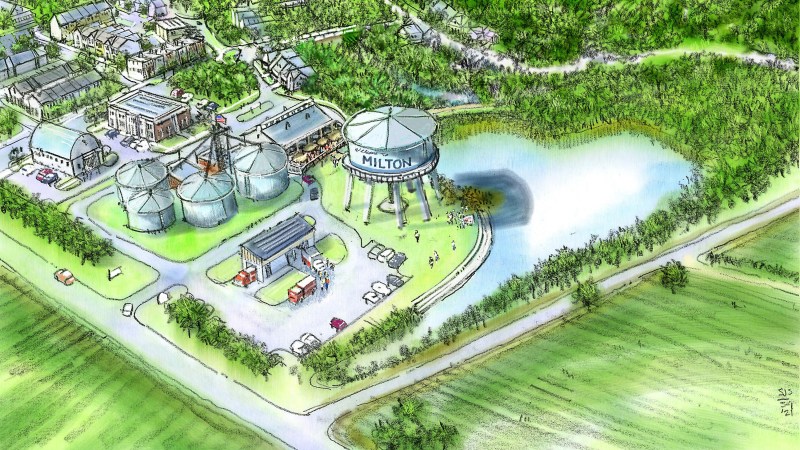
First is designing for connection: to nature, to others, and to something greater. We’ve done that by creating places people want to gather, like the brewery incubator, amphitheater, parks, and recreational fields—spaces that draw people out of their homes and into shared experiences.
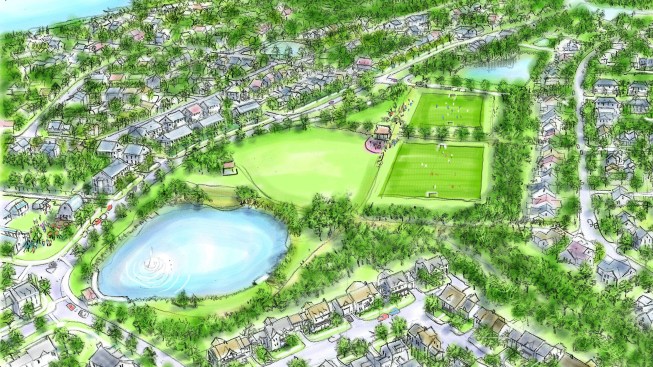
Second is making nature accessible in everyday life. With 3 miles of walking trails, the Rails-to-Trails connection, parks, and a mindfulness garden all within a short walk of their homes, people are constantly moving through natural, shared spaces where spontaneous interaction can happen.
Third is building in opportunities for reflection and presence. Through quieter elements like the mindfulness garden, waterfront trails, and natural open space, we’ve created places where people can slow down, step out of the noise, and reconnect with themselves spiritually. I believe that the only way to gain meaningful answers to the big outside questions is to go deeply within, and we’ve prioritized these elements in our communities as an invitation for residents to do that.
We prioritized the framework for connection first: trails, shared spaces, and access to nature. Homes are important, but they don’t define the experience on their own. What defines it is what happens outside your front door. If you get the connective tissue right early—the places where people walk, gather, and spend time together—you establish the culture of the community from day one. And once that’s set, everything else builds on top of it.
The Granary will avoid a single mega-amenity complex. What’s the philosophy behind smaller, neighborhood-anchored amenities?
Large, centralized amenities tend to become destinations you drive to. Smaller, distributed amenities become part of your daily life. We’re trying to create patterns of spontaneous interaction and get people moving outside. When amenities are woven into neighborhoods, people use them more naturally, and they see each other more often.
You’re planning a “five-minute walk configuration,” what did that requirement change about the site plan and were there any trade-offs?
It changes everything. When you commit to a five-minute walk configuration, you must distribute value across the entire site. You can’t cluster everything in one place—you must make sure that nature, gathering spaces, and daily experiences are accessible from everywhere. The trade-off is efficiency. I say forget efficiency. We are not robots seeking optimal output, we are humans having a human experience and peace, joy, and well-being are often a meandering journey and not a straight line. We’re optimizing for how people live. And when everything is within reach, people naturally get outside more, move more, and connect more.
Amongst the reserved open space, meadowscaping, wetlands and water systems, and trails, how are you balancing ecological integrity with everyday access, and what does stewardship look like once people move in?
Townscape Designs
The Granary: By the Numbers
Location: Milton, Delaware
Total Site: 451 acres
Developable Land: ~341 acres
Preserved Open Space: ~110 acres
Parks: ~50 acres total, including the 20-acre Granary Greens central park
Trails and Paths: 3 miles of planned multiuse paths
Residential Program Total Homes: 1,350 (~900 single-family homes includes 35 custom home sites and ~450 townhomes and condominiums)
Commercial Total Planned: 60,000 square feet (Two nodes of approximately 20,000 and 40,000 square feet)
Development Timeline Phasing: 10 phases
Buildout: Approximately 15 years
Phase One Snapshot
Size: 73.5 acres
Homes: 86 by DRB Homes
85 by D.R. Horton
9 custom homes anticipated
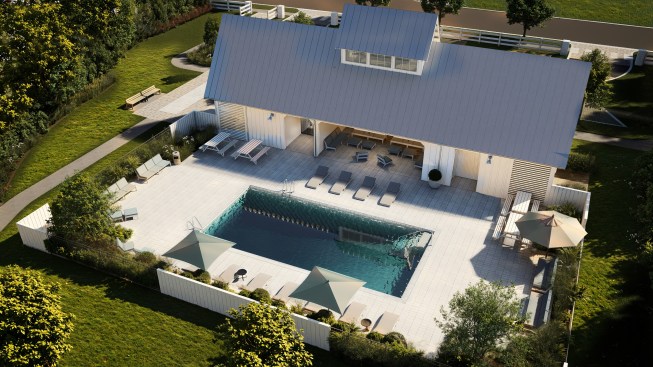
Amenity: Pavilion, 800-square-foot pool, and mail center
Nature is essential infrastructure at The Granary. The goal is to invite people outside in ways that are accessible, fun, and restorative. That means thoughtful trail placement, meadowscaping, and systems that work with the land instead of against it. Stewardship doesn’t stop at design; it becomes part of the culture. When people are connected to the land, they want to take care of it. Stewardship becomes something that is both built into the community and carried forward by the people who live there because they come to value the spaces as their own to enjoy, preserve, and protect. When great care is taken in our planning and enhancement of these spaces, that respect translates to others organically for the most part. There are basic rules around respect established as well, but rarely do these need to be “enforced.” That is part of the beauty of community and the shared value system embedded by the choice to be a part of it.
What lighting principles make The Granary different from other MPCs?
We’ve adopted dark sky principles, which means minimizing light pollution and preserving the night sky. All lighting is designed to be downward-oriented and intentional, not excessive. What makes that different is it’s not just a technical decision, it’s a values-based one. We believe in connection to nature and to something greater, and preserving the night sky is part of honoring that.
These principles reduce artificial light at night, which supports healthier sleep patterns and overall well-being, while also protecting the natural environment by limiting disruption to wildlife and ecosystems. It’s also experiential. When you step outside at night and see the stars, it changes how you feel. It reconnects you to something bigger than yourself, and that’s a key feeling that I want residents to experience.
How did you choose the initial housing mix, so the community’s ethos shows up even in “production” product, and not just in marketing?
The house is a part of the ethos, but not in its entirety. We’re intentionally designing a community where life happens outside the home—in shared spaces, on trails, and in everyday interactions. That said, we were very deliberate in creating a range of housing options. By partnering with builders like D.R. Horton and DRB Homes, and including custom homes as well, we’re able to offer a diversity of price points and product types. The ethos shows up in the accessibility. We wanted to make this community a space for all types of people, where a broad range of residents can belong, connect, and participate in daily life together.
Over a 10-phase, ~15-year buildout, what metrics actually matter to you, and how will you know The Granary is making people “happier,” not just housed?
The metrics that matter most aren’t just numerical—they’re experiential. Are people outside? Are they using the trails? Are they gathering in shared spaces? Are they forming relationships? You can feel it in a place. You can feel it on a Saturday afternoon when kids are playing, people are talking, and there’s a natural energy in the community. If people are more connected—to themselves, to each other, and to the world around them—then we’re doing what we set out to do. Because at the end of the day, this isn’t just about building homes. It’s about helping people live better lives. Our ultimate goal is that in the near future this doesn’t feel like a master-planned community in any way, it’s just an area of town. We were so intentional that you don’t notice the intentionality.