
For years, production home building followed a predictable formula: secure a large master-planned community, deploy a curated plan set, and repeat product across hundreds of lots.
That model is changing.
Across many markets, builders are pursuing smaller, infill opportunities and opening more communities at once, often with differing requirements from HOAs, municipalities, and architectural review boards. For builders managing a high degree of variation across plans and elevations, that can introduce a new challenge: operational fragmentation.
Jennifer Hoops, director of solutions at Higharc and a former production builder at Pulte and Beazer, sees this shift playing out nationwide. It’s often evaluated through a financial lens, she says. “What’s less visible is the operational strain that comes with opening more communities with the same teams.”
Eastwood Homes has experienced that shift firsthand.
“We’re opening more communities than ever,” says Jason Cochran, director of architecture at Eastwood Homes. “But our team size hasn’t changed.”
Instead of working in a handful of large neighborhoods, Eastwood now operates across dozens of smaller communities, each with its own HOA requirements, architectural review boards, and municipal regulations.
The result is more variation and more resets.
In one recent Charlotte-area community, Eastwood invested more than 700 development hours creating 15 plans to meet Architectural Review Board (ARB) and municipal requirements. Only four were ultimately approved.
Even minor adjustments, adding three sides of masonry, modifying trim details, increasing roof pitch, or adjusting foundation types can trigger cascading updates across architecture, engineering, estimating, purchasing, and marketing. In traditional workflows, each department effectively starts over.
In larger communities, product reuse often masked that inefficiency. In smaller communities with varying requirements, the friction becomes visible.
Without operational agility, that kind of variation can create real throughput risk.
Rethinking Product as a System
Rather than simply adding headcount, Eastwood chose to rethink how product itself is structured.
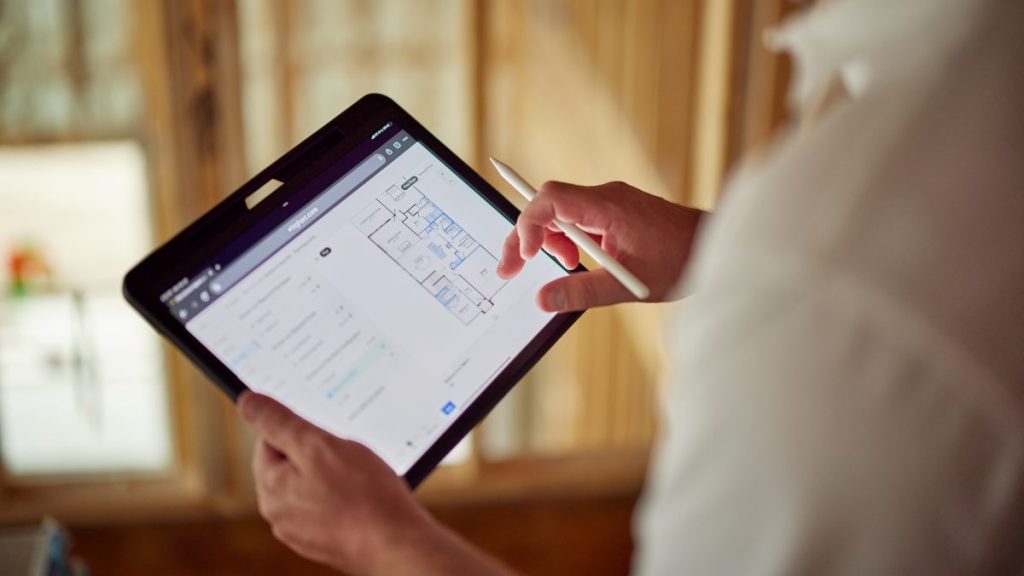
The team began identifying the variables that predictably change across communities: masonry percentages, roof pitches, foundation types, garage orientation, trim packages, and window configurations, and building those elements into a configurable product system within Higharc’s model-based platform.
“The historical one-to-one relationship between a plan and a drawing simply isn’t scalable anymore,” Hoops says. “The amount of variation expected today requires builders to structure flexibility intentionally, not reactively.”
For Eastwood, that shift became tangible during a recent elevation initiative.
Using Higharc’s elevation configurator, the team generated 57 elevations across five plans in just four and a half days.
By comparison, Cochran notes that producing four elevations within a traditional two-dimensional AutoCAD workflow previously required more than 40 billing hours, including option development and plan coordination. Based on early experience, he estimates the new approach reduces effort by at least 50%, and possibly closer to 70%.
More importantly, it changed the design experience itself.
Instead of redrawing elevations repeatedly, Cochran could toggle façade elements, compare variations side-by-side, and evaluate streetscapes in three dimensions directly within Higharc. Conflicts between roof planes and building corners were identified instantly rather than after multiple revisions.
“It brought the design to life,” he says. “For the first time in a long time, it felt refreshing.”
Because Higharc connects architectural intent with downstream workflows, those elevation adjustments no longer force estimating, purchasing, and marketing to restart from zero. Information flows forward rather than being rebuilt.
For a builder operating across dozens of smaller communities, that kind of productivity gain, without increasing headcount, fundamentally changes capacity.
A Broader Industry Transformation
Eastwood’s experience reflects a larger shift underway across production home building.
As land becomes scarcer near urban cores and municipalities add design requirements, variability increases. Buyers expect architectural diversity, while approval boards demand compliance with evolving standards.
Navigating that environment requires more than financial discipline. It demands operational alignment.
Centralized core plans still matter; Eastwood has found that repeated use of dialed-in plans drives stronger margins and fewer field issues. But controlled flexibility, enabled by connected systems, allows those plans to adapt without forcing teams to restart the process each time.
For builders balancing consistency with choice, speed matters. Carry costs matter. The ability to move from concept to vertical construction without operational bottlenecks directly impacts performance.
As plan variation and buyer choice continues to grow across communities, the real differentiator will be operational agility and the ability to scale that variation without scaling headcount.
To hear Eastwood Homes and Higharc discuss this transformation in more detail, watch the full on-demand conversation here.